Overview
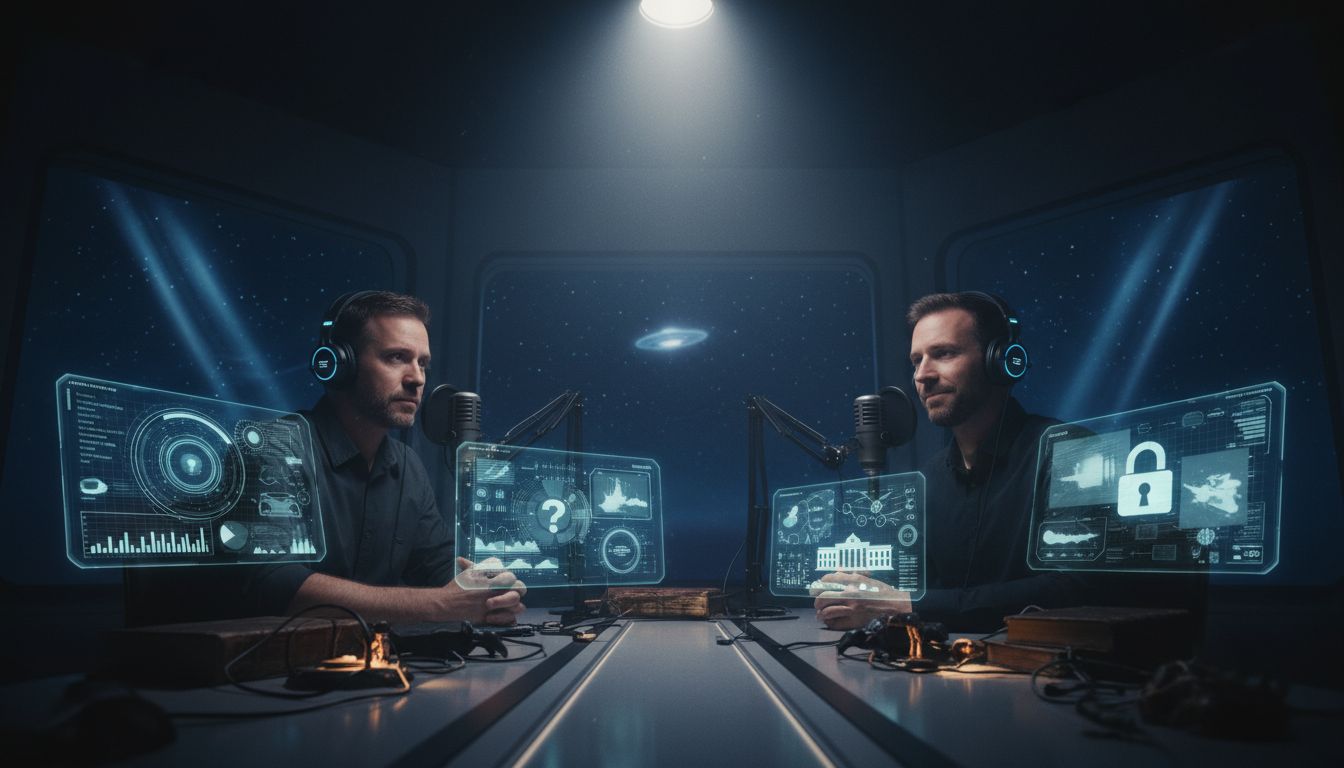
In the latest episode of the Podcast UFO, host Martin Willis sits down with veteran ufologist and tech entrepreneur Jesse Merl. The 56‑minute conversation, recorded on Dec 3 2025, traces Merl’s fascination with unidentified aerial phenomena (UAP) from childhood to his current role as the creator of the YouTube channel Jesse ON FIRE. Willis and Merl discuss the methodological standards Merl applies to UFO cases, his skepticism toward official government releases, and the emerging influence of artificial intelligence on both research and public perception. The dialogue also touches on speculative topics such as alleged AI‑alien links, consciousness studies, and Ryan Kralik’s “Theory of Everything,” before closing on a cautiously optimistic view of the field’s future.
Early Interest and Path to Ufology
Merl recounts that his first encounter with a “strange light” over his hometown at age nine sparked a lifelong curiosity. “I was more interested in how it moved than in any sensational story,” he says, emphasizing a scientific mindset that later guided his career. After founding several tech startups, Merl leveraged his entrepreneurial experience to launch Jesse ON FIRE, a channel that blends investigative reporting with cultural commentary. The platform, now boasting over 800,000 subscribers, aims to “cut through the hype” and present UFO data in a format accessible to both skeptics and believers.
Criteria for “Solid” UFO Cases
When asked how he distinguishes credible sightings from anecdotal noise, Merl outlines a three‑point checklist: (1) multiple independent witnesses, (2) corroborating sensor data (radar, infrared, or acoustic), and (3) reproducibility of observations. He cites the 2023 “Lakeview” incident, where civilian dash‑cam footage was matched with FAA radar returns, as a benchmark example. “If you can’t verify at least two of those pillars, the case remains speculative,” Merl notes, underscoring his commitment to empirical rigor.
Government Data and Potential Threats
Merl expresses a measured skepticism toward the recent Pentagon releases of UAP videos, describing them as “interesting but incomplete.” He warns that the secrecy surrounding the UAP Task Force could conceal not only genuine threats but also disinformation campaigns. “We have to ask whether the agencies are protecting national security or shielding themselves from public scrutiny,” he argues. Nonetheless, Merl acknowledges the possibility that some phenomena could pose a security risk, urging policymakers to develop transparent protocols for investigation and response.
AI, Alien Connections, and the Theory of Everything
A surprising segment of the interview explores how AI is reshaping ufology. Merl discusses claims that generative‑AI models might be “channeling” non‑human intelligence, a notion he treats with caution. “The data we feed AI are human‑generated; any apparent alien insight is more likely a reflection of our own biases,” he explains. The conversation then shifts to Ryan Kralik’s “Theory of Everything,” which posits a unified framework linking consciousness, quantum mechanics, and extraterrestrial intelligence. Merl respects the ambition of the theory but stresses that “extraordinary claims still require extraordinary evidence.”
Outlook: Cautiously Optimistic
Concluding the episode, Merl emphasizes the importance of interdisciplinary collaboration—combining aerospace engineering, data science, and psychology—to advance the field. He praises the growing community of citizen scientists who contribute high‑quality recordings and encourages mainstream media to adopt a balanced tone. “We’re moving from fringe speculation to a stage where credible research can inform public policy,” Merl says. Willis echoes this sentiment, noting that the podcast itself aims to “bridge the gap between curiosity and critical inquiry.” As the discussion wraps, both host and guest agree that while uncertainties remain, the trajectory of UFO research is increasingly grounded in methodological transparency and scientific accountability.


