Overview
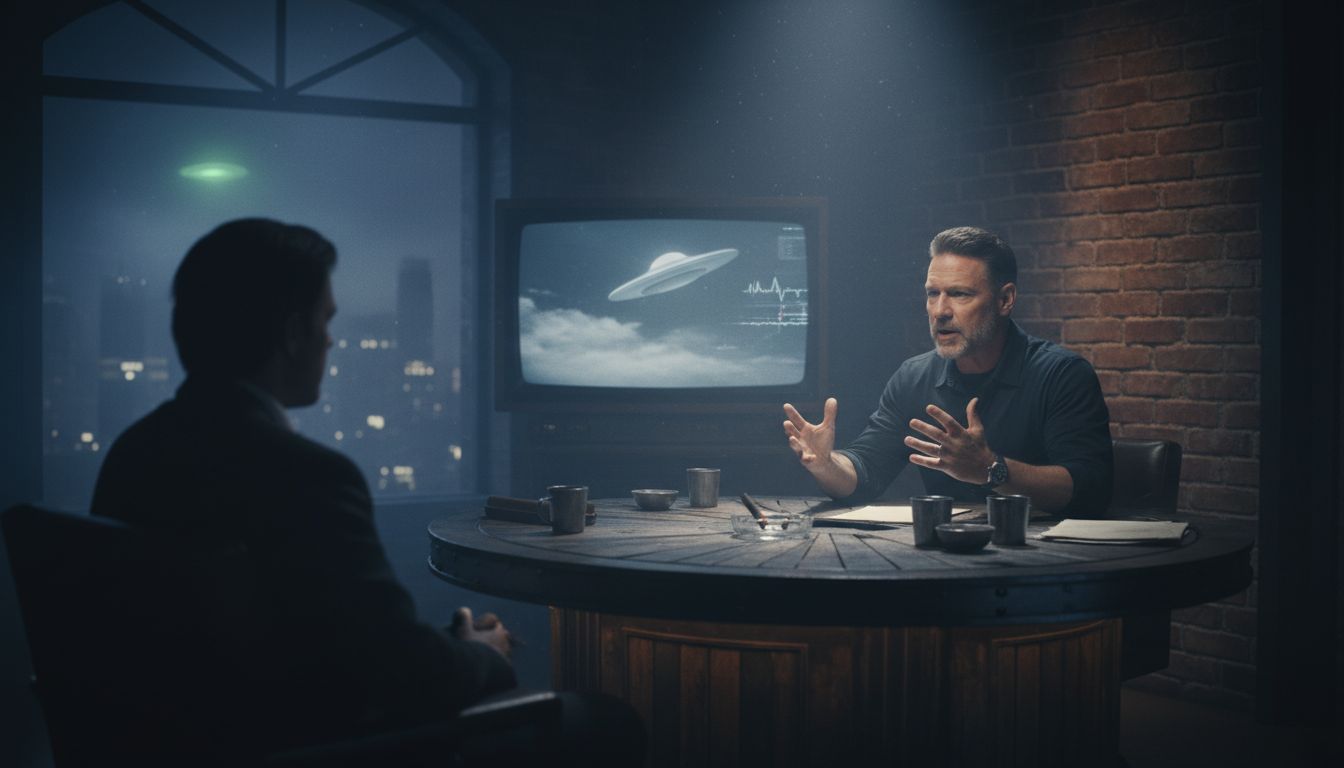
During a February 2026 episode of The Joe Rogan Experience, the podcast host warned that the current “UFO buzz” could fizzle out unless concrete evidence of extraterrestrials appears. Rogan argued that the conversation is now at a “turning point” because public confidence in mainstream media is eroding, leaving a vacuum that sensational claims could fill – but only if something tangible surfaces. The remarks have reignited a debate that has been simmering since the U.S. Office of the Director of National Intelligence (ODNI) released its unclassified UAP (Unidentified Aerial Phenomena) assessment in 2021, which concluded that most sightings remain unexplained but offered no proof of alien technology.
Rogan’s Perspective
Rogan, whose podcast reaches an estimated 200 million listeners worldwide, framed the issue in terms of audience fatigue. “People are tired of hearing about lights in the sky that never get a follow‑up,” he said on air. “If we don’t get something real—something you can’t dismiss as a weather balloon or a camera glitch—this whole thing is going to die out, especially now that people don’t trust the news any more.” He cited recent polls from Pew Research indicating that only 29 % of U.S. adults have confidence in mainstream news outlets, a figure that has been falling for several years. Rogan suggested that the UFO topic could become a “new frontier” for alternative media, but only if it delivers hard‑line evidence such as recovered material, credible radar data, or a government‑sanctioned disclosure.
Skeptical Response
Science communicators and defense analysts quickly pushed back. Dr. Michael Shermer, a noted skeptic, told The Guardian that “the excitement around UFOs is largely driven by cultural mythmaking, not by a surge in credible data.” He referenced the ODNI’s 2021 report, which examined 144 incidents and found no indication of extraterrestrial origin, while acknowledging that 18 % remained unexplained due to limited data. Former Pentagon UAP task‑force member Dr. Sean Carroll added that “the lack of verifiable, repeatable evidence means the phenomenon remains a matter of speculation, not science.” Critics also warned that sensationalist claims could further erode public trust in institutions that are already under scrutiny.
Media Trust and Cultural Factors
The conversation about UFOs does not exist in a vacuum. Researchers in sociology and religious studies note that UFO narratives often mirror prevailing cultural anxieties—from Cold‑War era fears of invasion to contemporary concerns about technological surveillance. A 2023 study by the University of Cambridge found that individuals with strong apocalyptic or millenarian beliefs are twice as likely to interpret ambiguous aerial phenomena as extraterrestrial. At the same time, declining trust in legacy media has driven many to seek information from podcasts, YouTube channels, and fringe forums, where editorial standards vary widely. This shift creates a feedback loop: as mainstream outlets are viewed as “out of touch,” alternative platforms amplify speculative stories, which in turn can deepen skepticism toward established reporting.
Looking Ahead
For the UFO discourse to regain momentum, experts agree that transparent, peer‑reviewed data will be essential. The Department of Defense’s recent establishment of the All‑Domain Anomaly Resolution Office (AARO) signals a willingness to collect and analyze sightings systematically, but its findings have yet to be released in a format accessible to the scientific community. Meanwhile, Rogan’s call for “real evidence” underscores a broader public demand: accountability and clarity from both government agencies and media outlets. Whether the next breakthrough will come from a declassified military video, a scientific breakthrough in sensor technology, or a genuine extraterrestrial encounter remains uncertain. Until then, the conversation is poised on a fragile edge, balanced between growing public distrust and the enduring human fascination with the unknown.