Overview
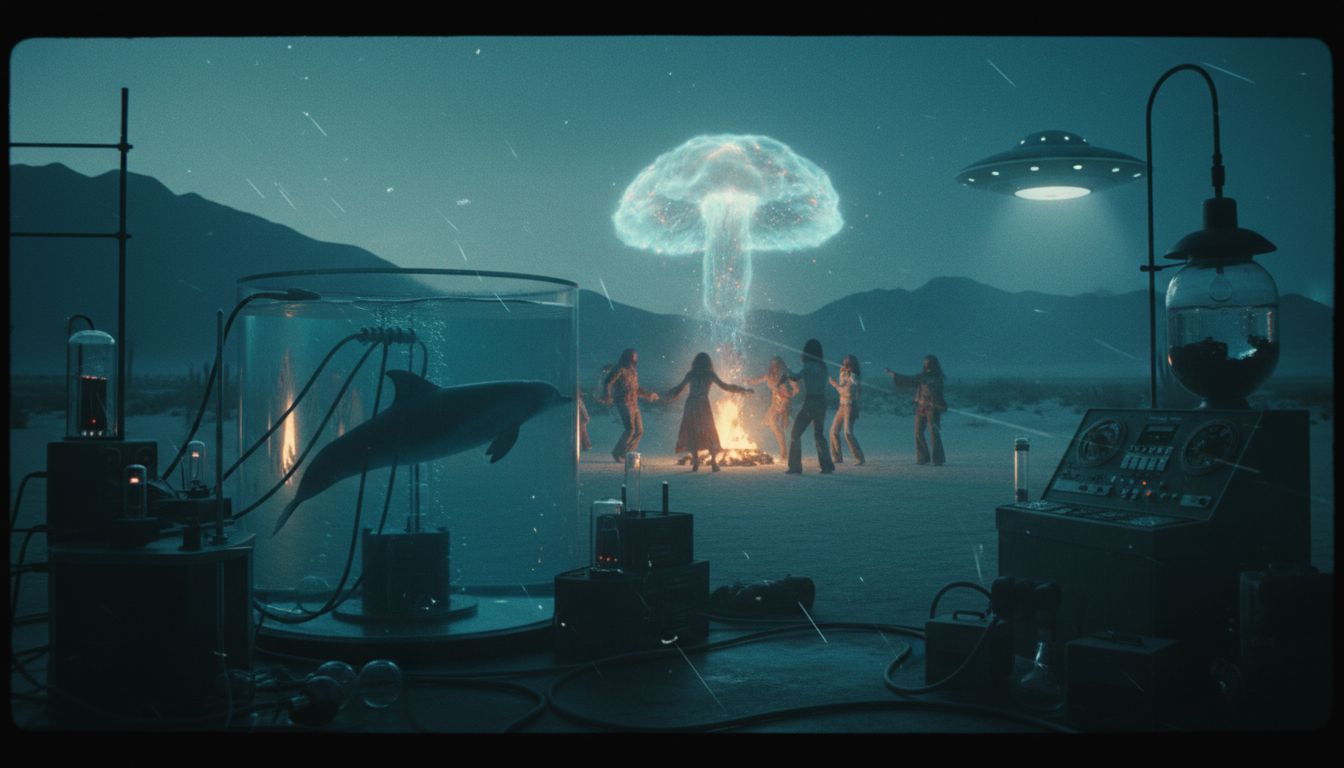
A new documentary, “John Lilly and the Earth Coincidence Control Office,” premiered this month, offering a measured look at the controversial neuroscientist and dolphin researcher whose work helped shape public imagination about marine intelligence. Directed by Michael Almereyda and Courtney Stephens, the 89‑minute film weaves archival footage, interview excerpts and a dead‑pan collage style to trace Lilly’s career from Cold‑War funded experiments in the 1950s through his immersion in 1960s psychedelic counterculture. While the review in Roger Ebert.com notes that the film “is less a hagiography (or a takedown) of the man than it uses him to chart how outrageous ideas become mainstreamed,” it also underscores Lilly’s lasting imprint on film, television and even video‑game storytelling.
Documentary Details
Almereyda, known for biographical dramas such as Experimenter and Tesla, approaches Lilly with the same distance he applied to his earlier subjects. The narration, delivered by Chloë Sevigny, frames Lilly as a “buttoned‑up scientist” who claimed humanity was “ten years away from communicating with some other form of life,” a notion that quickly turned toward the ocean’s most intelligent mammals. The filmmakers avoid sensationalism, instead letting Lilly’s own words—recorded on “The Jack Parr Show” and in lab notebooks—speak for themselves. As the review observes, “Coolly narrated… Lilly’s story begins by depicting him as a buttoned‑up scientist… while it could be alien, he was more convinced it would be marine.” The documentary’s collage technique, punctuated by period newsreels and psychedelic graphics, mirrors the era’s cultural turbulence and illustrates how Lilly’s fringe experiments slipped into mainstream consciousness.
Cultural Impact
Lilly’s early dolphin research coincided with a surge of marine‑themed media in the 1980s and 1990s, from the “save the whales” movement to television series like Flipper and SeaQuest DSV. The documentary argues that his popularization of dolphin self‑awareness helped embed the idea of intelligent marine life into popular culture, influencing everything from Hollywood scripts to video‑game narratives that feature sentient sea creatures. Critics note that while Lilly’s scientific rigor was often questionable, his ability to capture the public imagination created a lasting template for how scientists are portrayed as visionary outsiders in entertainment.
New Scientific Findings
In a separate report released this week, marine biologists studying bottlenose dolphins in the noisy Corpus Christi ship channel observed a significant shift in acoustic behavior. Researchers documented that dolphins are raising the pitch, increasing the speed, and expanding the variety of their clicks and whistles to compensate for chronic industrial noise. “The animals are essentially re‑tuning their communication system to maintain social cohesion,” said Dr. Elena Mendoza, lead author of the study. This adaptive response mirrors the very communication challenges Lilly sought to decode, underscoring that dolphin vocalizations remain a dynamic field of inquiry. The findings also raise concerns about long‑term impacts of noise pollution on marine ecosystems and highlight the need for stricter acoustic regulations in busy waterways.
Synthesis and Outlook
The convergence of Lilly’s legacy and contemporary dolphin research illustrates a broader narrative: human curiosity about non‑human intelligence is both a cultural and scientific driver. The documentary re‑examines a figure once dismissed as a “kook,” revealing how his boundary‑pushing experiments seeded ideas that persist in today’s environmental discourse. Meanwhile, the Corpus Christi study provides concrete evidence that dolphins continue to adapt to an increasingly noisy world, a reality that Lilly’s early work only hinted at. As policymakers grapple with marine noise mitigation and filmmakers revisit the mythos of intelligent sea life, both the documentary and the new scientific data remind audiences that the dialogue between humanity and the ocean remains as complex—and as essential—as ever.


