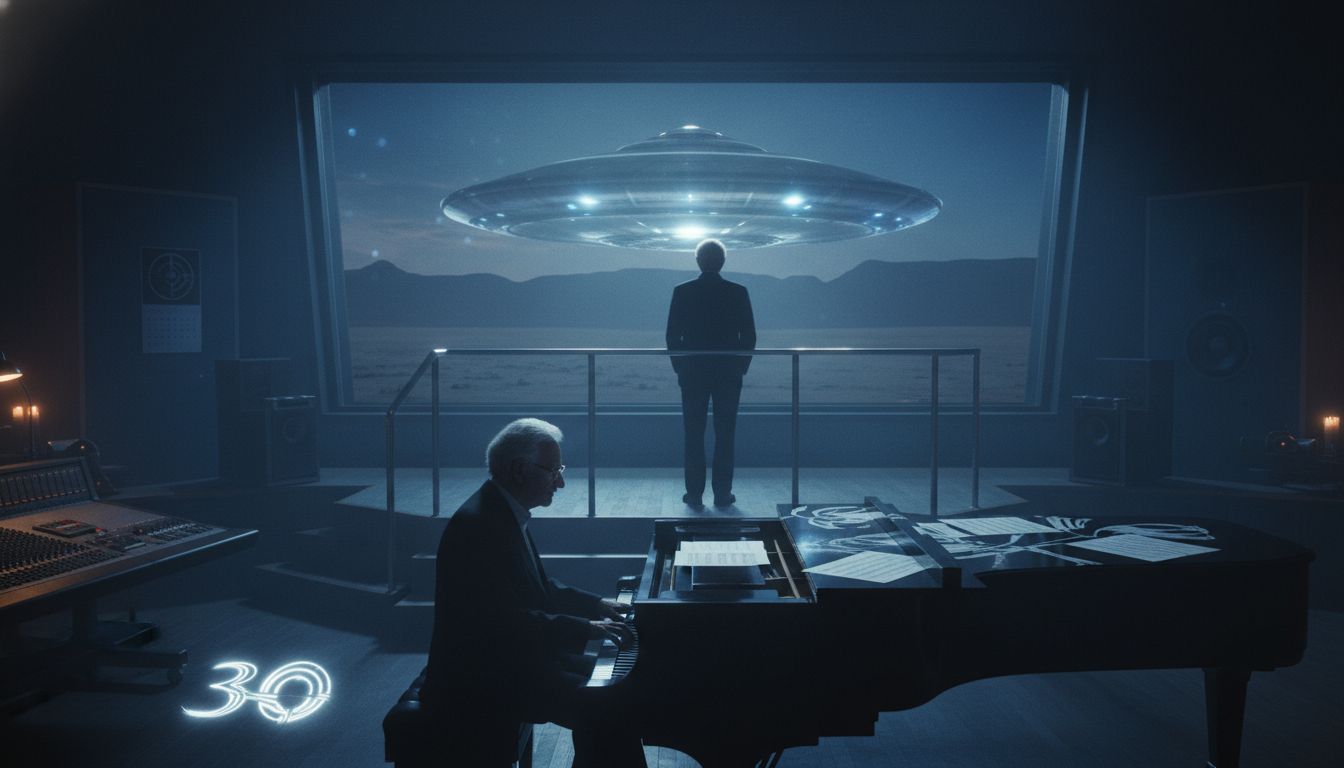
John Williams will return to the composer’s podium for director Steven Spielberg’s next feature, a science‑fiction mystery centered on an unidentified flying object. Announced on Oct. 28, the partnership marks the 30th film the two legends have worked on together, a milestone that underscores a collaboration spanning five decades. The project, officially untitled but widely referred to as “Spielberg’s UFO movie,” is slated for a 2026 theatrical release and has already generated discussion on trade sites such as Variety, Gizmodo and IGN.
The pairing of Williams and Spielberg is one of Hollywood’s most enduring creative alliances. Their first collaboration was the 1977 blockbuster Jaws, where Williams’ iconic two‑note motif became synonymous with cinematic tension. Since then they have crafted scores for a litany of landmark pictures—including E.T. the Extra‑Terrestrial, Jurassic Park, Schindler’s List and Saving Private Ryan—earning a combined tally of 40 Academy Award nominations and 20 wins for Williams alone. “It’s extraordinary to think that after three decades of films we’re still finding new stories that feel fresh enough to merit a fresh musical language,” Williams said in a brief statement to Variety, adding that the UFO narrative “offers a canvas for both mystery and wonder that I’m eager to explore.”
Spielberg, who has long expressed fascination with the unknown, confirmed that the film will blend classic investigative drama with speculative science. In a recent interview with IGN, the director described the story as “a modern take on the classic ‘close‑encounter’ tale, but grounded in the human experience of awe and fear.” While plot specifics remain under wraps, insiders suggest the screenplay will follow a team of researchers who uncover anomalous aerial phenomena over a remote American landscape, prompting both governmental scrutiny and personal reckononing. Production is reportedly underway at Pinewood Studios, with cinematographer Janusz Kamiński attached to capture the film’s atmospheric visuals.
Industry analysts see the Williams–Spielberg reunion as a strategic move to bolster the film’s marketability amid a crowded slate of sci‑fi releases slated for 2026. “Having John Williams attached instantly elevates the project’s prestige and signals to audiences that this is more than a typical genre picture,” noted film analyst Maya Patel of The Forecast Group. Early buzz on social platforms shows fans comparing the upcoming score to Williams’ earlier space‑themed works, such as Close Encounters of the Third Kind and War of the Worlds, while also anticipating fresh thematic material that reflects contemporary anxieties about extraterrestrial life and government secrecy.
The announcement also rekindles conversation about the evolving role of orchestral music in blockbuster cinema. While many modern scores lean heavily on electronic textures, Williams remains a steadfast advocate for full‑orchestra arrangements. In a recent interview with Gizmodo, he explained, “The orchestra can convey a sense of scale and emotional depth that synthetic sounds struggle to match, especially when you’re dealing with the vastness of the cosmos.” Spielberg’s films have historically provided the ideal showcase for such an approach, and both creators appear intent on preserving that tradition even as streaming platforms and digital effects dominate the industry.
As the production moves forward, the collaboration is expected to draw attention not only from long‑time fans but also from a new generation of moviegoers intrigued by the resurgence of UFO topics in popular culture. With a 2026 release date, the film will likely benefit from the heightened public interest sparked by recent government disclosures of unidentified aerial phenomena. Whether the score will echo the haunting leitmotifs of E.T. or venture into uncharted sonic territory, the partnership of John Williams and Steven Spielberg remains a rare cultural touchstone—one that promises to shape the narrative and musical landscape of contemporary science fiction.