Overview
In the wake of recent remarks by former President Barack Obama and former President Donald Trump—both of whom have publicly acknowledged the need for greater transparency on unidentified anomalous phenomena (UAP)—the scientific community is seeing renewed interest in systematic investigations of aerial mysteries. President Trump’s executive order to declassify a portion of government UFO files has added pressure for rigorous, open‑ended research. Against this backdrop, the Galileo Project, led by Harvard astrophysicist Avi Loeb, has launched a volunteer‑driven effort to label sky images captured by its new observatories, aiming to train artificial‑intelligence (AI) models to spot potential extraterrestrial artifacts.
Project Background
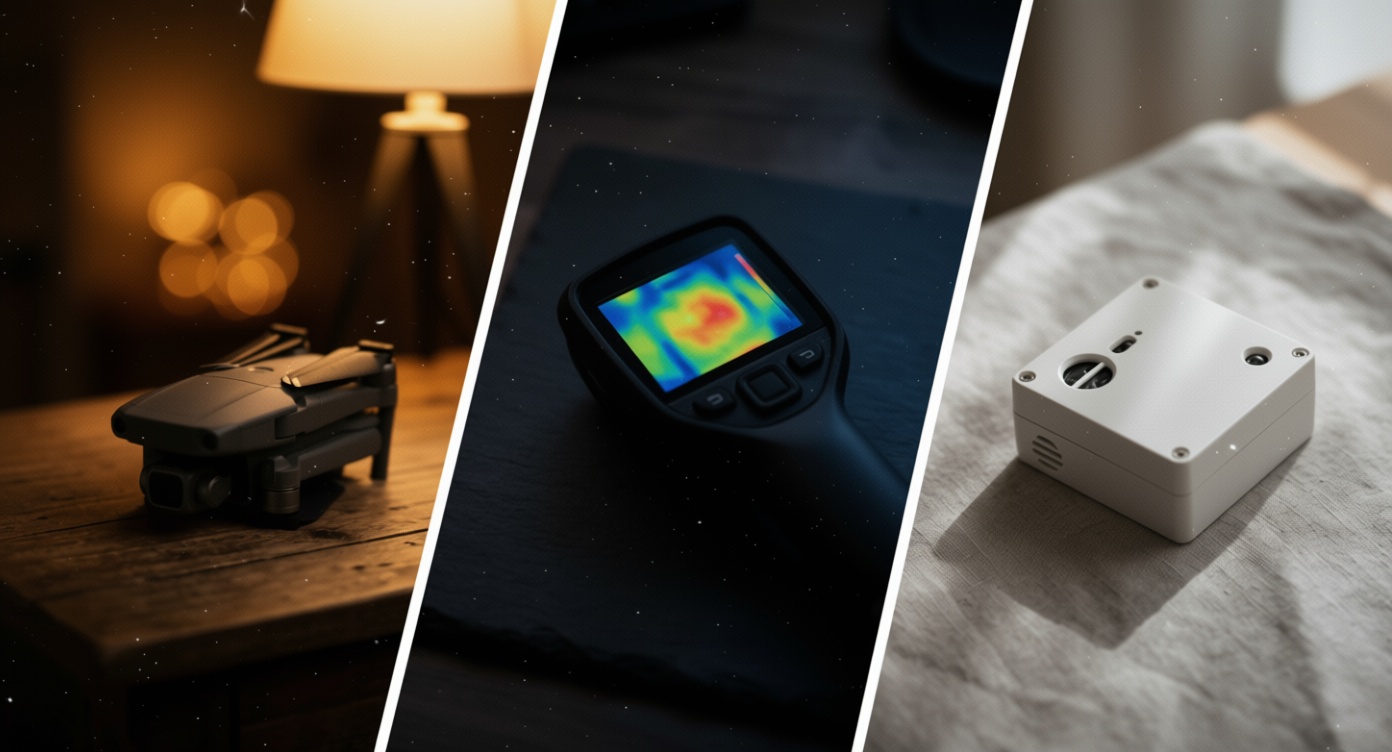
The Galileo Project distinguishes itself from traditional SETI initiatives by focusing on physical objects within Earth’s atmosphere rather than distant electromagnetic signals. Operating three dedicated observatories—in Massachusetts, Pennsylvania, and a state‑of‑the‑art facility in Nevada—the project continuously monitors the entire sky across infrared, optical, radio, and audio bands. “Our goal is to bring the search for extraterrestrial technological signatures … to the mainstream of transparent, validated and systematic scientific research,” Loeb wrote in a recent Medium post. By triangulating observations from stations spaced roughly 10 kilometers apart, the team can estimate distances to anomalous objects and differentiate them from known aircraft, drones, balloons, birds, clouds, and satellites.
The Role of Human Labeling
While the observatories generate petabytes of raw data each year, AI models require accurately labeled training sets to distinguish ordinary phenomena from true outliers. The classification task is complicated by variables such as time of day, sky background, and object orientation relative to the Sun or Moon. To address this, the Galileo research team has launched an online platform (https://labeling.galileo-project.com/) where volunteers can view images and assign them to predefined categories. “Human insight remains essential,” Loeb emphasized, noting that “our technology provides the framework, but the success of the mission ultimately depends on human insight.” Volunteers are asked to flag objects that do not fit known categories, thereby creating a curated dataset for AI refinement.
Volunteer Call‑to‑Action
The labeling initiative is open to anyone with an internet connection and a willingness to contribute to a scientific endeavor. Participants are guided through a simple interface that displays recent sky captures and asks them to select from options such as “airplane,” “drone,” “bird,” “cloud,” or “unknown.” According to project engineers, even a modest number of well‑labeled images can significantly improve detection accuracy, reducing false positives and sharpening the AI’s ability to isolate truly anomalous events. The project hopes that a broad, crowdsourced effort will accelerate the identification of any objects that merit deeper investigation.
Implications and Outlook
The convergence of political attention and a structured, peer‑reviewable research program marks a notable shift in how UAPs are studied in the United States. By coupling continuous, multi‑spectral observation with public participation and transparent AI development, the Galileo Project seeks to move the conversation from speculation to evidence‑based science. If successful, the initiative could set a precedent for future collaborations between governmental agencies, academic institutions, and citizen scientists. As the data pipeline expands and more volunteers contribute, the scientific community will be better positioned to evaluate whether any observed anomalies represent novel natural phenomena, advanced human technology, or—however unlikely—signs of extraterrestrial engineering.