Overview
Director Joseph Kosinski, known for visually striking sci‑fi titles such as Top Gun: Maverick and Oblivion, has announced that his upcoming UFO disclosure film will be rooted in scientific fact rather than pure fiction. Speaking to media outlets in early January, Kosinski said the project is built on declassified government data, peer‑reviewed research, and consultations with aerospace engineers and former intelligence analysts. The claim has sparked a lively discussion among filmmakers, scientists, and UFO researchers about where the line between entertainment and credible investigation should be drawn.
Background
Kosinski’s interest in the subject dates back to his work on Oblivion, where he first explored the idea of hidden extraterrestrial technology. In recent years, the United States government has released several reports acknowledging unidentified aerial phenomena (UAP) and establishing a task force to study them. The 2023 Office of the Director of National Intelligence (ODNI) report and the 2024 congressional hearing on UAPs have brought the topic into mainstream discourse, prompting several documentaries and academic studies. Kosinski says his film will synthesize these public disclosures with the latest findings from the scientific community, aiming to present a narrative that reflects the current state of knowledge rather than speculative fantasy.
Film Details
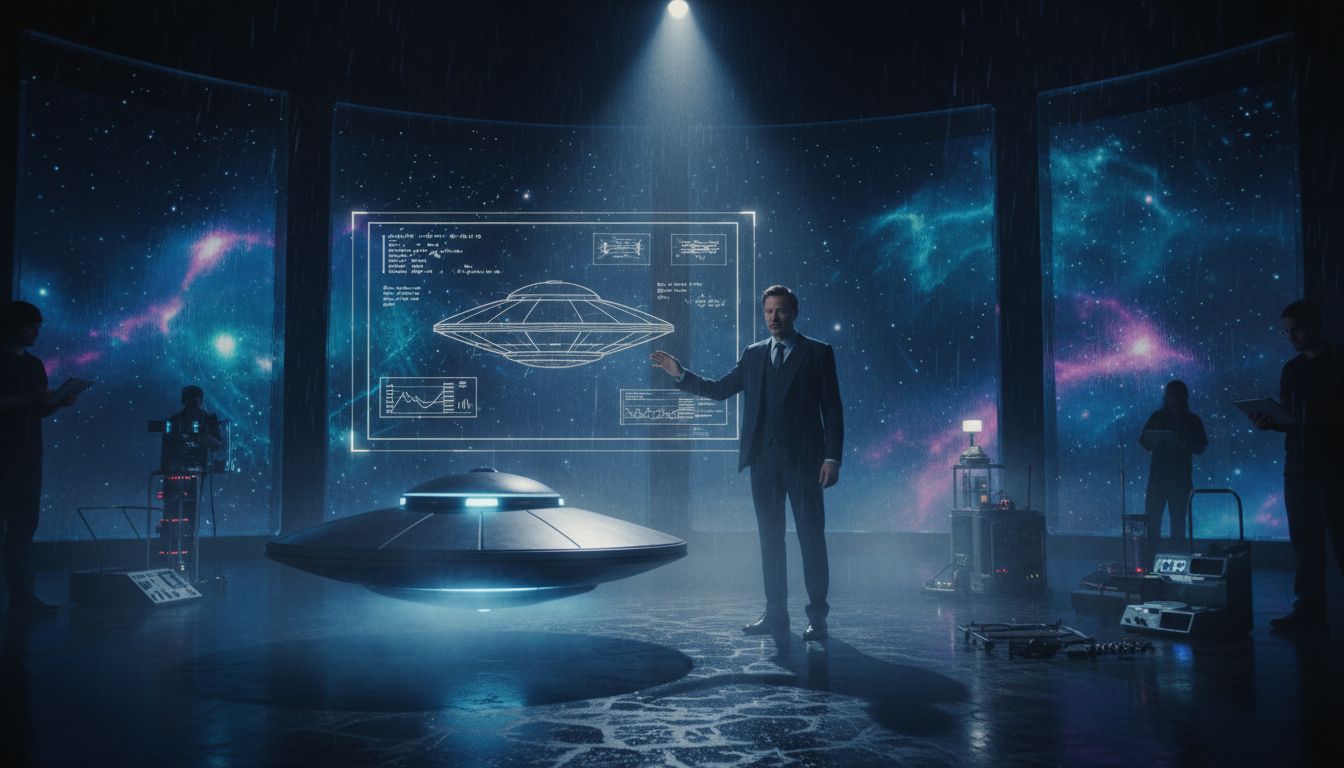
The yet‑untitled project, slated for a 2027 release, will combine high‑budget visual effects with on‑screen interviews of experts such as Dr. Sean Kirkpatrick, a former Navy pilot who testified before Congress, and Dr. J. Allen Hynek’s successor at the Center for the Study of Extraterrestrial Intelligence. Kosinski described the structure as “a hybrid docudrama,” where dramatized sequences illustrate hypothesized scenarios while real‑world footage and data visualizations ground the story in fact. Production is reportedly underway in collaboration with the U.S. Department of Defense’s Unidentified Aerial Phenomena Task Force, which has granted limited access to sensor data and declassified videos for authenticity.
Expert Reactions
The announcement has drawn mixed responses. Dr. Michael S. Turner, a cosmologist at the University of Chicago, praised the effort, noting that “bringing rigorously vetted data to a broad audience can demystify a subject that’s been clouded by myth.” Conversely, Dr. James Oberg, a veteran aerospace analyst, cautioned that “the line between dramatization and documentation can blur quickly; audiences need clear labeling to distinguish speculation from verified evidence.” Within the UFO research community, veteran investigator Luis Elizondo welcomed the collaboration, saying the film could “help legitimize serious inquiry by showing that mainstream cinema can respect the science.” Critics, however, warn that the commercial imperatives of Hollywood might pressure the narrative toward sensationalism, potentially undermining the very factual foundation Kosinski claims to uphold.
Outlook
If Kosinski’s approach succeeds, the film could become a catalyst for public engagement with the ongoing scientific and governmental study of UAPs, mirroring the impact of earlier works like Close Encounters of the Third Kind on public interest in space exploration. The project also raises broader questions about the role of entertainment media in disseminating emerging scientific topics. As production progresses, the industry will be watching closely to see whether the final product can maintain the balance between cinematic storytelling and rigorous fact‑checking. Regardless of the outcome, Kosinski’s pledge to anchor his UFO narrative in documented evidence marks a notable shift in how Hollywood may tackle subjects that sit at the intersection of mystery and mainstream science.