Overview
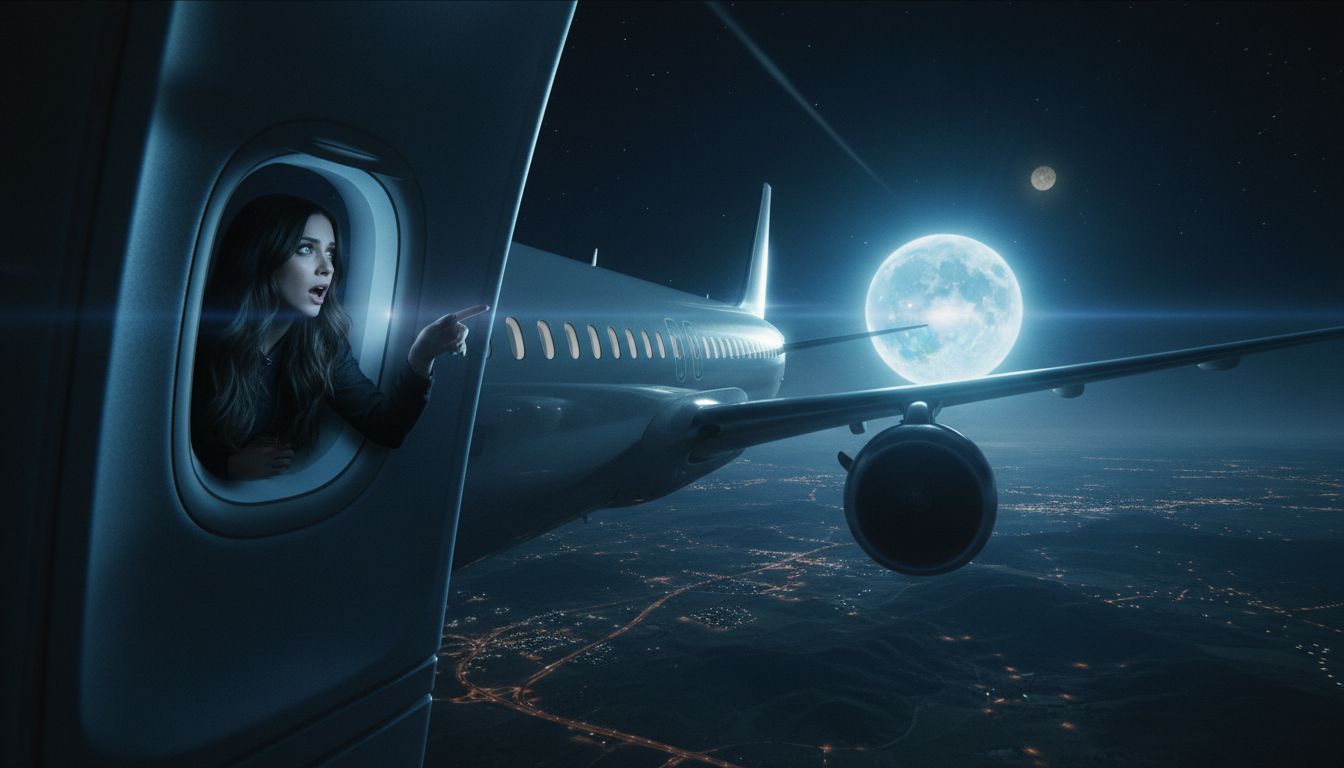
Country singer Kacey Musgraves has joined a growing list of civilian witnesses who claim to have observed unidentified aerial phenomena (UAP) while traveling at commercial altitude. In an interview with Fox News, Musgraves described seeing a “bright orb” that appeared to follow her flight from Texas to Tennessee, calling the incident the “craziest experience of my life.” Her account, released on April 11, 2026, has reignited public interest in high‑altitude sightings that have been documented by pilots, airline crews, and, more recently, government‑sponsored investigations.
Musgraves’ Account
According to the Fox News report, Musgraves was seated on a routine domestic flight when she noticed a luminous sphere moving in close proximity to the aircraft’s wing. She said the object maintained a steady distance for several minutes before disappearing from view. “It was like nothing I’d ever seen,” Musgraves told the outlet, adding that the sighting left her “shaken” and “wondering what it could be.” While she did not claim the object was extraterrestrial, she emphasized that the experience was “unsettling” and unlike any typical atmospheric phenomenon she had encountered.
Aviation and UAP Context
Musgraves’ testimony arrives at a time when the aviation community is grappling with an influx of high‑altitude UAP reports. The U.S. Department of Defense’s Unidentified Aerial Phenomena Task Force, now operating under the All‑Domain Anomaly Resolution Office (AARO), released a comprehensive assessment in 2023 that documented over 200 credible sightings by military pilots and radar operators. Civilian pilots have also contributed to databases such as the National UFO Reporting Center, noting objects that exhibit speeds, maneuverability, and illumination patterns inconsistent with known aircraft or weather events. Experts stress that while many reports can be attributed to drones, balloons, or optical effects, a subset remains “unexplained” after rigorous analysis.
Public Reaction and Expert Insight
The story quickly trended on social media, with fans and UFO enthusiasts sharing the clip of Musgraves’ interview and debating the possible explanations. Dr. Jacqueline “Jackie” Hsu, a senior researcher at the University of Texas’ Center for Atmospheric Studies, cautioned against jumping to sensational conclusions. “High‑altitude observations are challenging because of factors like sun glare, ice crystals, and instrument reflections,” Hsu explained. “Nevertheless, when multiple independent witnesses—especially trained observers like pilots—report similar characteristics, the data warrants systematic study.” Meanwhile, a spokesperson for the Federal Aviation Administration (FAA) reiterated that the agency monitors all anomalous radar contacts but does not publicly attribute them without conclusive evidence.
Looking Ahead
Musgraves’ experience underscores a broader cultural shift: public figures are increasingly willing to discuss UAP encounters without fear of stigma, potentially encouraging more systematic reporting. The FAA, in partnership with AARO, has announced plans to expand its voluntary reporting portal for commercial flight crews later this year, aiming to capture a more comprehensive picture of aerial anomalies. As the conversation moves from fringe speculation to mainstream discourse, analysts suggest that the accumulation of credible civilian sightings could influence future policy decisions regarding airspace security and scientific research into unexplained aerial phenomena. For now, Musgraves remains “curious” and hopes her story adds a valuable data point to an ongoing investigation that bridges entertainment, aviation safety, and the quest to understand what, if anything, lies beyond our current technological horizon.


