Overview
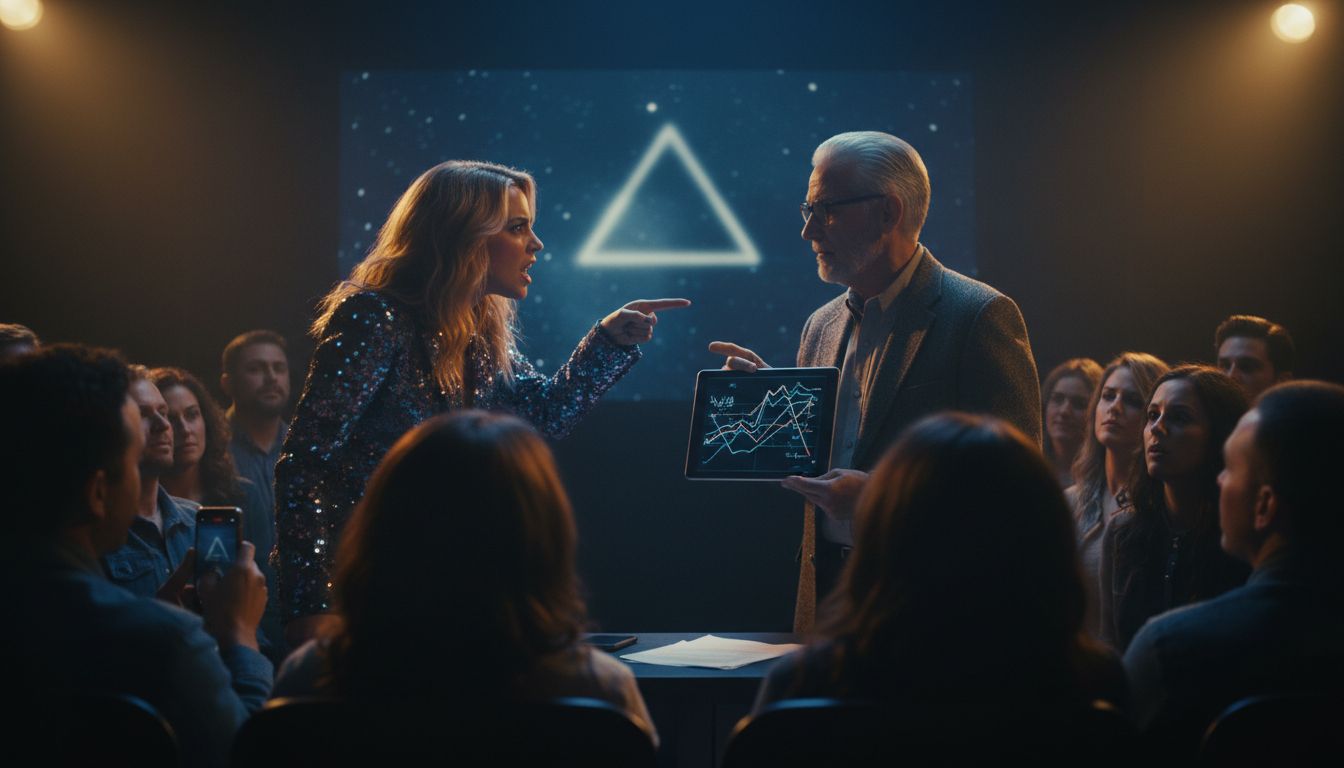
Country‑music star Kacey Musgraves has entered a public dispute with a self‑styled “UFO analyst” after the analyst dismissed her recent claim of witnessing an unidentified flying object. Musgraves, who described the sighting as a “real, unfiltered moment” in a series of Instagram Stories last week, responded with a pointed rebuttal, insisting that her experience was genuine and demanding respect for what she called “a personal, undeniable encounter.” The exchange has reignited discussion about the credibility of celebrity UFO reports and the growing community of amateur investigators who claim to separate fact from fiction.
The Original Claim
During a break in her North American tour in early April, Musgraves posted a short video taken from the roof of a tour bus. The footage, lasting roughly twelve seconds, shows a bright, disc‑shaped light moving erratically across the night sky. In accompanying text, the singer wrote, “I swear I saw that with my own eyes – something out there that wasn’t a plane or a drone.” The post quickly garnered thousands of comments, ranging from supportive fans to skeptical observers. Within hours, the clip was shared by several UFO‑interest forums, prompting a wave of speculation about its authenticity.
Analyst’s Debunk
A week later, Dr. Alan “UFO‑Analyst” Greene, who runs the popular YouTube channel UFO Fact Check, released a video titled “Kacey Musgraves’ ‘UFO’ – Hoax or Hologram?” Greene argued that the light could be explained by a combination of lens flare, a passing satellite, and post‑production editing. He cited the lack of a clear horizon line in the video and the sudden appearance of the object as evidence of manipulation. “There’s nothing here that can’t be reproduced with off‑the‑shelf video software,” Greene said. “When celebrities jump on the UFO bandwagon, it often fuels misinformation.”
Greene’s analysis was picked up by several mainstream outlets, and his claims were summarized in a brief segment on a national news broadcast, where he was quoted as saying, “We have to hold public figures to a higher standard of evidence, especially on a topic as contentious as unidentified aerial phenomena.”
Musgraves’ Response
Musgraves took to the same Instagram platform to address Greene’s video, posting a new story that read, “I’m not a prankster. I saw something that night and I’m not going to let anyone tell me I’m crazy.” She added a short clip of herself speaking directly to the camera: “I respect people who study the sky, but dismissing my experience without even talking to me feels disrespectful. I’m a believer in the unknown, and I stand by what I saw.”
The singer’s statement was later quoted by The Independent, which reported that she “angrily rebutted” the analyst’s conclusions and emphasized that her sighting was “genuine, personal, and not a staged performance.” Musgraves has not provided additional footage or technical data, but she did note that the sighting occurred while the tour bus was parked near a remote desert stretch in New Mexico, an area known for frequent astronomical activity.
Wider Implications
The Musgraves‑Greene clash highlights a broader tension in the public discourse surrounding UAP (Unidentified Aerial Phenomena). Since the U.S. government’s 2023 release of the preliminary UAP report, interest in civilian sightings has surged, and more celebrities have spoken publicly about their own experiences. While some observers view these accounts as valuable anecdotal data, others argue that the involvement of high‑profile figures can blur the line between credible testimony and sensationalism.
Amateur investigators like Greene play an increasingly visible role, offering technical analyses that can either bolster or undermine claims. Their work, however, is often conducted without peer‑reviewed methodology, raising questions about standards of evidence. Meanwhile, organizations such as the U.S. Office of the Director of National Intelligence (ODNI) continue to emphasize the need for rigorous data collection, encouraging witnesses to submit raw sensor data where possible.
Musgraves’ insistence on the authenticity of her sighting, coupled with Greene’s rapid debunking, underscores the challenges faced by both sides: witnesses seek validation without losing personal credibility, while analysts strive to maintain scientific rigor amid a flood of viral content. As the conversation evolves, the episode serves as a reminder that transparent documentation and open dialogue remain essential for any meaningful progress in understanding the phenomena that continue to capture public imagination.