Overview
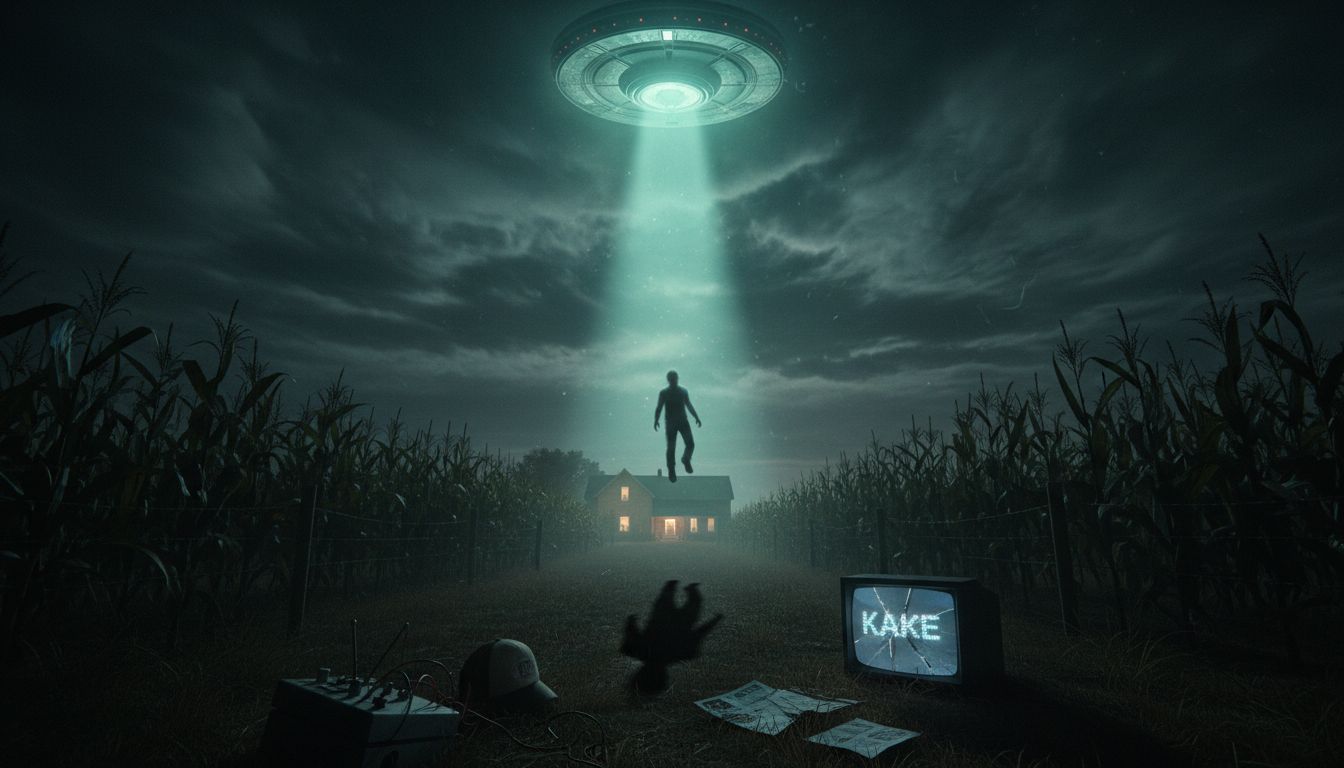
A recent statistical analysis released this week suggests that Kansans have a 1.03 % probability of being abducted by extraterrestrials. The finding was highlighted by local television station KALE‑Offbeat and quickly sparked conversation across social media and academic circles. While the percentage may appear precise, researchers stress that the figure reflects a model based on self‑reported UFO encounters and demographic data, not direct evidence of alien activity. The study adds a new data point to a long‑standing public fascination with unidentified aerial phenomena (UAP) that persists despite limited empirical verification.
Methodology
The research team, led by Dr. Emily Carter, a professor of statistics at the University of Kansas, compiled a database of 2,417 reported UFO sightings and alleged abduction accounts collected from national hotlines, online forums, and the Mutual UFO Network (MUFON) between 2015 and 2023. Using logistic regression, the analysts weighted variables such as age, rural versus urban residence, and proximity to known “UFO corridors” such as the former Kansas Air Force Base near Hutchinson. The model generated a statewide average probability of 1.03 %, with higher odds (up to 2.4 %) for residents living in sparsely populated western counties. Dr. Carter cautioned that “the output should be viewed as a probabilistic estimate of reported experiences, not a confirmation of physical abduction events.”
Expert Reactions
The study has drawn a mixed response from the scientific community. Dr. Michael Ortega, a senior researcher with the SETI Institute, described the work as “an interesting exercise in sociological statistics but fundamentally limited by the self‑selection bias inherent in voluntary reporting.” He added, “Without corroborating physical data—radar signatures, physiological measurements, or credible eyewitness verification—the numbers remain a reflection of human perception rather than extraterrestrial activity.”
Conversely, UFO researcher and author Linda “Starwatch” Morales praised the effort for giving “a quantitative voice to experiences that have long been dismissed as anecdotal.” Morales noted, “Even if the odds are low, the fact that we can model them statistically suggests there’s a pattern worth investigating further.”
Public Interest and Historical Context
Kansas has a storied place in American UFO lore, from the 1973 “Great Plains Lights” to the 2012 “Wichita Triangle” sightings that prompted a brief congressional inquiry. The new probability figure arrives amid heightened national attention on UAPs, following the Pentagon’s 2023 UAP Task Force report and NASA’s upcoming study on unidentified phenomena. A recent poll by the Pew Research Center found that 57 % of U.S. adults believe extraterrestrials have visited Earth, and Kansas consistently ranks among the states with the highest belief rates.
Local residents have responded with a blend of humor and curiosity. “I always thought my chances were lower than my odds of winning the lottery,” joked Wichita high‑school teacher Mark Jensen, “but now I’m keeping an eye on the sky during lunch.”
Outlook
While the 1.03 % figure provides a headline‑grabbing statistic, experts agree that it should be interpreted cautiously. The study underscores the need for systematic data collection, interdisciplinary analysis, and transparent methodology in the field of UAP research. As Dr. Carter concluded, “Our work is a starting point. Future investigations that combine statistical modeling with physical instrumentation could help separate myth from measurable phenomena.” Until such evidence emerges, Kansas residents—and the nation at large—will continue to watch the skies, balancing wonder with scientific rigor.