Overview
A night‑time altercation at a private residence in the Indian state of Karnataka ended in tragedy when a homeowner, identified by police as 34‑year‑old Ramesh Kumar (name changed for legal reasons), killed a 28‑year‑old male visitor who had arrived intoxicated. The incident, initially reported as a simple assault, took an unexpected turn when Kumar claimed that the victim’s ghost compelled him to confess to the crime during an interview on the U.S. radio program Coast to Coast AM. The bizarre confession has drawn attention from law‑enforcement officials, legal scholars, and cultural commentators alike.
Incident Details
According to the Karnataka Police, the victim, identified as Rajesh Patel, entered Kumar’s home around 11 p.m. after a local celebration. Patel was visibly drunk and, according to witnesses, began shouting and demanding money. A verbal confrontation escalated, and Patel was later found dead in the front yard with multiple blunt‑force injuries. Kumar was arrested the following morning after neighbors reported hearing a heated argument.
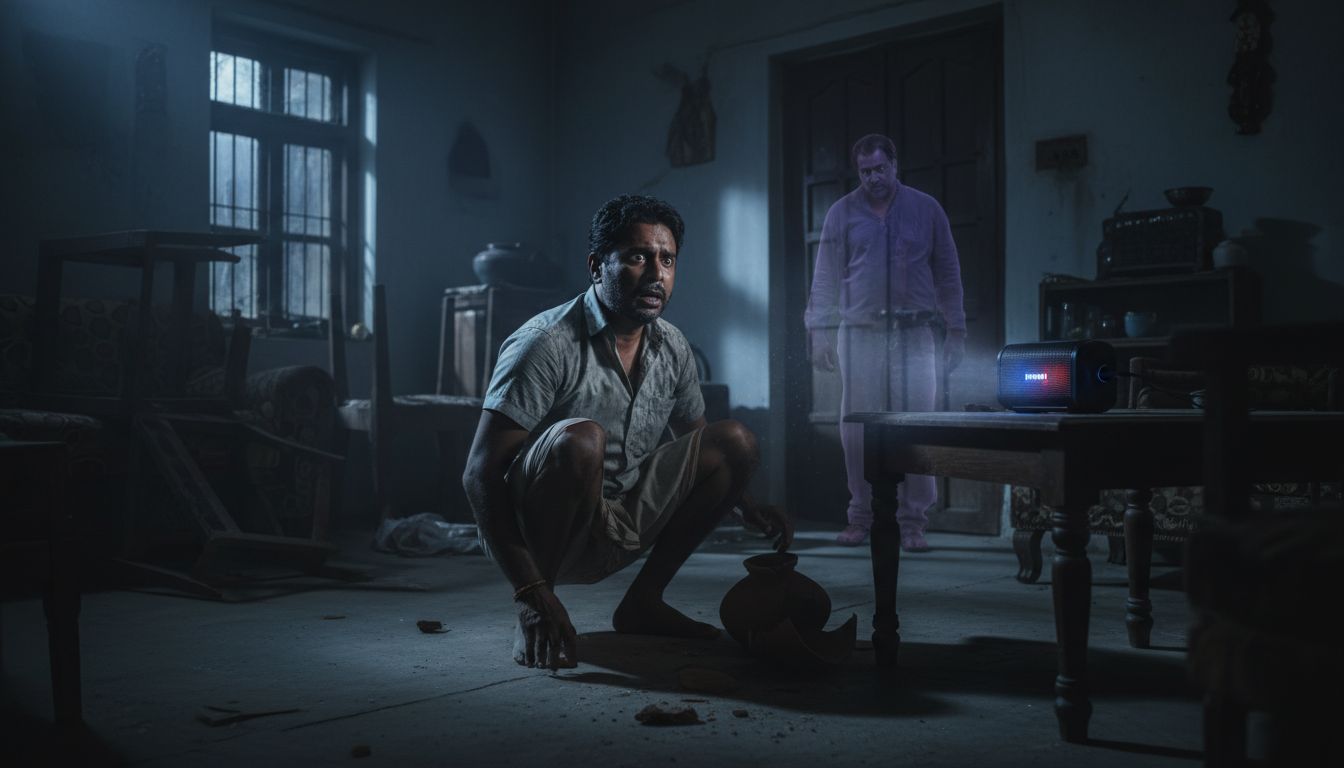
During the subsequent police interrogation, Kumar admitted to striking Patel but denied any intent to kill. He later told Coast to Coast AM host George Noory that “the ghost of Rajesh kept appearing to me, whispering that I had to tell the truth.” Kumar alleged that the apparition haunted him for three days, leading him to devise a plan to “prove the ghost was real” by playing low‑volume recordings of eerie sounds through a Bluetooth speaker placed in the wall of his next‑door neighbor’s house.
Legal Proceedings
Kumar’s claim of supernatural coercion has no bearing under Indian criminal law, which requires mens rea—a guilty mind—to establish murder. Prosecutors have filed a charge of culpable homicide not amounting to murder, citing the forensic evidence that Patel’s injuries were consistent with a single blunt‑object blow.
In court, the defense counsel filed a motion to introduce a psychological evaluation, arguing that Kumar may be suffering from a brief psychotic episode triggered by guilt and cultural beliefs about spirits. The judge denied the request for a ghost‑related expert, stating that “the court will consider only scientifically verifiable evidence.” The case is slated for trial in June, with the prosecution seeking a ten‑year imprisonment term.
Cultural Context
Belief in restless spirits, or preta, is deeply rooted in many Indian traditions, especially in rural and semi‑urban communities. Anthropologists note that such beliefs can influence personal narratives when individuals face extreme stress or guilt. Dr. Anjali Mehta, a sociologist at the University of Mysore, explained, “In moments of crisis, people often resort to culturally familiar explanations. Claiming a ghost’s influence is a way to externalize responsibility and seek social sympathy.”
The incident also highlights the global reach of Coast to Coast AM, a program known for exploring paranormal topics. While the show provides a platform for unconventional stories, critics argue that it can amplify fringe claims without adequate fact‑checking, potentially shaping public perception of criminal cases.
Reactions and Implications
Law enforcement officials in Karnataka have expressed concern that the media coverage may distract from the factual investigation. “Our priority is to present a clear, evidence‑based account of what happened,” said Inspector S. Rao of the Bengaluru Police Department.
Legal experts warn that sensationalized narratives can affect jury impartiality. “When a defendant publicly attributes their actions to a ghost, it creates a narrative that could bias jurors, even if the claim is dismissed in court,” said criminal law professor Arvind Singh of Delhi University.
Meanwhile, mental‑health professionals emphasize the need for proper psychological assessment. “Claims of hauntings are often symptomatic of underlying trauma or psychosis,” noted psychiatrist Dr. Priya Nair. “A thorough evaluation is essential, not only for the legal process but for the individual’s well‑being.”
As the case proceeds, the intersection of cultural belief, media exposure, and criminal justice will continue to be scrutinized, reminding observers that facts, not folklore, must guide the pursuit of accountability.


