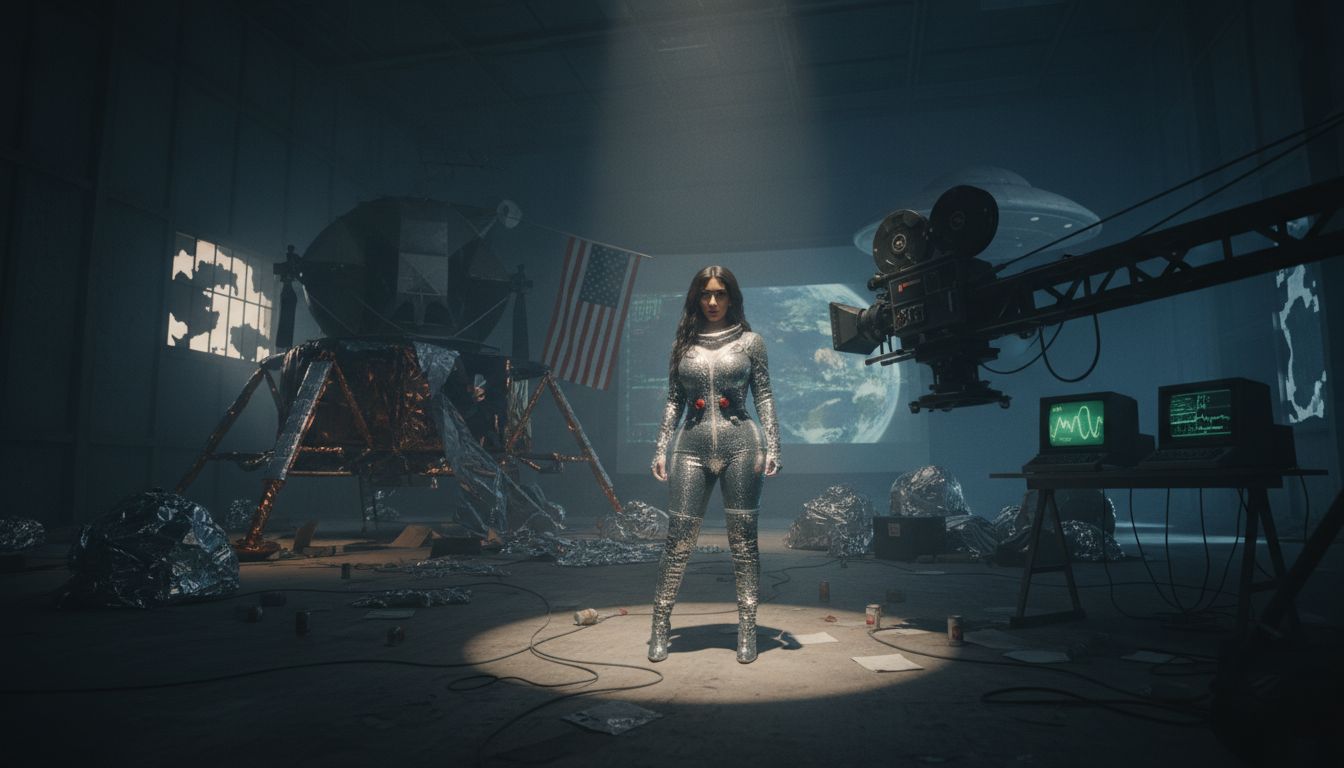
Kim Kardashian sparked a fresh wave of moon‑landing denial when she posted a short video on Instagram asserting that the 1969 Apollo 11 mission was “staged” by the United States. Within minutes the clip had amassed millions of views and was shared across TikTok, Twitter and Reddit, prompting a surge of comments that ranged from earnest skepticism to outright mockery. NBC News reported that the claim spread rapidly despite the absence of any credible evidence, highlighting how a single post from a celebrity with a massive following can reignite long‑dormant conspiracy narratives.
The notion that the lunar landing was a hoax dates back to the 1970s, when a handful of skeptics cited perceived anomalies in photographs and video footage. Over the decades, scientists, historians and former astronauts have repeatedly debunked those arguments, pointing to a wealth of physical evidence—including lunar rock samples, retro‑reflectors still used for laser ranging, and telemetry data archived by NASA. “We have overwhelming, independently verified evidence that humans walked on the Moon,” said Dr. Ellen Stofan, senior scientist at the Smithsonian’s National Air and Space Museum, adding that “the conspiracy theory persists not because of gaps in the record, but because of how misinformation travels in the digital age.”
Social‑media analysts say Kardashian’s post is a textbook example of how algorithmic amplification can give fringe ideas a mainstream platform. “When a figure with over 300 million followers makes a sensational claim, the platform’s recommendation engines prioritize that content, regardless of its veracity,” explained Dr. Maya Patel, a communications professor at Northwestern University. “The result is a cascade effect: users who might never have encountered moon‑landing denial are now exposed to it, and the echo chambers that form can give the illusion of consensus.” Within hours, fact‑checking organizations such as Snopes and PolitiFact issued statements labeling the claim false, but the corrective messages struggled to match the reach of the original video.
NASA’s public affairs office responded promptly, reiterating the agency’s extensive documentation of the Apollo program. “Every piece of hardware, every sample, every photograph from Apollo 11 has been scrutinized by independent experts worldwide,” said NASA spokesperson Lisa Gordon. “The notion that an entire nation could fabricate such a complex operation without any credible leak is implausible.” Gordon also noted that the agency monitors misinformation trends and works with social platforms to flag false claims, though the effectiveness of those measures remains a topic of debate among policy makers.
The incident underscores a broader challenge for the scientific community: navigating a media landscape where celebrity influence can outweigh empirical authority. As the conversation continues online, experts warn that the persistence of debunked theories can erode public trust in institutions and distract from pressing scientific issues. “We must invest in media literacy and transparent communication,” Dr. Patel added, “so that audiences can differentiate between entertainment and evidence‑based information, regardless of who is speaking.”