Overview
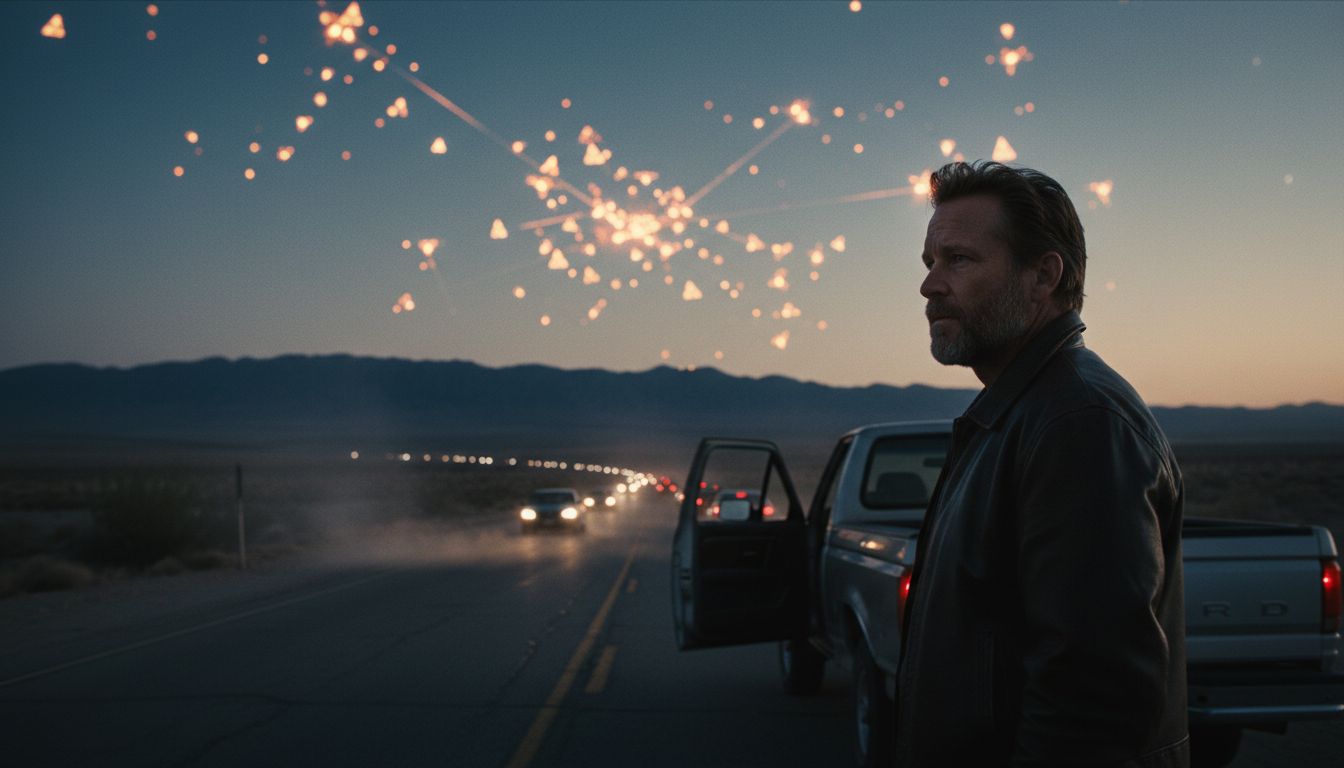
Actor Kurt Russell disclosed that he was an unwitting witness to the infamous 1997 Phoenix Lights phenomenon, a mass UFO sighting that has long been a touchstone for ufology enthusiasts. In a recent interview, Russell explained that he observed a series of bright, silent lights traversing the night sky while driving near Phoenix, but at the time he dismissed them as ordinary aircraft or a highway flare. It was only years later—after revisiting news footage and reading accounts from other witnesses—that he recognized the event as part of the same “Phoenix Lights” incident that captured worldwide attention on March 13, 1997.
Russell’s Account
Russell recounted the night’s details with a calm, matter‑of‑fact tone. “I was on a late‑night drive, and I saw a line of lights moving in perfect formation, way above the clouds,” he said. “They were silent, and they didn’t behave like any military or commercial aircraft I’d ever seen.” He added that the lights appeared to pause briefly before accelerating and disappearing from view. At the time, Russell assumed they were a test of a new aircraft or a weather balloon, noting, “I didn’t think much of it until I started hearing the Phoenix Lights story years later and realized I’d seen the same thing.”
Historical Context
The Phoenix Lights event remains one of the most documented mass sightings in U.S. history. On the night of March 13, 1997, thousands of residents reported seeing a V‑shaped formation of lights moving silently over the Phoenix metropolitan area, followed by a separate series of stationary, hovering lights near the Arizona–Nevada border. The sightings were captured on video, most famously by Arizona State University professor Dr. James Fox, and sparked extensive media coverage, congressional hearings, and a flurry of investigative reports. The U.S. military later attributed the V‑shaped formation to training flights of F‑16 fighter jets, a claim that many eyewitnesses, including Russell, find unsatisfying given the lights’ reported behavior.
Expert Commentary
Ufologists and aerospace analysts have weighed in on the discrepancy between official explanations and eyewitness testimony. Dr. John Alexander, a former U.S. Army intelligence officer and author of UFOs: Generals, Pilots, and Government Officials Go on the Record, notes, “When credible public figures like Kurt Russell describe an experience that aligns with the original Phoenix Lights timeline, it adds weight to the argument that something anomalous occurred that night.” Conversely, former Air Force pilot Lt. Col. Mark Stucky cautions, “Atmospheric phenomena, such as lenticular clouds illuminated by ground‑based lights, can create the illusion of organized aerial displays, especially to drivers on unfamiliar roads.”
Implications and Future Outlook
Russell’s revelation underscores how the Phoenix Lights continue to permeate popular culture and influence public perception of unidentified aerial phenomena (UAP). His admission that a Hollywood star observed the event without initially recognizing its significance highlights the subjective nature of eyewitness identification and the importance of retrospective analysis. As the U.S. government has recently declassified several UAP reports and established the All‑Domain Anomaly Resolution Office (AARO), accounts from high‑profile individuals may prompt renewed scrutiny of historic cases. Whether the Phoenix Lights will ever be definitively explained remains uncertain, but each new testimony—especially from figures like Kurt Russell—adds a layer of credibility that keeps the conversation alive in both scientific circles and mainstream media.


