Overview
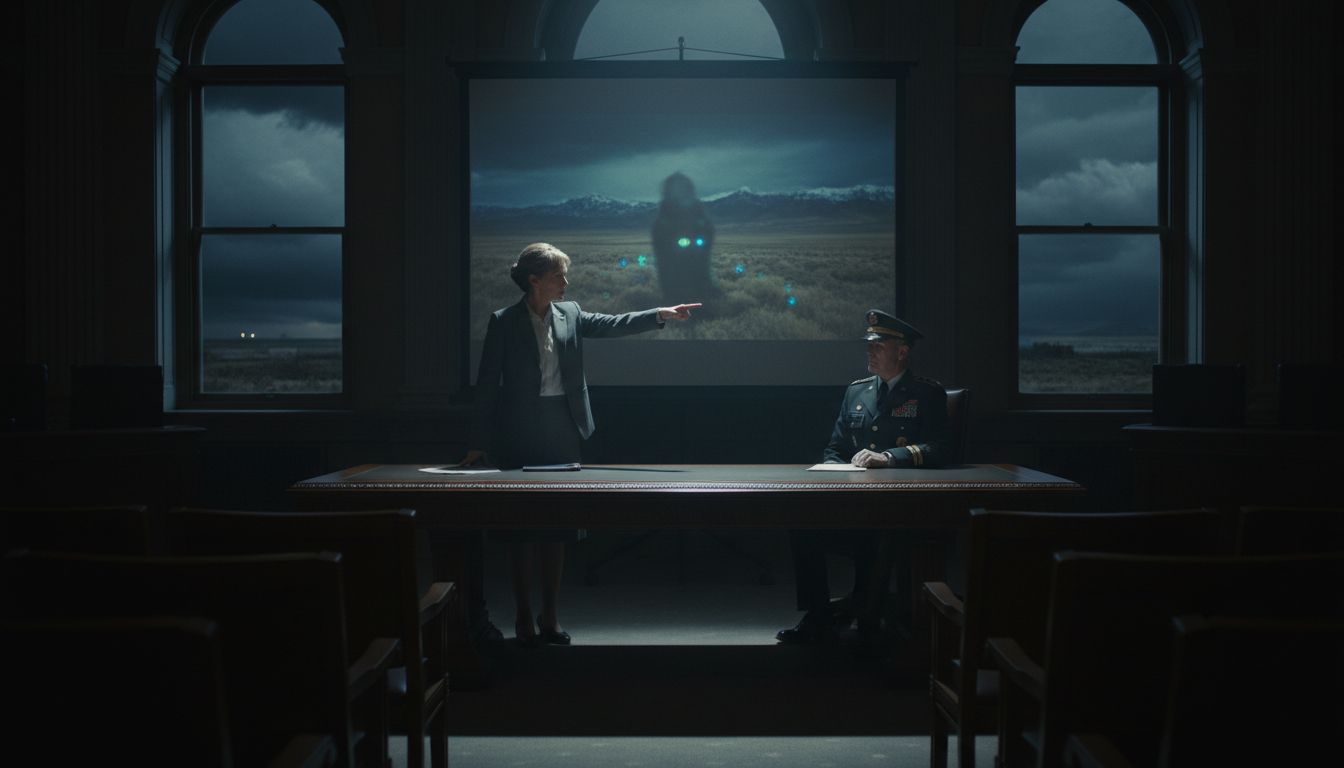
During a routine budget‑planning session of the Wyoming Senate Appropriations Committee, Senate Appropriations Chair Tim Salazar (R‑Riverton) raised a question that quickly shifted the focus from fiscal matters to national‑security concerns. Salazar asked Adjunct General Greg Porter, the head of the Wyoming National Guard, whether the state’s airspace had experienced any incidents involving unidentified anomalous phenomena (UAP)—the term now preferred by the Pentagon for what were once popularly called UFOs. Porter responded that he could not discuss the matter publicly, citing ongoing investigations and the sensitivity of information related to “other federal facilities.” The exchange underscores growing political pressure for transparency on UAP sightings at the state level.
Legislative Context
Salazar’s inquiry came amid a broader legislative push to address the recent spate of mysterious aerial sightings reported across the United States, including high‑profile incidents near military installations. The Wyoming Senate was simultaneously debating a bill that grants Governor Mark Gordon authority to activate the National Guard when drones threaten critical infrastructure. After Governor Gordon vetoed the measure in March—citing jurisdictional conflicts with federal agencies—the legislature overrode the veto, signaling strong bipartisan concern over “mystery drones.” The timing of Salazar’s question suggests lawmakers view UAP reports as part of the same security challenge that prompted the drone‑interdiction legislation.
Sheriff Reports and Statewide Concern
In January, eight Wyoming sheriffs confirmed receiving reports of strange, drone‑like objects flying over rural counties, a story documented by the Cowboy State Daily. While many of those sightings remain unexplained, the sheriffs’ accounts have amplified worries among local officials about potential threats to public safety and air‑traffic control. Salazar noted that national media coverage of UAP activity at U.S. military sites has “become more of a concern,” prompting him to seek clarification from the Guard’s top officer. The lack of a clear response from Porter has left legislators and law‑enforcement leaders without a definitive assessment of the risk level.
Guard Capabilities and Limitations
Porter also used the hearing to address the Guard’s operational readiness concerning unmanned aerial systems. He acknowledged that the Wyoming National Guard does not currently possess counter‑UAS (unmanned aircraft system) technology, and that any equipment purchased today would likely become obsolete within 12‑14 months due to rapid advances in drone capabilities. “Right now, none of the formations I have in Wyoming National Guard have a counter‑UAS capability,” Porter told the committee. This admission highlights a capability gap that state officials must consider when evaluating both drone‑related threats and the broader category of unidentified aerial phenomena.
Implications and Next Steps
The brief but pointed exchange between Salazar and Porter reflects a growing demand for state‑level oversight of UAP investigations, a domain traditionally dominated by federal agencies such as the Department of Defense and the Office of the Director of National Intelligence. While the Guard’s spokesperson declined to provide additional clarification after a follow‑up request from the Cowboy State Daily, the episode may prompt the legislature to request a formal briefing or to seek a joint task force with federal partners. As Wyoming grapples with both reported drone incursions and the specter of unidentified objects, policymakers appear poised to balance transparency with the security imperatives that govern classified aerospace data.