Overview
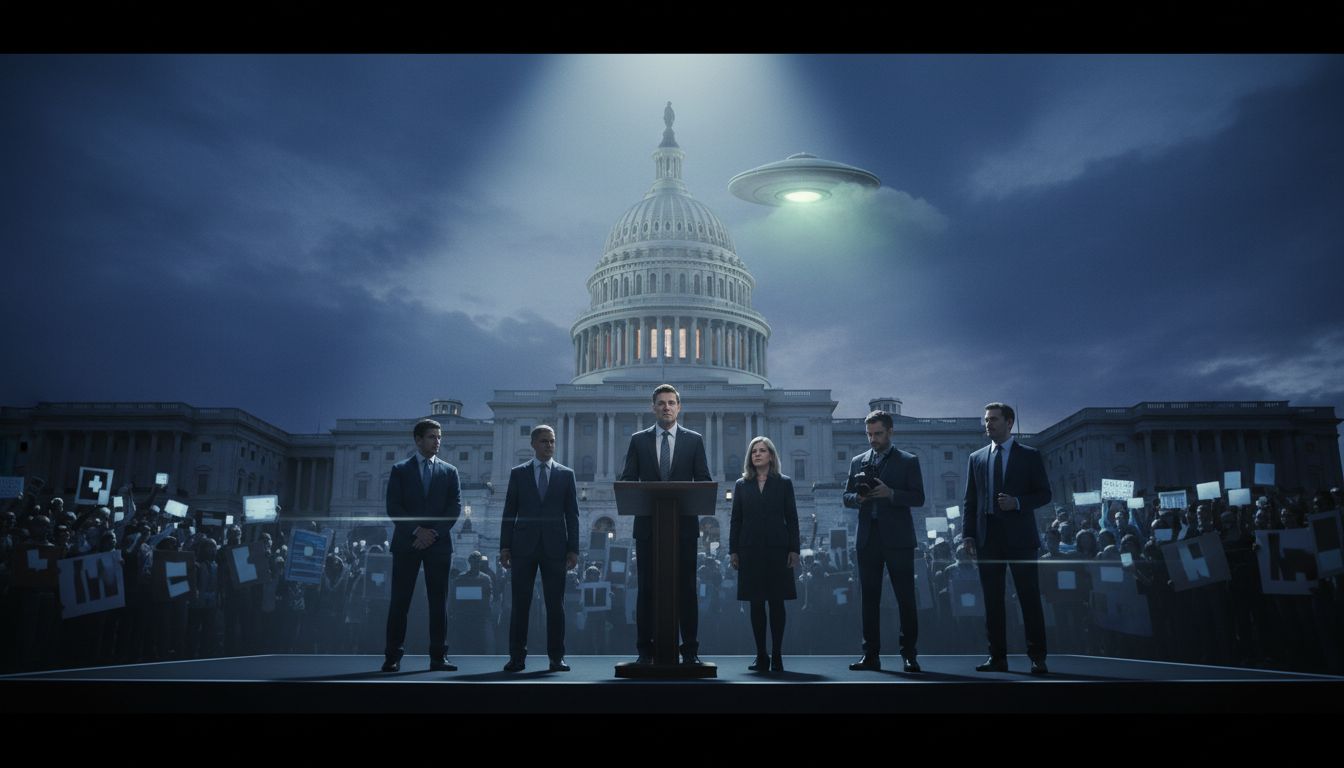
On June 9, a Capitol Hill briefing will bring together a coalition of former government officials, civilian investigators and congressional staffers to press the U.S. government for a more robust UAP Disclosure Act. The event, organized by members of the House Unidentified Aerial Phenomena (UAP) Caucus, aims to move beyond the limited reporting requirements of earlier legislation and to establish enforceable standards for the declassification and public release of UAP‑related information. Organizers say the timing reflects growing bipartisan pressure to address what they describe as a “systemic lack of transparency” surrounding unexplained aerial sightings.
Key Participants
The briefing’s most prominent witness is David Grusch, a former intelligence‑community official who publicly disclosed in 2023 that he had seen “material evidence” of non‑human technology in government custody. Grusch is expected to reiterate his earlier testimony that senior officials deliberately withheld data from Congress and the public. Joining him are veteran investigative journalist Leslie Kean, whose 2021 book “The Report on Unidentified Aerial Phenomena” laid out a framework for scientific inquiry, and documentary filmmaker James Fox, whose recent series highlighted credible eyewitness accounts from military pilots and commercial aviators. Several members of the House UAP Caucus, including Rep. Mike Gordon (R‑OH) and Rep. Katherine Clark (D‑CA), will moderate the discussion and field questions from the press.
Legislative Push
Proponents of the upcoming UAP Disclosure Act argue that existing statutes—such as the 2021 Intelligence Authorization Act’s requirement for an annual “UAP report”—lack “teeth” and fail to compel agencies to release material that could have national‑security or scientific implications. The proposed bill would create a statutory mandate for the Office of the Director of National Intelligence (ODNI) to develop a standardized classification‑declassification schedule, set penalties for non‑compliance, and fund an independent review board with access to all relevant data. “We need a law that forces the government to answer the American people, not one that lets agencies hide behind vague exemptions,” said Rep. Gordon during a pre‑briefing interview.
Challenges and Controversies
While the coalition emphasizes a factual, evidence‑based approach, critics caution that the push for disclosure could be hampered by legitimate security concerns. The Department of Defense has repeatedly asserted that many UAP sightings involve classified platforms or foreign adversary technology, and that premature release could jeopardize intelligence methods. Moreover, the extraterrestrial claims made by Grusch and echoed in some media reports remain contested; senior officials have not publicly corroborated the existence of “non‑human craft.” Leslie Kean stressed the need for “rigorous scientific analysis” before drawing conclusions, noting that “extraordinary claims require extraordinary evidence,” a sentiment echoed by former Pentagon officials who have called for a measured, peer‑reviewed investigation.
Outlook
The June 9 briefing is expected to generate a fresh wave of congressional inquiries and may influence the upcoming fiscal‑year appropriations debate, where funding for UAP research could be earmarked. If the UAP Disclosure Act gains sufficient co‑sponsorship, it could be slated for a floor vote in the next session, potentially setting a precedent for how the United States handles anomalous aerial phenomena. Observers note that the event marks a notable shift from the largely secretive posture of previous administrations toward a more open, accountable process—one that could finally bring “the truth about unidentified aerial phenomena into the public domain,” as James Fox put it in a recent interview.
The article reflects information available as of May 29, 2026, and incorporates statements from participants and public records. Further developments will be reported as they unfold.