Overview
Cybernews has published a cache of previously classified Soviet‑era documents that appear to detail official investigations into unidentified aerial phenomena (UAP) during the Cold War. The files, reportedly obtained from a former intelligence archive, suggest that Soviet scientists and military officials not only catalogued thousands of sightings but also considered the possibility of extraterrestrial origin for a subset of cases. While the authenticity of the material has not yet been independently verified, the leak has reignited scholarly and public debate over the extent of Cold‑War‑era UFO research in both the East and the West.
The Leaked Documents and Their Claims
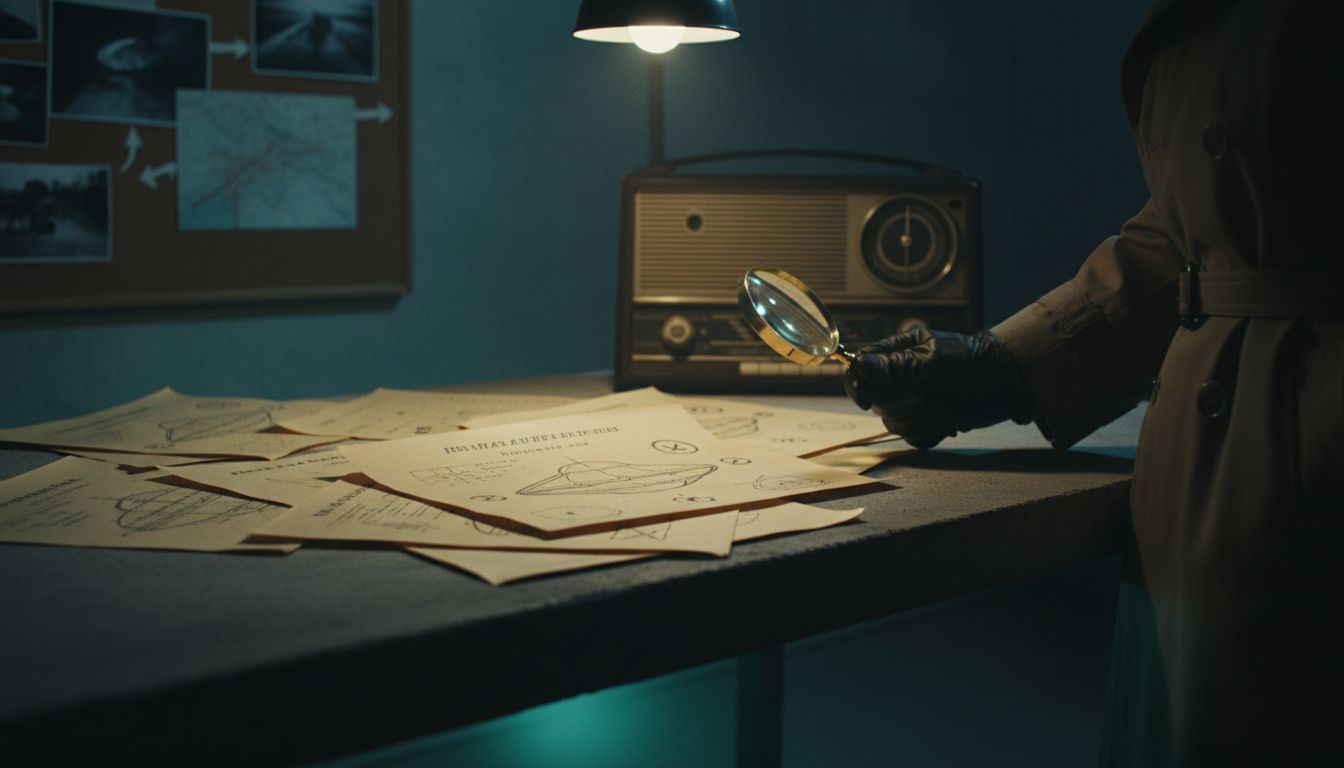
The collection comprises internal memos, technical reports, and correspondence dated from the late 1950s through the early 1980s. One memo from the Soviet Academy of Sciences, signed by senior physicist Nikolai Petrov, reads: “Several high‑altitude observations exhibit flight characteristics that cannot be reconciled with known aircraft or atmospheric phenomena; further analysis is warranted.” Another report from the Ministry of Defense’s KOSMOS program— the Soviet counterpart to the United States’ Project Blue Book—states that “the probability of an artificial, non‑human origin, while low, cannot be dismissed outright.” The documents also reference meetings between KGB officers and aerospace engineers to discuss possible reverse‑engineering of recovered materials, echoing long‑standing rumors of Soviet “alien technology” programs.
Historical Context
UFO investigations were not unique to the United States; the USSR maintained a parallel, albeit more secretive, effort. Beginning in the late 1950s, the Soviet military established the KOSMOS and SPEKTR units to monitor aerial anomalies over the vast Siberian expanse and the strategically sensitive Baltic region. Declassified Soviet literature has previously mentioned “unidentified flying objects” (UFOs) as a matter of national security, but official acknowledgment was rare. The newly released files add granularity, showing that scientists were systematically tasked with evaluating physical evidence, such as radar traces and photographic plates, and that some findings were escalated to the Politburo for consideration.
Expert Reactions
Western UFO scholars have greeted the leak with cautious interest. Dr. Linda Moulton Howe, senior researcher at the Center for UFO Studies, said, “If authentic, these documents provide a rare glimpse into how a rival superpower approached the UFO question—something that has been largely speculative until now.” Conversely, Russian historian Sergei Ivanov of the Institute of Contemporary History warned that “the provenance of these files remains unclear, and without corroborating archives, we must treat them as preliminary evidence.” Both sides agree that the material, even if partially accurate, underscores the mutual paranoia that characterized Cold‑War intelligence work, where any unexplained aerial event could be perceived as a potential threat.
Potential Implications
The publication of the Soviet UFO files could have several ramifications. For policymakers, the revelations may prompt a reevaluation of historical declassification policies, encouraging the release of other Cold‑War intelligence records that could shed light on contemporary UAP investigations. For the scientific community, the documents raise the question of whether any physical artifacts were ever recovered and, if so, why they have not entered the public domain. Finally, the leak adds a new layer to the ongoing discourse about government transparency and the public’s right to know about phenomena that, while enigmatic, have historically been tied to national security concerns. As more analysts scrutinize the papers, the line between historical curiosity and present‑day policy relevance may become increasingly blurred.


