Overview
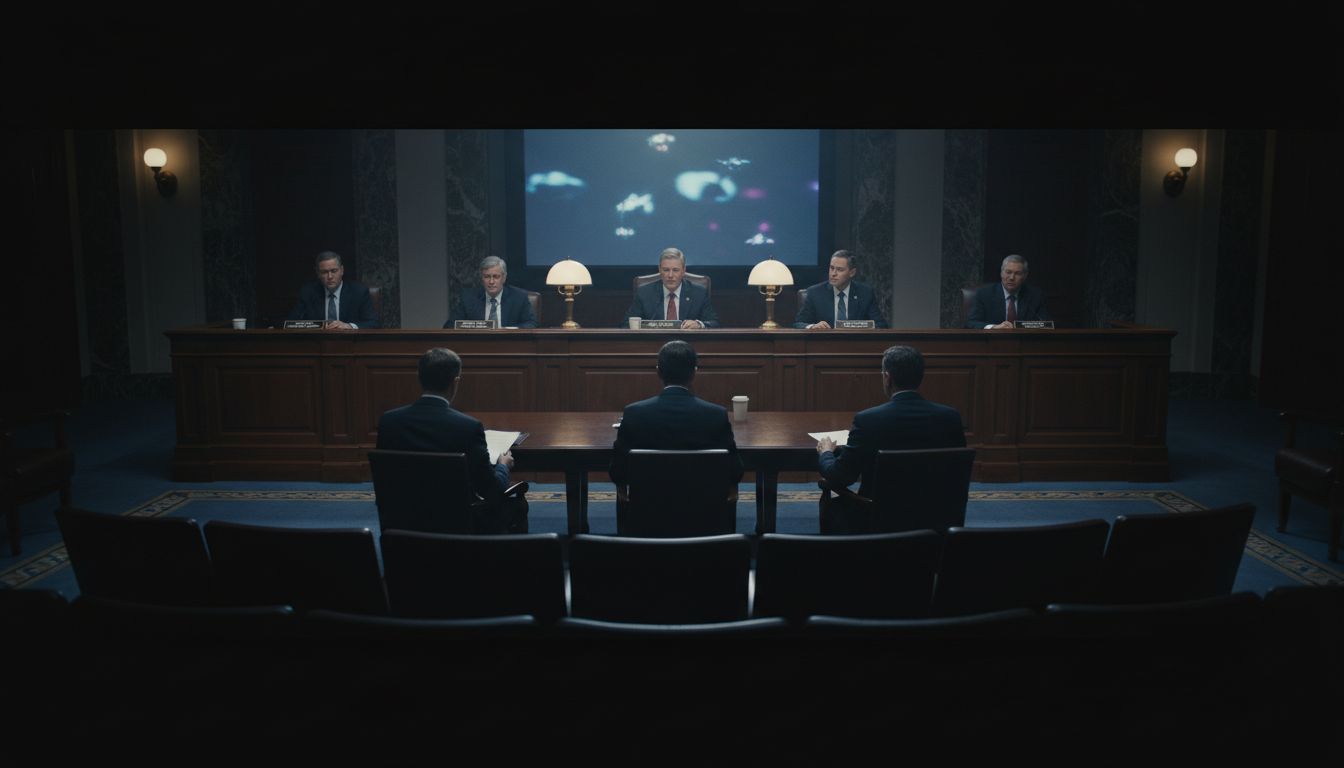
On Thursday, the House Committee on Oversight and Reform convened a live hearing to examine the growing demand for unidentified aerial phenomena (UAP) disclosure and to discuss legislation that would protect whistleblowers who come forward with related information. Lawmakers cited the Pentagon’s recent unclassified reports on UAP encounters, emphasizing the need for a transparent framework that encourages credible reporting while safeguarding national security interests. The hearing marked the first time the committee has combined the topics of public disclosure and whistleblower safeguards in a single session.
Key Legislative Proposals
Representative Mike Turner (R‑OH) introduced a bipartisan amendment that would amend the Intelligence Community Whistleblower Protection Act to explicitly cover individuals who disclose UAP‑related data. The amendment proposes a secure, classified reporting portal administered by the Office of the Director of National Intelligence (ODNI) and guarantees anonymity where possible. “We must ensure that those who see something extraordinary are not forced to choose between their careers and the truth,” Turner said during the hearing.
Across the aisle, Representative Anna Eshoo (D‑CA) highlighted a companion bill that would require the Department of Defense to produce an annual public summary of UAP investigations, building on the June 2022 and December 2023 Pentagon assessments. Eshoo argued that “regular, de‑classified updates will build public confidence while preserving the integrity of ongoing analyses.”
Both proposals received tentative support, though several members raised concerns about potential leaks of sensitive technology or intelligence methods. The committee agreed to refer the measures to the Subcommittee on National Security for further refinement.
Pentagon Reports and Their Impact
The hearing referenced three major Pentagon documents released over the past two years: the 2021 Preliminary Assessment, the 2022 Annual Report, and the 2023 Comprehensive Review. Collectively, these reports acknowledge that UAPs represent a “potential national security challenge” and that a majority of sightings remain unexplained after rigorous analysis.
Deputy Assistant Secretary of Defense James O'Connor testified that the Department has established the Airborne Object Identification and Management Synchronization Group (AOIMSG) to centralize data collection from military pilots, radar operators, and allied partners. “Our goal is not to sensationalize,” O'Connor said, “but to systematically assess whether these phenomena pose a threat, and to identify any technological breakthroughs they may represent.”
Lawmakers used the reports to underscore gaps in the current reporting chain, noting that service members often lack clear guidance on how to file a UAP report without fear of reprisal or career impact.
Reactions from Stakeholders
Advocacy groups such as the UAP Disclosure Project welcomed the hearing, calling it “a pivotal step toward ending decades of secrecy.” Their spokesperson, Luis Elizondo, emphasized that whistleblower protections are essential for “bringing forward credible witnesses who have been silenced.”
Conversely, senior officials from the Office of the Director of National Intelligence cautioned that premature public disclosure could jeopardize intelligence sources. In a prepared statement, ODNI Director Alyssa Miller affirmed the agency’s commitment to “protecting classified information while working with Congress to improve reporting mechanisms.”
The hearing also drew comments from former military pilots who described anomalous encounters during training flights. One pilot, speaking on the record as Lt. Cmdr. Sarah Patel (Ret.), recounted a 2022 incident over the Pacific where an object performed maneuvers “that defy known aerodynamics.” Patel urged the committee to “create a safe channel so that pilots can share these events without stigma.”
Outlook and Next Steps
The committee scheduled a follow‑up session for later this month to hear from the Department of Energy and NASA, agencies that have begun independent UAP research. If the proposed amendments gain bipartisan backing, they could be incorporated into the upcoming National Defense Authorization Act.
While the hearing stopped short of mandating full public disclosure, it signaled a growing congressional consensus that systematic, protected reporting is essential for national security and scientific inquiry alike. As the debate continues, the balance between transparency and security will shape how the United States addresses the mysterious aerial phenomena that have long hovered at the edge of public awareness.