Overview
Archaeologists working across the Peruvian Andes and coastal valleys have uncovered a complex, long‑distance trade network that pre‑dated the rise of the Inca empire by several centuries. Radiocarbon dates from sites such as Kuntur Wasi, Huaca del Sol, and the high‑altitude settlement of Jiskairumoko place the exchange of goods between 2000 BCE and 800 CE, a period traditionally associated with the Norte Chico, Moche, and early Wari cultures. The new findings suggest that indigenous groups were already coordinating the movement of raw materials and finished products across dramatically different ecological zones—coastal deserts, highland plateaus, and Amazonian foothills—long before the centralized Inca state formalized such routes.
Evidence of Trade
The research team, led by Dr. María Ruiz of the Universidad Nacional Mayor de San Marcos, employed a combination of petrographic analysis, portable X‑ray fluorescence (pXRF), and isotopic sourcing to trace the origins of artifacts recovered from burial contexts and habitation layers. Obsidian shards found at the highland site of Jiskairumoko match volcanic sources in the Misti volcano region of southern Peru, a distance of over 600 km from the find spot. Similarly, marine shell ornaments recovered from inland tombs have been chemically linked to Mancora and Punta Sal on the Pacific coast, confirming that coastal resources traveled deep into the Andes.
“We see a consistent pattern of non‑local materials appearing in elite and ritual contexts, which indicates organized exchange rather than sporadic scavenging,” Dr. Ruiz explained. The team also documented woven textiles featuring motifs characteristic of coastal iconography discovered at highland ceremonial centers, further supporting the notion of cultural diffusion through trade.
Materials Traded
The most frequently exchanged commodities identified include:
- Obsidian – prized for its sharpness, used in tools and ceremonial blades.
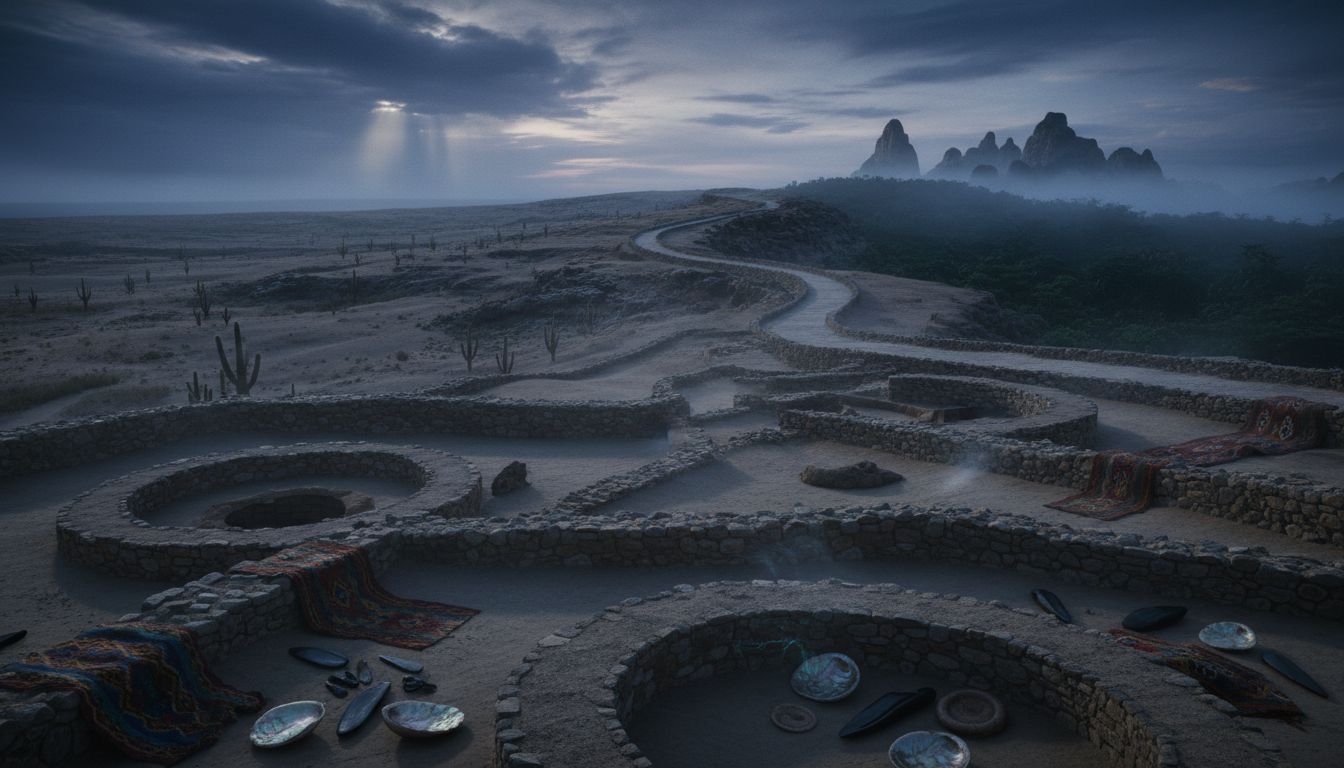
- Marine shells – such as Strombus and Conus species, fashioned into pendants and status symbols.
- Cotton and alpaca textiles – high‑quality fabrics that traveled both uphill and downhill, reflecting a two‑way exchange of raw fibers and finished cloth.
- Ceramic vessels – distinctive painted wares from the coastal Moche tradition appearing in highland caches, suggesting both functional and symbolic value.
These items were not merely traded for their material worth; they also carried social and religious significance, acting as markers of prestige and as tokens in alliance-building ceremonies.
Social Implications
The breadth of the network implies a level of social organization and political coordination previously attributed only to later Andean states. Researchers propose that a system of reciprocal gift‑exchange and seasonal caravan routes linked autonomous chiefdoms, facilitating the flow of resources essential for agricultural diversification and elite display.
“Such a network would have required knowledge of geography, seasonal weather patterns, and safe passage through diverse terrains,” noted Dr. John Smith, senior archaeologist at the University of Cambridge. “It challenges the long‑standing view that sophisticated trade only emerged under the Inca’s state‑controlled quipu system.”
The findings also shed light on the interregional interactions that likely set the stage for later empire‑building, as shared material culture and mutual dependencies could have fostered the political cohesion later exploited by the Inca.
Looking Ahead
Future excavations aim to map the full extent of these prehistoric corridors, employing remote sensing and GIS modeling to identify likely caravan pathways. By integrating archaeological data with ethnohistorical accounts, scholars hope to reconstruct the social mechanisms—such as kinship ties and ritual obligations—that sustained the network.
The emerging picture is one of dynamic, interconnected societies whose economic ingenuity and cultural exchange laid a foundational layer for the later grandeur of the Inca empire. As Dr. Ruiz concludes, “Understanding these early trade systems not only revises our chronology of Andean complexity but also highlights the agency of indigenous peoples in shaping their own expansive world long before external narratives took hold.”