Overview
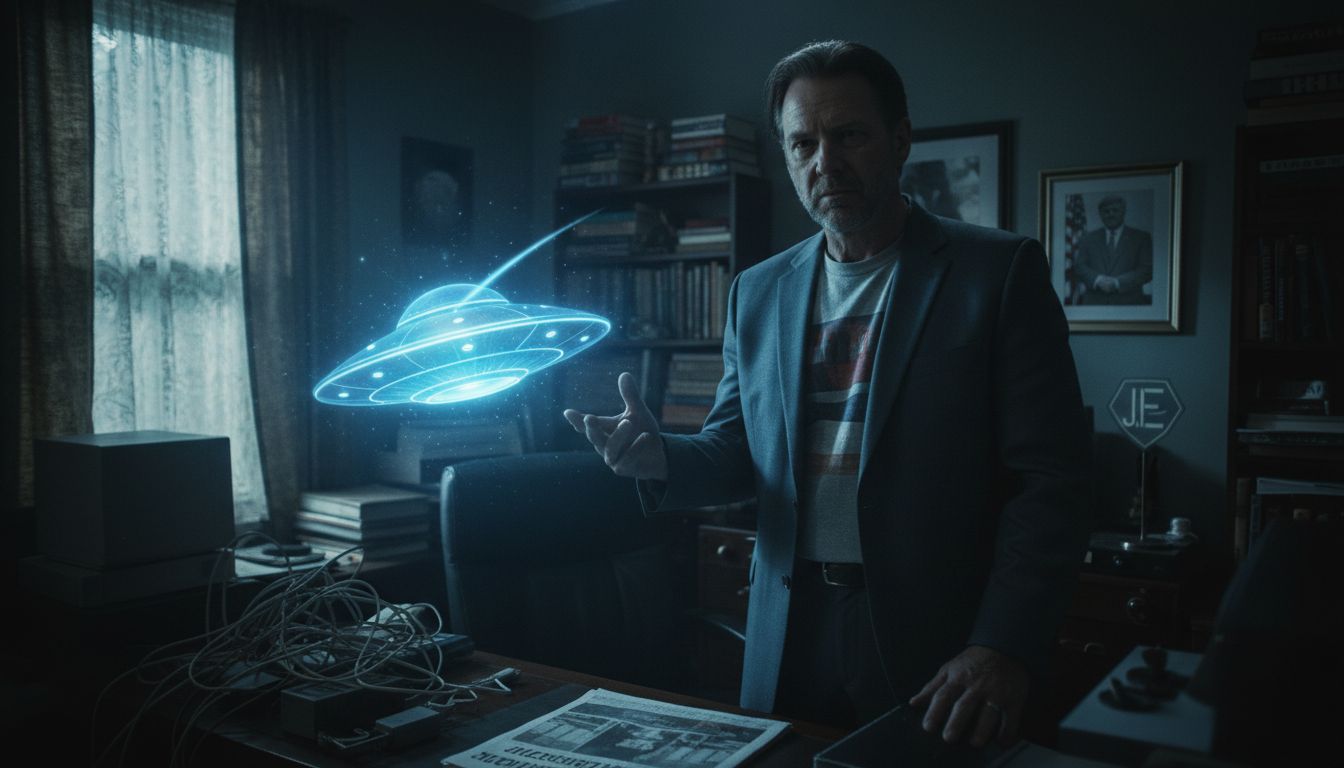
A prominent MAGA‑aligned social‑media personality, James “Jimmy” Hartley, found himself at the centre of renewed scrutiny after a photograph of him appeared in the infamous “Epstein binder” that was made public last year. In a brief statement posted to his X account on Friday, Hartley said he will not be involved in any effort to release the long‑sought UFO files compiled during the Trump administration. His comment arrives as bipartisan pressure mounts on the National Archives and the Office of the Director of National Intelligence to declassify the documents, which are believed to contain material on unidentified aerial phenomena (UAP) investigated by the Pentagon’s All‑Domain Anomaly Resolution Office (AARO).
Background on the Epstein Binder
The binder, first leaked by a whistle‑blower in early 2024, compiled photographs, flight logs and guest‑list entries from Jeffrey Epstein’s private jet and residences. Among the images was a snapshot of Hartley attending a 2018 fundraiser hosted by a known Epstein associate. The photo, which quickly circulated on social media, prompted accusations that the influencer had been complicit in or at least aware of Epstein’s network. Hartley later issued an apology, describing the appearance as “an unfortunate mistake” and asserting that he had no personal connection to Epstein’s illegal activities.
Trump’s UFO Files and the Push for Transparency
During Donald Trump’s presidency, the Department of Defense accelerated its study of UAPs, culminating in the 2020 release of a preliminary report to Congress. Subsequent requests from lawmakers and investigative journalists have sought the full archive of raw data, analysis, and inter‑agency communications generated between 2017 and 2021. In March 2026, the Senate Intelligence Committee voted to compel the National Archives to release the files by the end of the year, citing national‑security and public‑interest arguments. Advocacy groups such as the Citizens for Transparent Defense have organized petitions that have gathered over 200,000 signatures.
Hartley’s Response and Its Significance
Hartley’s X post read, in full: “I have no involvement with the Trump UFO dossier and will not be asked to help release it. My focus remains on supporting American values and defending the Constitution.” The brief remark, devoid of the usual partisan rhetoric, was interpreted by observers as an attempt to distance himself from both the Epstein controversy and the polarising UFO debate. Media analyst Laura Chen noted, “Hartley’s decision underscores a growing awareness among right‑wing influencers that association with high‑profile investigations can attract unwanted legal and reputational risk.” The influencer’s refusal also means that lawmakers cannot count on his network of followers to amplify pressure on the archives.
Implications for the Declassification Effort
While Hartley’s non‑participation is unlikely to affect the procedural timeline for the release, it does illustrate the broader challenge of navigating political loyalties in an era where fringe topics intersect with mainstream politics. Critics argue that the absence of high‑profile allies could slow public momentum, but officials at the National Archives have reiterated that the decision rests on legal review, not external lobbying. In a statement on Thursday, Acting Archivist Maria Delgado said, “All requests will be evaluated on their merit, consistent with existing classification guidelines and privacy protections.”
Looking Ahead
The coming months will test whether congressional mandates and public advocacy can overcome the inertia that has long shrouded UAP investigations. As the deadline approaches, the focus is shifting from celebrity involvement to institutional accountability. Whether the files will finally be released in full, partially redacted, or remain classified will have lasting repercussions for transparency, scientific inquiry, and public trust in government. For now, the episode serves as a reminder that even peripheral figures like Hartley can become flashpoints in the complex interplay between politics, secrecy, and the enduring mystery of unidentified aerial phenomena.


