Overview
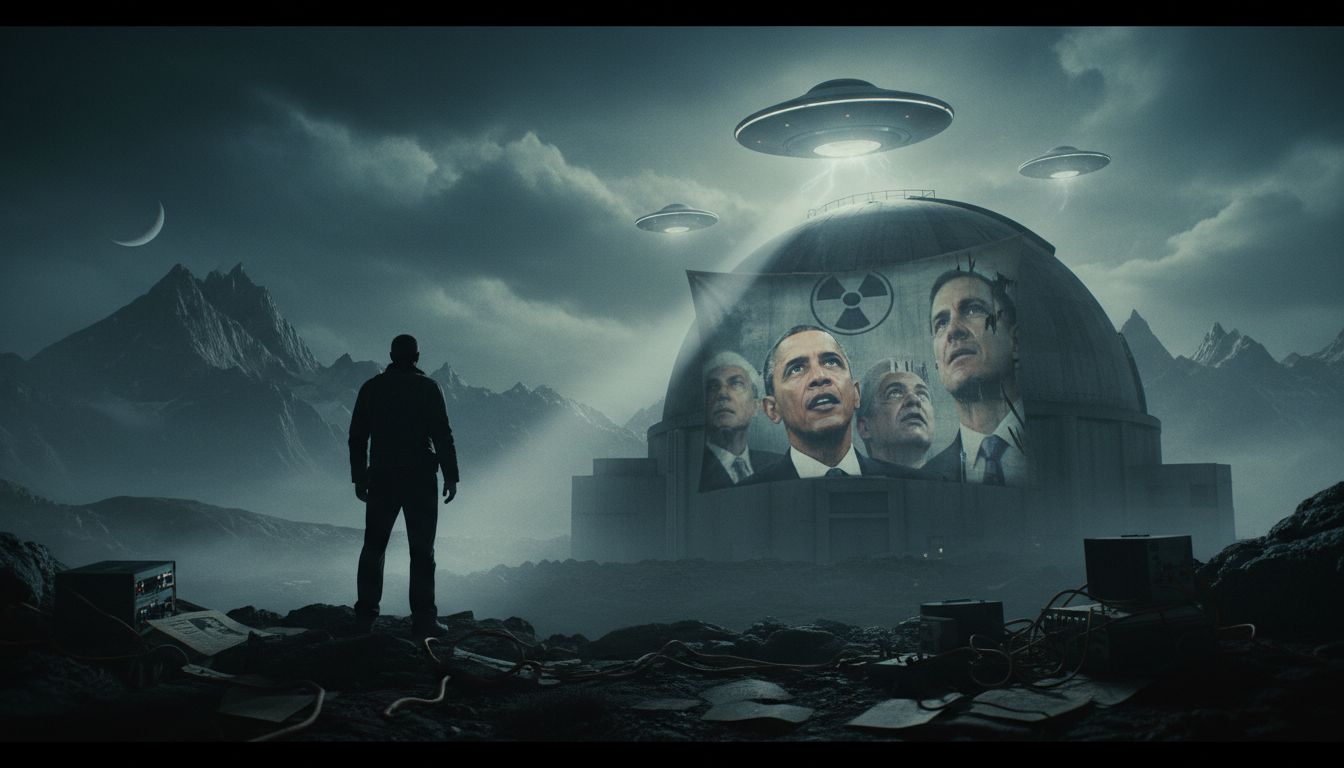
In a trailer for the documentary The Age of Disclosure, U.S. Secretary of State Marco Rubio asserted that unidentified aerial phenomena have been observed over restricted nuclear installations. The claim, first publicized on February 15, 2026, echoes a series of disclosures by former officials—including a 2024 interview in which former President Barack Obama acknowledged the reality of “UFOs” and urged greater transparency. While Rubio’s remarks were made in a promotional context, they revive longstanding questions about the extent of government knowledge of non‑human aerial objects and the protocols governing their investigation.
Background and Prior Statements
Rubio’s comment, “There have been reports of something operating in the airspace over restricted nuclear facilities that wasn’t American‑made,” mirrors language used in declassified briefings to senior policymakers over the past decade. In 2023, the Office of the Director of National Intelligence released a preliminary assessment on unidentified anomalous phenomena (UAP), noting that “some incidents involve advanced capabilities that exceed known technology.” Obama, speaking at a 2024 press event, said, “The evidence is there, and the American people deserve to know what we’re looking at.” These statements have helped shift the conversation from fringe speculation to a matter of national security.
Government Involvement and Ongoing Investigations
Since the establishment of the UAP Task Force in 2020, the Pentagon has continued to collect and analyze data from military sensors, with particular focus on sites deemed “critical national infrastructure.” Recent internal memos, obtained by journalists in late 2025, indicate that at least three separate sightings of unexplained craft were logged near the perimeter of the Pantex and Y-12 nuclear complexes. The documents describe the objects as exhibiting “hypersonic velocity, instantaneous acceleration, and no discernible propulsion signature,” characteristics that have prompted congressional hearings on the need for a dedicated oversight body. Rubio’s remarks, though delivered in a documentary trailer, align with these ongoing classified briefings, suggesting that senior officials are being kept “on a need‑to‑know basis.”
Recent Sightings and Public Awareness
Beyond the nuclear sites, civilian reports have surged since late 2025, with radar‑verified events reported over the Midwest and the Pacific Northwest. A July 2025 encounter captured by a commercial airline’s onboard system was later released by the Federal Aviation Administration after a thorough review cleared it of instrumentation error. Meanwhile, investigative journalists such as Ciaran McGrath have compiled a database of over 200 sightings from 2024‑2026, noting a pattern of activity near high‑value government installations. These developments have amplified calls from advocacy groups for a comprehensive public disclosure, arguing that secrecy hampers scientific inquiry and national preparedness.
The Disclosure Debate
Lawmakers and experts remain divided on how much information should be released. Proponents of full transparency argue that the public has a right to understand potential threats to national security and the broader implications for aerospace safety. Critics warn that premature disclosure could compromise intelligence sources, reveal vulnerabilities, or spark public panic. A bipartisan Senate subcommittee scheduled for June 2026 is set to review the existing classification framework and consider legislation that would mandate periodic reporting to Congress and, eventually, the public. As Rubio’s statement underscores, the issue is “keeping me up at night,” reflecting the tension between secrecy and accountability that continues to shape the UAP conversation.
The article draws on statements from Secretary of State Marco Rubio, former President Barack Obama, Pentagon reports, and recent investigative journalism to provide a balanced overview of the current state of UAP investigations related to U.S. nuclear facilities.


