Overview
The 4th Annual Loch Ness Quest will take place in Drumnadrochit from May 28‑31, 2026, bringing together researchers, local historians, and enthusiasts to conduct a coordinated survey of Scotland’s famed freshwater loch. For the first time, the event will feature Deep Sea Vision, a marine‑technology firm, which will deploy a fleet of advanced underwater drones to scan the lake’s depths. Organizers describe the initiative as “a milestone in applying modern oceanographic tools to a long‑standing cryptozoological inquiry,” underscoring a shift toward data‑driven investigation rather than anecdotal speculation.
Technology Deployment
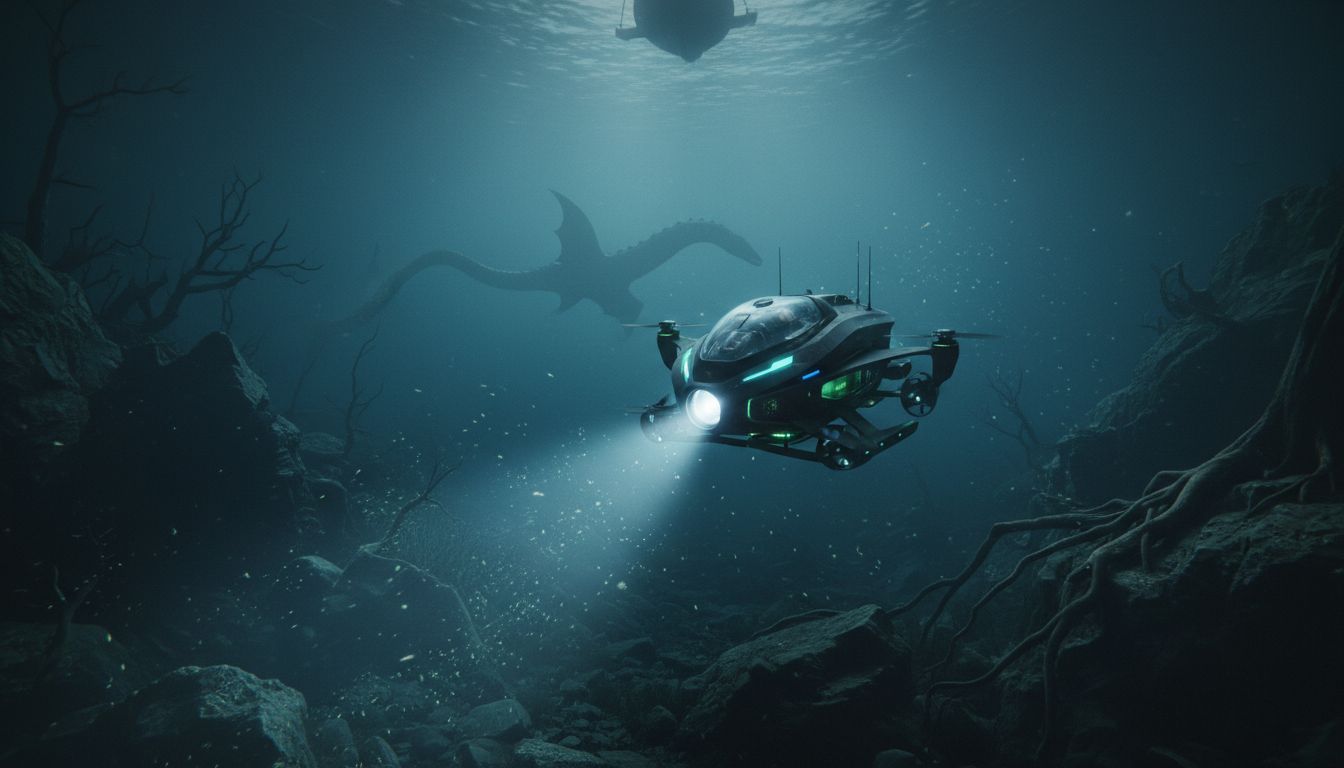
Deep Sea Vision’s drones are equipped with high‑resolution sonar imaging, low‑light cameras, and real‑time data transmission capabilities. According to Dr. Eleanor Shaw, chief engineer at the company, “the system can map the lakebed at a resolution of 2 cm and operate continuously for up to 12 hours on a single battery charge.” The drones will be launched from a small research vessel anchored near the western shore, following a pre‑programmed grid that covers the lake’s 23‑square‑kilometre surface. Researchers will monitor the feeds from a temporary command centre set up in the nearby Loch Ness Centre for History and Heritage, allowing them to flag any anomalies for immediate follow‑up.
Loch Ness Quest Context
The Loch Ness Quest, now in its fourth year, builds on earlier expeditions that relied primarily on surface sonar sweeps and eyewitness interviews. While the Scottish government has funded occasional scientific surveys, the inclusion of autonomous underwater vehicles marks the most technologically sophisticated effort to date. “Previous attempts were limited by the depth‑range of handheld equipment and the difficulty of maintaining consistent coverage,” notes Prof. Malcolm Reid, a marine biologist at the University of Aberdeen. “Deploying multi‑beam sonar and AI‑enhanced image analysis provides a systematic baseline that can be compared across years.”
Stronsay Beast Exhibit
Concurrently, the Stromness Museum on the Orkney Islands has opened the Sea Stories exhibition, featuring the 55‑foot “Stronsay Beast”—a skeletal specimen recovered in 1978 that was once touted as a living plesiosaur. Curator Anna MacLeod explains that the exhibit aims to “contextualize historical marine mysteries within contemporary scientific understanding.” The museum’s display includes CT‑scans of the bones, comparative anatomy charts, and a timeline of the creature’s classification journey, which ultimately identified it as a decomposed basking shark. The exhibit will run through April 2027, offering visitors insight into how misinterpretations can arise when limited data meets the allure of the unknown.
Outlook
Both the Loch Ness Quest and the Stronsay Beast exhibit illustrate a broader trend: applying rigorous, peer‑reviewed methods to phenomena that have long occupied the fringe of scientific inquiry. While the presence of a “monster” in Loch Ness remains unproven, the deployment of Deep Sea Vision’s drones will generate a comprehensive sonar map that can be archived for future research. “Even a negative result is valuable,” says Prof. Reid, “because it narrows the parameters for what we should be looking for.” As the data from the upcoming survey become publicly available, they are expected to inform not only cryptozoology enthusiasts but also conservationists monitoring the loch’s native ecosystems.