Overview
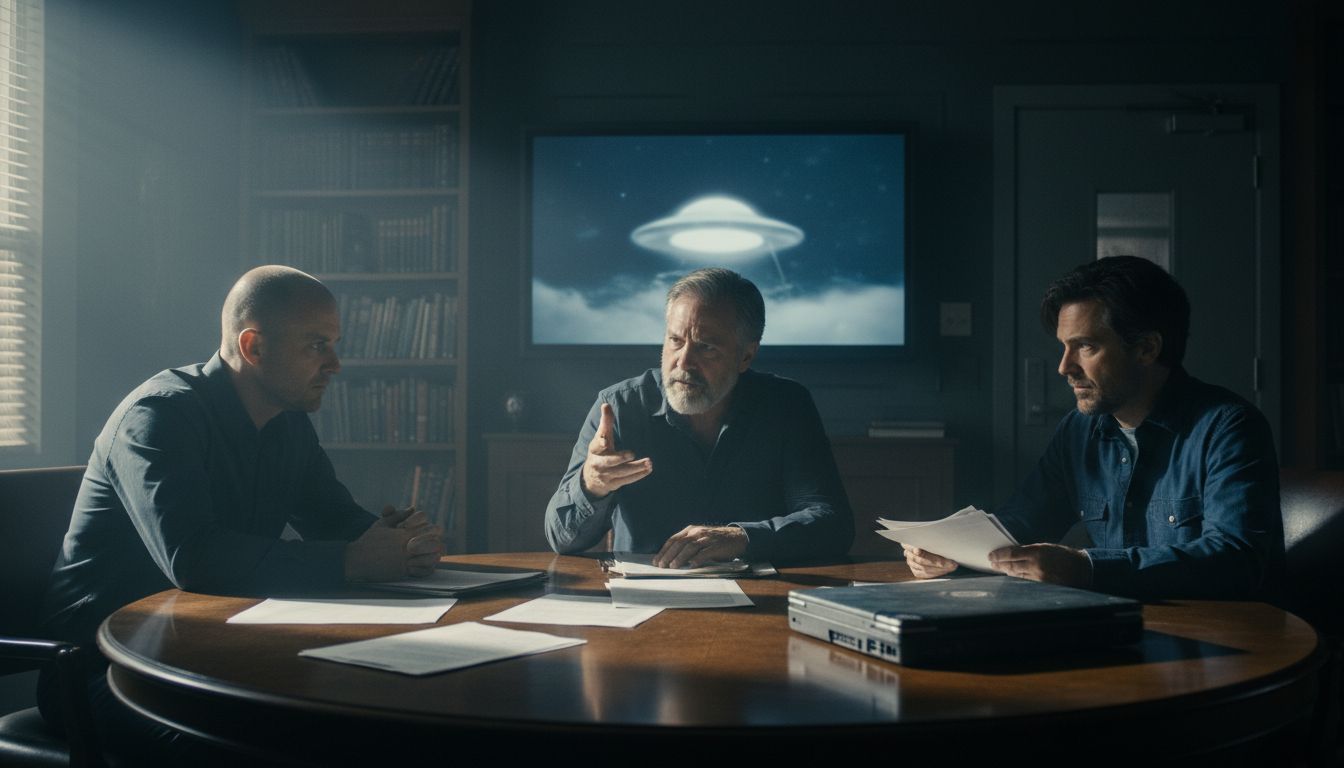
In a June 2024 episode of the WEAPONIZED podcast, investigative journalists Jeremy Corbell and George Knapp sat down with former government contractor and UAP whistleblower Matthew Brown. Brown detailed a covert operation he calls “Immaculate Constellation” (IC), described how the U.S. government allegedly suppresses UAP evidence, and recounted the personal retaliation he has faced since going public. The conversation highlighted the limited congressional backing for whistleblowers and the growing consideration of legal avenues as the primary route for disclosure.
The “Immaculate Constellation” Operation
Brown clarified that IC is not a simple program but a nested Special Access Program (SAP) overseen by the National Security Council. According to his account, the operation employs advanced artificial‑intelligence tools to sweep military and intelligence databases, identify high‑quality UAP data—such as video, imagery, and geospatial intelligence—and then “scoops” that material into restricted repositories, effectively erasing it from public or even internal platforms. Brown emphasized that the operation’s architecture places it under White‑House authority rather than the Department of Defense, allowing a tighter veil of secrecy and a centralized control point for the removal of anomalous‑phenomena records.
Allegations of Government Subversion and Harassment
The former contractor recounted a meeting at the ODNI facility known as Liberty Crossing, where he was invited to discuss a purported “UAP Whistleblower Protection Program” linked to Tulsi Gabbard’s Director’s Initiative Group (DIG). Brown characterized the session as a “trap”, noting that officials focused on how he accessed classified compartments instead of offering protection. He further alleged a coordinated smear campaign involving active‑duty service members and reserve personnel using government computers to launch online attacks. Among the tactics cited were false accusations of anti‑Semitism—despite Brown’s own Jewish heritage—and the involvement of a Northrop Grumman employee described as part of a “dirty‑tricks” unit aimed at silencing dissenters.
Personal Toll and Wider Suppression
Brown described the fallout from his disclosures as severe: loss of employment, financial instability, and ongoing legal pressure. He placed his experience within a broader pattern, naming other UAP figures—David Grusch, Lou Elizondo, Dylan Borland, Jay Stratton, Sean Kirkpatrick, and Ronald Moultrie—as similarly targeted. Brown suggested that while Tulsi Gabbard may have intended the DIG to protect whistleblowers, her staff allegedly subverted that mission, further entrenching the executive branch’s resistance to congressional oversight. The guests underscored a public misperception of the issue, noting that “pluralistic ignorance” hampers any meaningful shift in policy despite emerging scientific or legal findings.
Legal Strategy and Outlook
Concluding the interview, Brown announced a new nonprofit venture with Dylan Borland called “Lawfare.” The organization intends to pursue UAP disclosure through the courts, bypassing a legislative and executive landscape he describes as an “impasse” or, at times, complicit in secrecy. Brown expressed cautious optimism, stating he remains “hopeful but doubtful” that the government will voluntarily release the data. The podcast’s broader message points to what Brown calls a constitutional crisis, wherein the executive branch appears to be subverting congressional intent regarding UAP information, and where whistleblowers are subjected to “military‑grade psychological operations” designed to maintain silence.