Overview
Congressman Bill Huerta (D‑CA) has publicly warned that the pattern of unexplained deaths and disappearances among scientists linked to the U.S. government’s Unidentified Aerial Phenomena (UAP) program is deepening. In a statement released on April 20, 2026, Huerta singled out two additional names—most notably former intelligence officer Michael Sullivan—who, according to unnamed sources, were being prepared to disclose classified information about the White House‑sponsored UAP investigation. The congressman is calling on the Federal Bureau of Investigation to launch a “decisive foul‑play investigation” and is demanding a fully transparent inquiry into all missing and deceased researchers associated with the program.
New Allegations
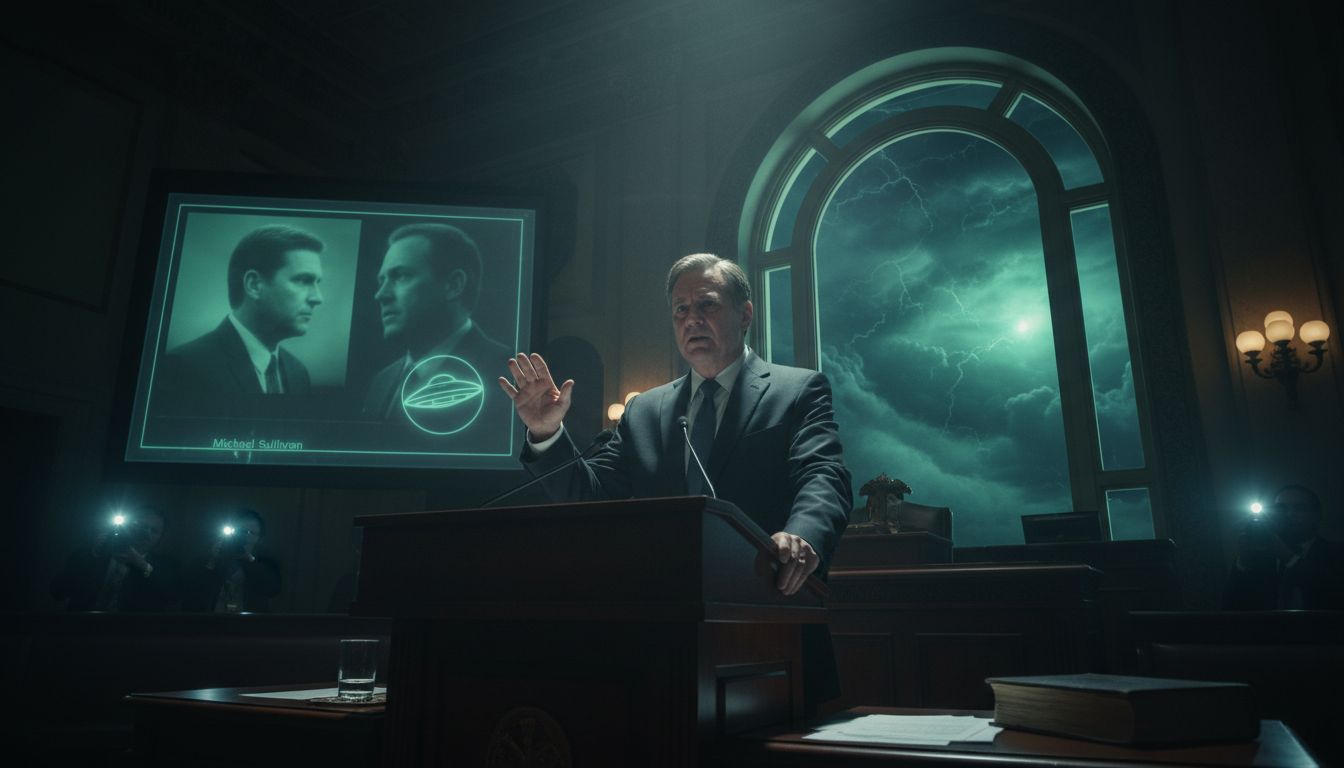
Sullivan, a veteran of the Defense Intelligence Agency who retired in 2022, reportedly worked on a classified analysis team that reviewed sensor data from alleged UAP encounters over the past decade. Sources close to the matter claim that in early 2025 Sullivan began compiling a briefing that would reveal the scope of classified findings—particularly evidence suggesting advanced propulsion technologies and possible foreign or non‑human origins. Before he could finalize the document, Sullivan was found dead in his Washington, D.C., apartment under circumstances described by his family as “sudden and unexplained.”
A second scientist, Dr. Evelyn Ramos, a physicist who had been contracted by the Office of the Director of National Intelligence to model anomalous flight dynamics, vanished from her home in Colorado Springs in March 2026. Her vehicle was discovered abandoned, and no trace of her has been found. Both cases have reignited concerns that individuals with privileged access to sensitive UAP data may be targeted for their knowledge.
Congressional Response
In a press briefing, Congressman Huerta said, “When we see a pattern of unexplained deaths among those who have been tasked with shedding light on the UAP phenomenon, we must ask whether there is a cover‑up at work. The American people deserve answers, and the FBI must act swiftly and openly.” He has formally submitted a request for a special counsel to oversee the investigation, citing the need for independence from any agency that might have been involved in the original UAP studies.
Huerta also urged the House Intelligence Committee to hold a closed‑door hearing on the matter, emphasizing that “the integrity of our national security apparatus depends on the safety of the professionals who serve it.” The congressman’s appeal follows similar calls from other lawmakers earlier this year after the deaths of Dr. James Collins, a data scientist, and Dr. Maya Patel, a biochemist, both of whom were also linked to the UAP effort.
Historical Context
The White House’s UAP task force, established by an executive order in 2023, has been under congressional scrutiny since the release of the Preliminary Assessment report in June 2024, which acknowledged 144 sightings that could not be readily explained. While the report stopped short of attributing any sightings to extraterrestrial technology, it warned of potential national‑security implications. Since then, a series of “missing scientist” cases have emerged, prompting watchdog groups to label the pattern a “silent crisis” within the intelligence community.
Critics argue that the secrecy surrounding the UAP program creates an environment where whistleblowers may feel compelled to act outside official channels, thereby increasing personal risk. Supporters of the investigation maintain that the deaths could be unrelated coincidences, noting that the individuals involved had health issues or faced unrelated personal threats. Nonetheless, the accumulation of cases has heightened calls for greater oversight.
Next Steps
The FBI has confirmed receipt of Congressman Huerta’s request but has not yet detailed its investigative timeline. An internal memo obtained by Newsweek indicates that the bureau is reviewing “all available forensic evidence” related to the Sullivan and Ramos cases and coordinating with the Department of Defense’s Office of the Under Secretary of Defense for Intelligence.
If the FBI proceeds with a “decisive foul‑play” probe, it would likely involve a multidisciplinary team of homicide detectives, forensic pathologists, and security‑clearance experts. Congressional leaders have pledged to hold a follow‑up briefing within 30 days, and several bipartisan members have co‑sponsored a resolution demanding a public report on the findings.
The unfolding situation underscores a broader tension between national‑security secrecy and democratic accountability. As the investigation moves forward, the scientific community and the public will be watching closely to see whether transparency can be restored—or whether the mystery surrounding the UAP program will deepen further.