Overview
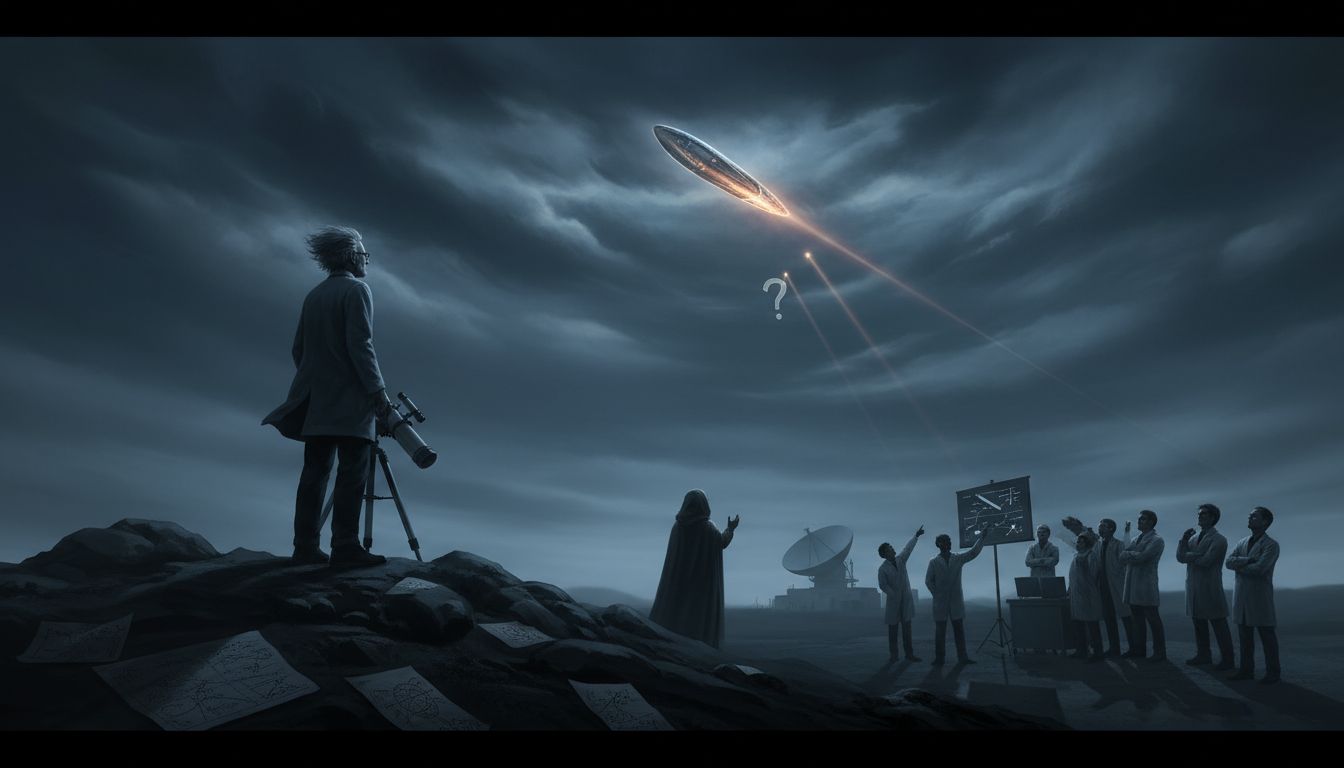
Astrophysicist Avi Loeb, a professor at Harvard and the founder of the Galileo Project, has issued a renewed call for humility within the scientific community when confronting anomalous interstellar objects. In a recent Medium essay titled Missing Elements in the Cosmic Jigsaw Puzzle, Loeb argues that researchers must entertain “unknown unknowns” rather than default to conventional explanations that may overlook novel phenomena. He criticizes what he describes as a “dogmatic comet‑expert” mindset that can stifle inquiry, especially when faced with objects that defy standard classification.
Scientific Context
The debate intensified after the detection of several interstellar interlopers—most famously ‘Oumuamua in 2017 and the cometary body C/2019 Q4 (Borisov) in 2019. While the majority of astronomers interpreted these bodies as natural fragments of distant planetary systems, Loeb has persistently highlighted their atypical features: unusual accelerations, elongated shapes, and unexpected reflectivity. In his essay, he notes, “When the data do not fit our models, the scientific response should be to expand the model, not to shrink the observation.” Loeb’s stance underscores a broader methodological principle: the need to consider extraterrestrial artifacts as a legitimate, albeit low‑probability, hypothesis rather than dismissing it outright.
The Galileo Project
To operationalize this philosophy, Loeb leads the Galileo Project, an interdisciplinary effort that aims to systematically search for, observe, and retrieve potential extraterrestrial technological artifacts in near‑Earth space. Funded by a combination of private donors and academic grants, the project has deployed a network of high‑resolution telescopes and radar arrays capable of tracking fast‑moving objects with unprecedented precision. “Our goal is not to prove the existence of alien technology,” Loeb clarified in a recent interview, “but to create an open‑ended, data‑driven framework that can objectively test that possibility.” The initiative has already secured observing time on several major observatories and is developing autonomous drones to capture high‑definition imagery of candidate objects.
New Book: Interstellar
In August 2024, Loeb released “Interstellar,” a book that synthesizes his research on anomalous interstellar visitors with a broader discussion of the philosophical implications of extraterrestrial contact. The work expands on themes from his earlier bestseller Extraterrestrial and includes newly declassified data from the European Space Agency’s Gaia mission, which has refined the trajectories of several suspect objects. Reviewers have praised the book for its “balanced treatment of speculative science,” noting that Loeb “maintains rigorous standards while daring to ask the questions most scientists shy away from.” The publication serves both as a manifesto for open inquiry and as a practical guide for future observational campaigns.
Broader Implications
Loeb’s advocacy resonates beyond astrophysics, touching on policy, funding, and public perception of science. By urging institutions to allocate resources for “unknown unknowns,” he challenges the prevailing risk‑averse culture that favors incremental advances over bold, high‑impact investigations. Critics argue that such an approach could divert limited funds from more conventional research, yet Loeb counters that the potential payoff—identifying a technosignature—would be transformative. As the Galileo Project moves toward its first operational phase, the scientific community watches closely, weighing the merits of a paradigm that embraces uncertainty while adhering to empirical rigor.


