Overview
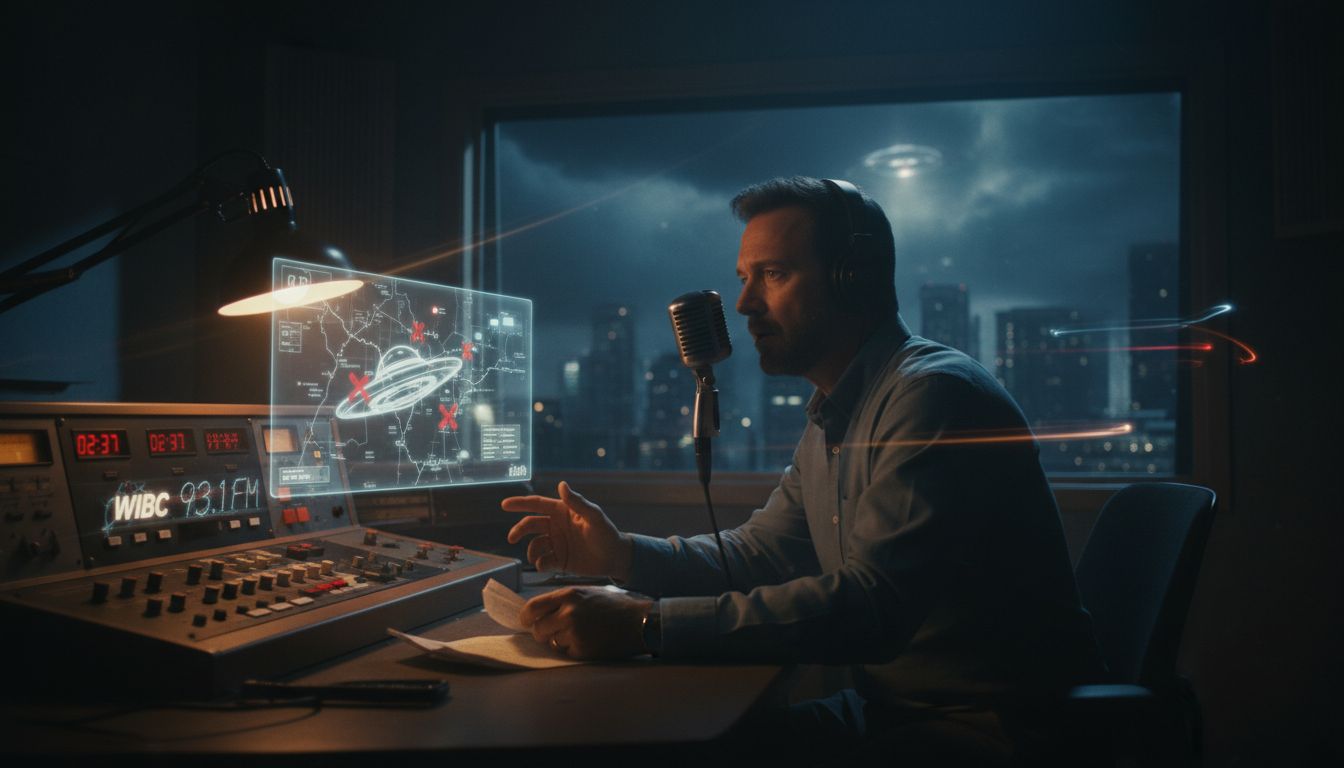
On March 30, WIBC 93.1 FM host Mike Burchett issued a stark on‑air warning after a series of unexplained disappearances involving researchers who specialize in unidentified aerial phenomena (UAP). Burchett, whose daily talk‑show reaches a sizable Indiana audience, urged listeners to remain vigilant and called for “full transparency from any agency that might have information about these missing scientists.” While the station has not released the names of the individuals, the pattern of disappearances has sparked renewed speculation about the safety of those investigating UAPs.
Background
The United States government has publicly acknowledged the existence of UAPs since the 2020 Department of Defense report, prompting a surge of civilian and academic interest in the subject. Over the past two years, several universities and independent research groups have received funding to study anomalous aerial observations, atmospheric data, and sensor recordings. According to a 2025 briefing by the Office of the Director of National Intelligence, more than a dozen qualified scientists have been actively engaged in such projects, many of whom operate under strict confidentiality agreements.
Recent Developments
According to Burchett’s broadcast, at least four UFO researchers have vanished under “mysterious circumstances” within the last six months. In each case, the individuals were reportedly working on data sets related to radar anomalies or night‑time visual sightings when they last made contact with family or colleagues. Local law enforcement agencies have listed the disappearances as “missing persons” but have not disclosed any leads. A spokesperson for the UFO Research Collaborative (UFORC), which coordinates many of the affected scientists, confirmed that “the missing researchers were not involved in any known illegal activity; they were simply pursuing legitimate scientific inquiries.”
Reactions
Burchett’s on‑air appeal has drawn mixed responses. Civil‑rights groups have praised the call for accountability, noting that “any pattern of unexplained disappearances warrants a thorough, independent investigation,” said Laura Martinez, director of the Indiana Civil Liberties Union. Conversely, a Pentagon public affairs officer declined to comment, citing “operational security” and the ongoing nature of the investigations. Some members of the scientific community caution against jumping to conclusions. Dr. Alan Cheng, a professor of atmospheric physics at Purdue University, remarked, “While the timing is concerning, we must avoid speculation until concrete evidence emerges.”
Next Steps
Burchett has pledged to keep the issue in the public eye, promising weekly updates and a dedicated segment on his show to track any new information. He also urged listeners to report any relevant tips to the UFO Research Collaborative’s anonymous hotline. Meanwhile, families of the missing scientists have filed a joint request for a federal inquiry into the circumstances surrounding the disappearances, citing the need for “transparent communication between investigative agencies and the scientific community.”
As the story unfolds, the broader debate over UAP research—balancing national‑security interests with scientific openness—remains at the forefront. Whether the missing researchers are victims of foul play, accidental mishaps, or other causes, the call for clear, accountable investigation echoes across both media outlets and the scientific field alike.


