Overview
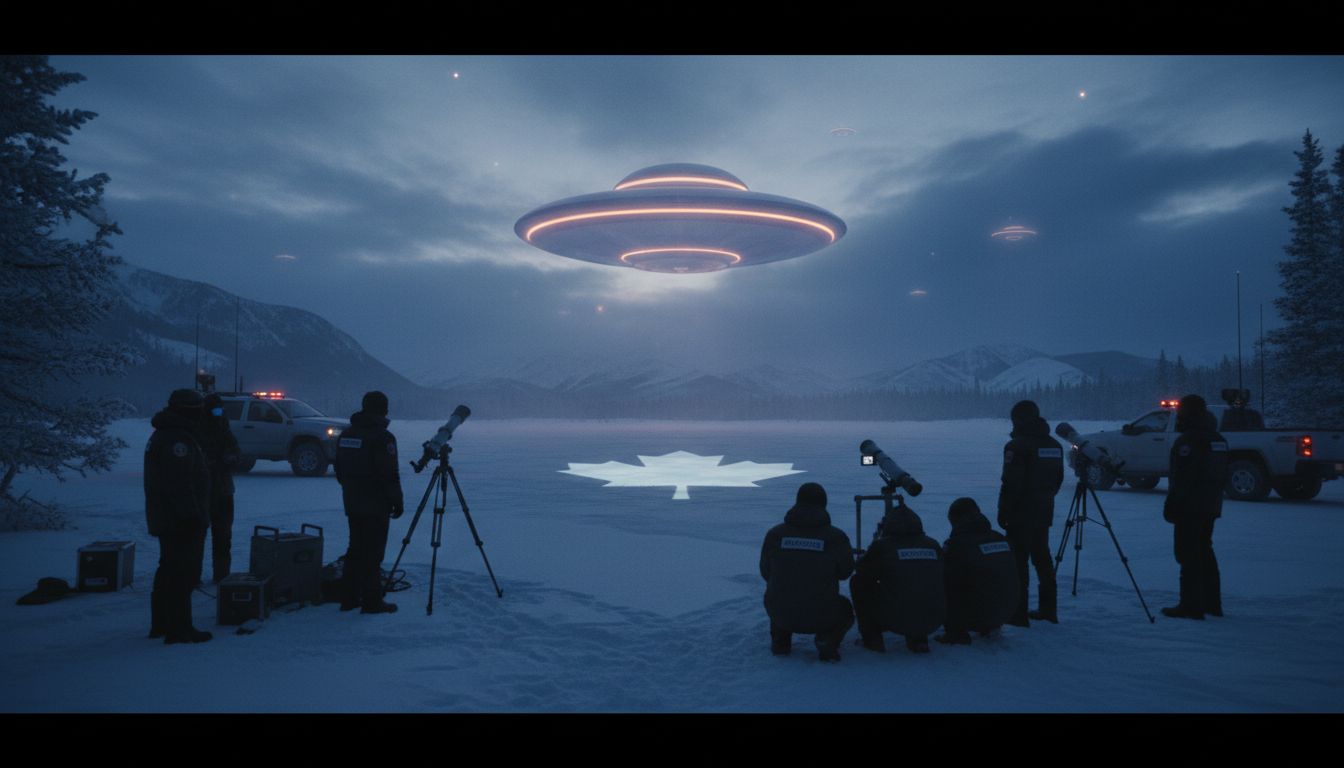
Canadian authorities logged more than 1,000 reports of unidentified aerial phenomena (UAP) across the country in 2025, according to a summary released by CTV News on March 10. The figure represents a noticeable uptick from the roughly 800 sightings recorded in 2024 and underscores a growing willingness among Canadians to report unusual objects in the sky. While the majority of cases are expected to be explained by conventional aircraft, drones, or natural phenomena, a small but significant portion remains unaccounted for, prompting continued scrutiny by federal agencies.
Statistical Highlights
The 2025 tally was compiled from submissions to the UAP Reporting Portal, a joint platform operated by the Department of National Defence (DND) and Transport Canada. Reports originated from every province, with the highest concentrations in Ontario, British Columbia, and Alberta—regions that also host the most active civilian air traffic corridors. Preliminary analysis indicates that approximately 68 % of the sightings were later identified as known objects, leaving about 32 % still classified as “unexplained” pending further investigation.
The surge aligns with a broader trend observed in North America, where the U.S. Pentagon’s Unidentified Aerial Phenomena Task Force disclosed a similar rise in civilian reports after the launch of a dedicated mobile app in late 2023. Canadian data suggest that the ease of digital reporting may be encouraging more witnesses to come forward.
Government Response
In a statement released to the media, DND spokesperson Lieutenant‑Colonel Sarah Mitchell emphasized that the increase does not imply any immediate security threat. “Our primary goal is to collect accurate data, assess any potential risks to civil aviation, and improve our understanding of anomalous aerial observations,” she said. The department’s UAP Task Force, established in 2022, continues to work with the Royal Canadian Mounted Police, provincial aviation authorities, and scientific partners to verify each report.
Transport Canada’s senior advisor for air safety, Dr. Michael Gauthier, added that “the data we gather helps refine radar algorithms and flight‑path monitoring, ultimately enhancing safety for all airspace users.” The agencies have pledged to release a comprehensive annual summary later this year, following the format of the 2023 public report that highlighted 144 unexplained cases out of 1,200 total submissions.
Public Reaction
The numbers have sparked renewed public interest, with social‑media discussions trending under hashtags such as #UAPCanada and #UFOs2025. Amateur astronomers and local “UFO watcher” groups report a higher volume of sightings, attributing the rise partly to increased night‑time photography and the proliferation of high‑resolution smartphone cameras.
A Toronto resident who submitted a report in February, preferring to remain anonymous, said, “I’ve always been skeptical, but the portal made it easy to log what I saw—a bright, erratically moving light that didn’t match any commercial flight I could find.” Such anecdotal accounts, while not scientifically conclusive, illustrate the growing public engagement with the UAP reporting process.
Looking Ahead
The 2025 data set will feed into the next phase of Canada’s UAP research, which includes plans for a dedicated research laboratory in Ottawa and potential collaboration with the International Civil Aviation Organization (ICAO) on standardized reporting protocols. Analysts caution that while the rise in reports is noteworthy, most incidents are expected to receive conventional explanations after thorough investigation.
Nevertheless, the sustained flow of information provides a valuable resource for both national security assessments and the scientific study of atmospheric and aerospace anomalies. As Canada continues to refine its reporting mechanisms, the hope among policymakers and the public alike is that greater transparency will lead to clearer answers, reducing speculation and improving overall air‑space safety.


