Overview
Over a long weekend in Chicago, journalist Jessica Grose joined roughly 700 individuals who have reported near‑death experiences (NDEs) at the International Association of Near‑Death Studies (IANDS) conference. The gathering, the largest of its kind in the United States, offered a rare forum for survivors to share how brushes with mortality have reshaped their values, relationships, and sense of purpose. In addition to personal testimonies, the program featured a conversation with neuroscientist Laurel Waterman, whose research on consciousness outside the brain sparked a provocative discussion about how these insights could influence educational theory and practice.
The Conference Experience
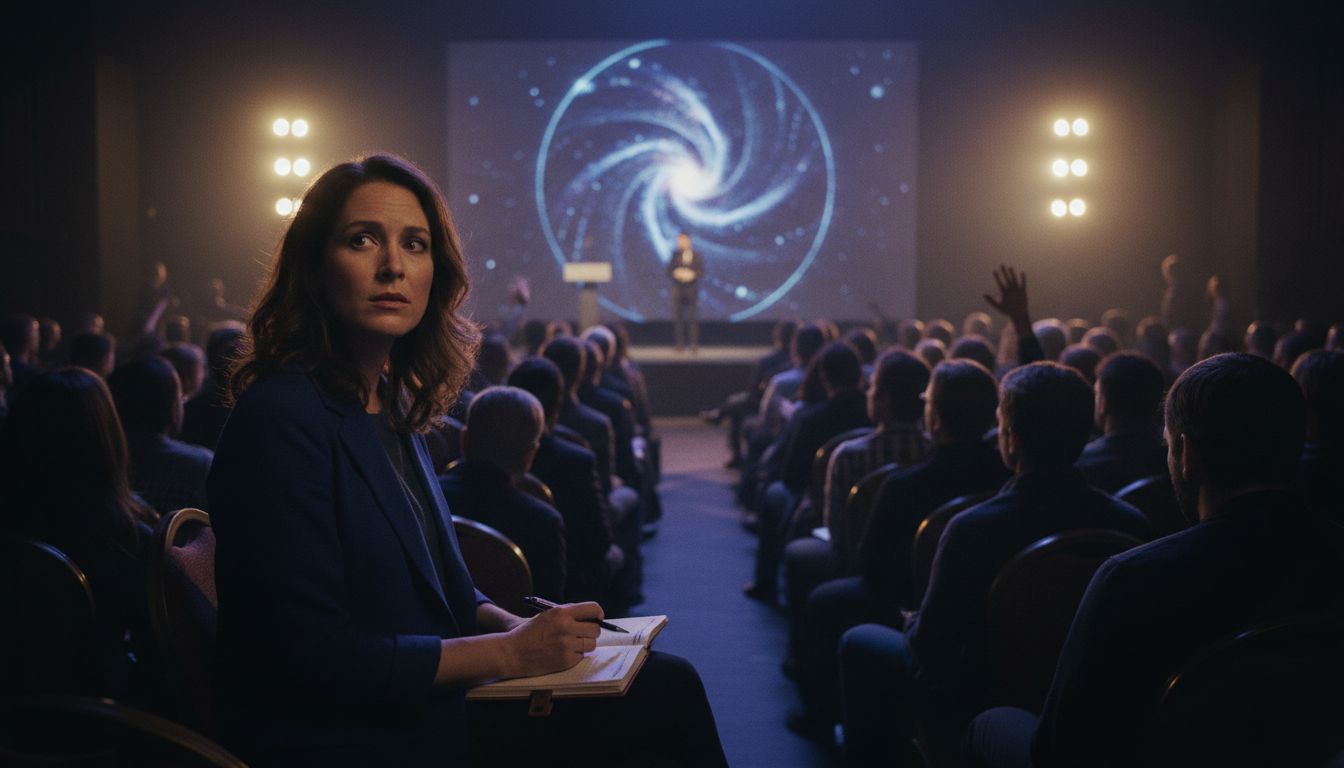
The three‑day event, held at the Chicago Convention Center, combined plenary talks, breakout sessions, and informal round‑tables. According to IANDS founder Dr. Kenneth Ring, the organization’s membership has grown to over 2,000 worldwide, reflecting a broader cultural willingness to explore experiences that sit at the fringe of mainstream science. Grose noted that the atmosphere was “more akin to a support group than a scientific symposium,” with participants describing vivid memories of tunnels, bright lights, and profound feelings of unconditional love.
One attendee, 42‑year‑old teacher Maya Patel, recounted, “After my heart stopped for three minutes, I came back with a clarity that made every petty worry feel irrelevant. I quit my corporate job the next week and started teaching mindfulness to kids.” Such narratives underscored a common theme: NDEs often act as catalysts for radical life‑course changes, prompting many to pursue careers in caregiving, the arts, or advocacy.
Voices from Survivors
The conference’s “Storytelling Circle” gave space for participants to articulate the emotional aftershocks of their experiences. A recurring motif was the intensified appreciation for ordinary moments. “I used to think success meant climbing the corporate ladder,” said retired engineer Carlos Méndez, “but after my NDE I realized success is measured by the love you give and receive.”
Researchers highlighted that while anecdotal, these testimonies align with emerging data suggesting a statistically significant increase in prosocial behavior among NDE survivors. A survey presented by Dr. Bruce Greyson, a leading figure in NDE research, indicated that 78 % of respondents reported heightened empathy, and 64 % reported a reduced fear of death within a year of their event.
Scientific Perspectives
The conference’s scientific track was anchored by Laurel Waterman, a cognitive neuroscientist whose work challenges the conventional view that consciousness is strictly a product of neural activity. In a moderated dialogue, Waterman explained, “When we observe patients who have clinically flat EEGs yet later recount coherent, detailed experiences, we must entertain the possibility that consciousness can operate independently of the brain’s electrical patterns.”
She cited recent functional MRI studies that show persistent brain‑wide connectivity patterns during cardiac arrest, arguing that these findings do not fully account for the richness of reported NDE narratives. While acknowledging the need for rigorous methodology, Waterman emphasized that the reproducibility crisis in neuroscience makes it essential to keep an open‑minded stance on phenomena that defy current models.
Implications for Education
Waterman’s most consequential contribution to the conference was her speculation on how a non‑material view of consciousness could reshape educational frameworks. “If learning is not confined to synaptic plasticity alone, curricula should incorporate practices that nurture the ‘inner self’—meditation, reflective storytelling, and ethical dialogue,” she suggested.
Educators at the conference responded with cautious optimism. Dr. Lena Ortiz, a professor of educational psychology, remarked, “Integrating contemplative practices could help students develop resilience and empathy, qualities that traditional testing rarely measures.” However, she warned that any curricular shift must be grounded in empirical evidence to avoid slipping into pseudoscience.
Looking Forward
Jessica Grose’s immersion in the IANDS conference revealed a community united by a shared conviction that near‑death experiences are more than fleeting anomalies; they are transformative events that reverberate through personal identity, scientific inquiry, and societal structures. While skeptics continue to demand tighter experimental controls, the growing body of qualitative and quantitative data suggests that NDEs merit serious interdisciplinary study.
As the conference concluded, participants left with a renewed sense of purpose and a collective hope that their stories might one day inform policy, healthcare, and education in ways that honor the full spectrum of human consciousness. The dialogue sparked in Chicago may well become a catalyst for broader conversations about what it means to be alive—and what, if anything, lies beyond.