Overview
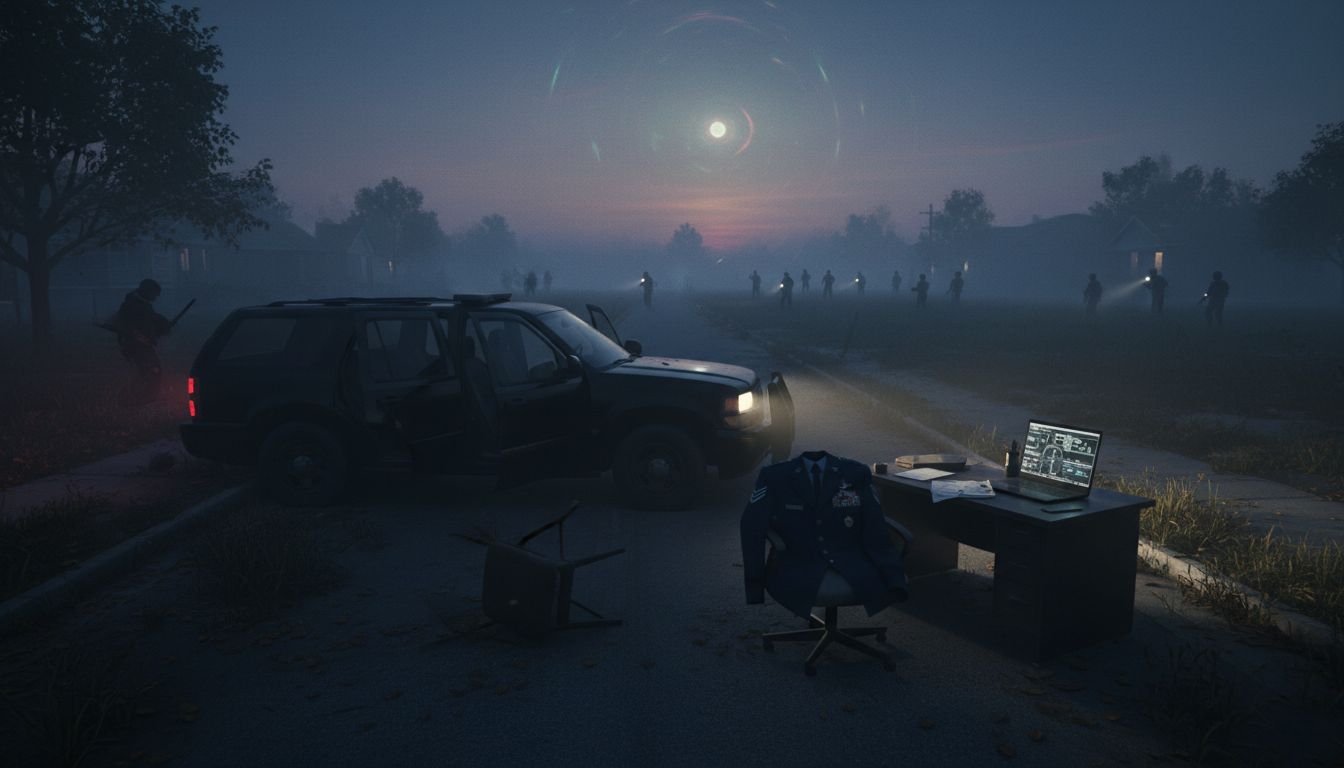
A senior U.S. Air Force officer who has overseen the Pentagon’s Unidentified Aerial Phenomena (UAP) program has vanished without a trace, prompting a coordinated, nationwide search effort. The disappearance was first reported late Tuesday night by the officer’s staff, who said he failed to appear for a scheduled briefing at the Pentagon’s Advanced Aerospace Threat Identification Center. Authorities have mobilized federal, state, and local resources, and the case is now being treated as a missing‑person investigation with “national security implications,” according to a statement from the Department of Defense.
Details of the Disappearance
The general, who has been publicly identified only as the senior official responsible for the Air Force’s UAP research, was last seen leaving his Washington, D.C., residence at approximately 8:30 p.m. on March 2. Surveillance footage from a nearby street camera captured him walking toward his parked vehicle, but no further video exists after he entered the car. His vehicle was later found abandoned in a residential garage in Arlington, Virginia, with the engine still running and the doors locked from the inside. Personal belongings, including his government‑issued identification badge and a notebook containing classified UAP case notes, were left behind.
Official Response
The Pentagon confirmed that the search has been expanded to include the Federal Bureau of Investigation, the U.S. Coast Guard, and the Department of Homeland Security’s Office of Intelligence and Analysis. “We are deploying all appropriate assets to locate the missing officer and to determine whether any hostile action was involved,” said Deputy Secretary of Defense Kathleen Hicks in a briefing to reporters. The Department of Justice has opened a formal missing‑person case, and a joint task force is reviewing the officer’s recent travel logs, communications, and the security footage from surrounding areas. No evidence of foul play has been disclosed at this stage.
Expert Commentary
Security analysts caution against jumping to conclusions about extraterrestrial involvement, noting that the UAP program has historically attracted “high‑profile speculation” that can obscure the factual investigation. “While the officer’s role naturally fuels public curiosity, the priority is a thorough, evidence‑based inquiry,” said Dr. Michael Sullivan, a former CIA analyst who now consults on aerospace security. Former members of the UAP task force echoed this sentiment, emphasizing that the disappearance could be linked to personal, health‑related, or even operational security issues rather than any otherworldly factor. Nonetheless, the incident has revived congressional interest in the transparency of UAP reporting, with the House Armed Services Committee reportedly preparing a hearing on the matter.
Next Steps
Law‑enforcement agencies are urging anyone with information—no matter how minor—to contact the FBI’s tip line or the local police department in Arlington. The Air Force has placed the general’s position on interim leave and appointed a deputy to oversee the UAP program pending the outcome of the investigation. Meanwhile, the broader defense community is watching closely, as the disappearance underscores the heightened security concerns surrounding classified research into aerial phenomena. A full report is expected within the next 30 days, after which the Pentagon will determine whether additional protective measures are needed for personnel involved in sensitive UAP work.


