Overview
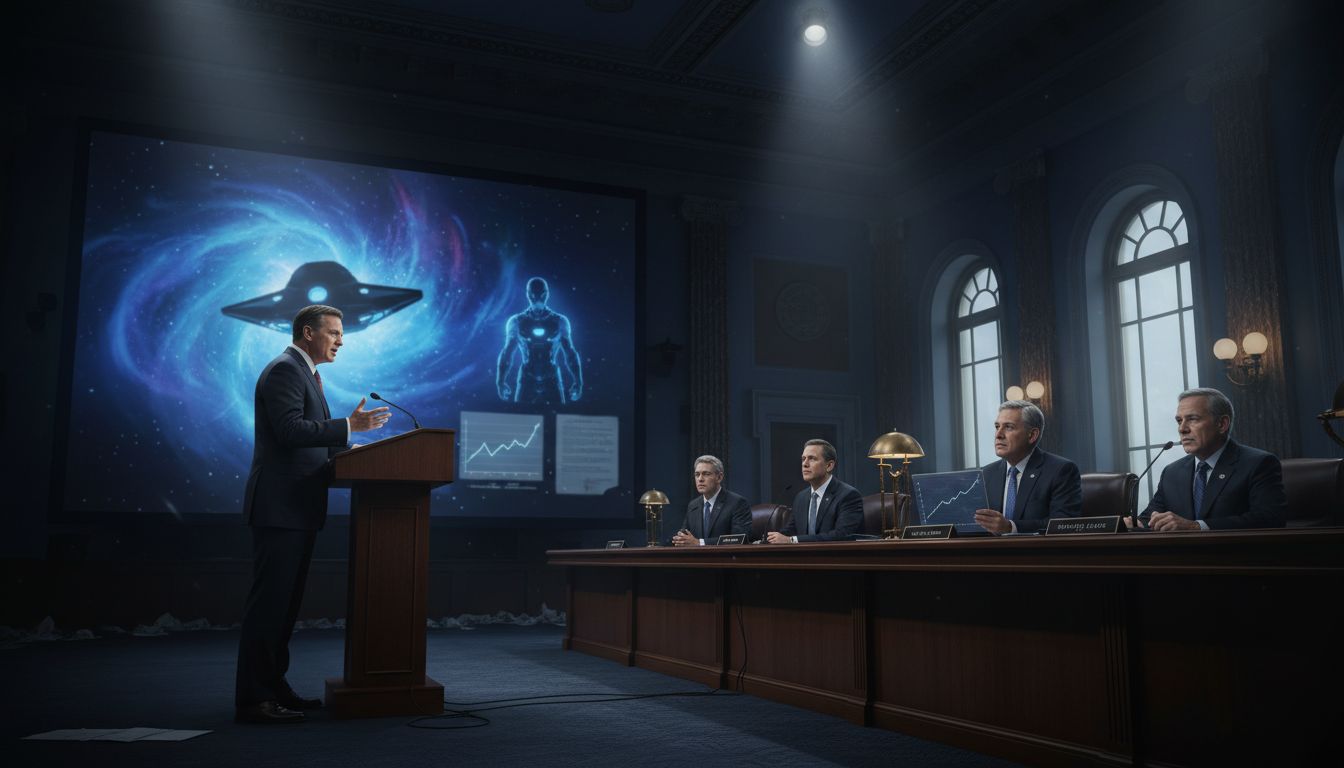
On March 20, 2026, Rep. Tim Burchett, a member of the House Oversight Committee, publicly asserted that NASA is withholding classified information on unidentified aerial phenomena (UAP) and “alien craft.” Speaking on a televised news program, Burchett claimed that internal NASA briefings have confirmed the agency is studying anomalous objects but that the findings are being kept from the public. The allegation has reignited a long‑standing debate over governmental transparency on UAPs and prompted NASA to issue a formal response emphasizing its scientific mandate and ongoing data‑collection efforts.
Burchett’s Allegations
Burchett told the audience that “the lying that goes on in these departments is intentional, and it’s about protecting national security while keeping the American people in the dark.” He cited a series of closed‑door meetings in which senior NASA officials allegedly discussed “unusual craft” that exhibited flight characteristics beyond known technology. According to the congressman, the agency possesses “classified files” that could confirm the existence of extraterrestrial technology, but these are being deliberately concealed. Burchett’s statements come as part of a broader congressional inquiry into UAPs, which has examined Pentagon reports, intelligence briefings, and the 2023 establishment of the UAP Independent Study Team (UAP‑IST) at NASA.
NASA’s Response
In a press release issued later that day, NASA Administrator Bill Nelson rejected the notion that the agency is “lying” about UAPs. “NASA’s mission is to collect, analyze, and share scientific data in a transparent manner,” Nelson said. “We have no classified program that hides evidence of alien craft. Our work on UAPs is conducted openly through the UAP‑IST, which publishes its findings in peer‑reviewed journals and makes data sets available to the scientific community.” NASA spokesperson Dr. Maya Patel added that “any data deemed national‑security sensitive is handled in coordination with the Department of Defense, not hidden from oversight.” The agency reiterated its commitment to cooperate with congressional investigations while safeguarding legitimately classified material.
Broader Context
The controversy unfolds against a backdrop of increasing governmental attention to UAPs. In 2023, the Office of the Director of National Intelligence released an unclassified assessment acknowledging that many sightings remain unexplained and recommending further scientific study. The Pentagon’s UAP Task Force, now rebranded as the All‑Domain Anomaly Resolution Office (AARO), has declassified dozens of videos showing objects with “unusual flight characteristics.” Simultaneously, NASA’s UAP‑IST, launched in 2023, has produced several interim reports that highlight gaps in data collection, especially from civilian sensors and commercial satellites. While these efforts have been praised for adding rigor to a previously speculative field, critics argue that the pace of disclosure is too slow and that inter‑agency coordination remains opaque.
Next Steps and Implications
Congressional leaders, including members of the House Oversight Committee, have scheduled a series of hearings for the coming weeks to examine the extent of classified UAP information across federal agencies. Burchett has requested that NASA provide a detailed inventory of all UAP‑related data it holds, classified or otherwise, and that the agency submit a written response to the committee by the end of the month. NASA has indicated it will comply with lawful requests while preserving the integrity of any national‑security material. Analysts note that the outcome of these hearings could shape future policy on data sharing, potentially leading to a formal framework for civilian‑government collaboration on UAP research. Until then, the tension between transparency and security remains a defining feature of the UAP discourse, with both lawmakers and scientists watching closely for any indication that the “truth” is being concealed.


