Overview
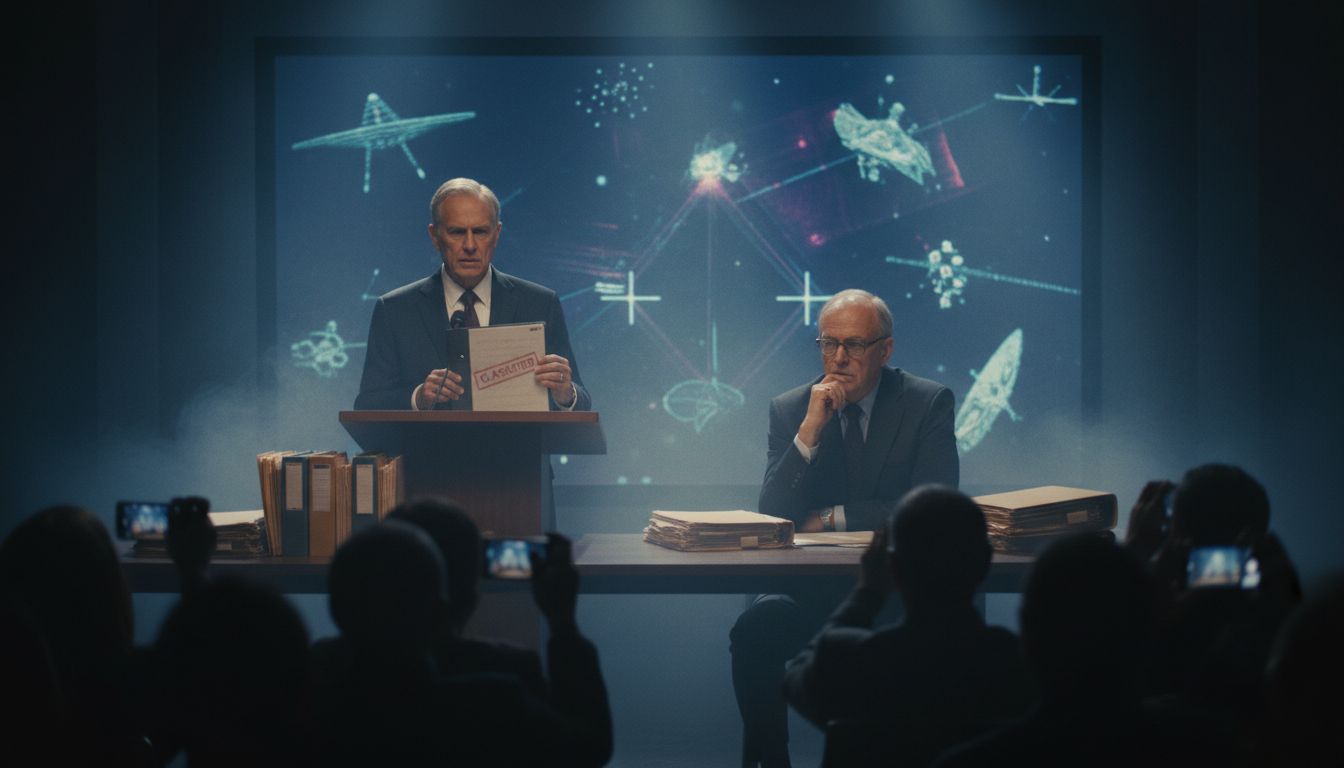
NASA Administrator Bill Nelson announced on Thursday that a cache of previously classified Unidentified Aerial Phenomena (UAP) documents from the Trump administration has been released to the public. The material, uncovered during a routine audit of federal archives, includes internal memos, sensor data, and a handful of video clips that were never cleared for public view. While the Pentagon’s recent declassification effort has already made thousands of pages available, the newly surfaced records contain “bizarre findings” that had been buried for years, prompting renewed scrutiny from both the scientific community and civilian UFO investigators.
Key Findings
The declassified bundle consists of 212 pages of correspondence between the Department of Defense, the Office of the Director of National Intelligence, and several NASA research centers. Among the most striking items are:
- Anomalous sensor readings from a 2023 Navy flight test that recorded objects moving at speeds exceeding 25 km/s without visible propulsion.
- A 2024 satellite‑based infrared sweep that captured a series of transient luminous events over the Pacific, later labeled “high‑altitude, non‑attributable flashes.”
- A memorandum noting a “persistent pattern of radar‑lock loss” during a series of training exercises off the Gulf Coast, suggesting possible electromagnetic interference.
None of the documents provide definitive evidence of extraterrestrial technology, but they do highlight gaps in current detection capabilities and the need for systematic study.
Expert Commentary
Astrophysicist Avi Loeb, director of the Institute for Advanced Study at Harvard, praised the transparency but cautioned against premature conclusions. “The data points to phenomena that are not easily explained by known atmospheric or aerospace physics,” Loeb said in an interview, “but we must apply rigorous statistical analysis before invoking exotic hypotheses.” He added that NASA’s involvement could enable interdisciplinary research, leveraging the agency’s expertise in instrumentation and data modeling.
Community Reactions
The release sparked a mixed response among civilian researchers. John “Jack” Whitaker, a longtime UAP investigator based in Little Rock, Arkansas, called the documents “a golden opportunity for independent verification.” Whitaker plans to collaborate with local universities to re‑examine the sensor logs using open‑source software. In contrast, skeptic Dr. Melissa Carter, a professor of aerospace engineering at the University of Texas, warned that “isolated anomalies often turn out to be instrumental artifacts or data‑processing errors.” Carter emphasized the importance of peer‑reviewed studies before the findings influence policy.
Implications and Next Steps
The NASA chief’s decision to make these records public aligns with the administration’s broader push for transparency on UAP matters, a stance that began under the Trump‑era “UFO task force.” Officials indicated that the agency will convene a multidisciplinary panel later this summer to assess the technical merit of the newly released data and recommend a roadmap for future observations. If the panel validates the anomalies, it could prompt the development of dedicated sensor platforms and potentially reshape aerospace safety protocols. Until then, the scientific community remains poised to sift through the evidence with methodical rigor, ensuring that curiosity does not outpace credibility.


