Overview
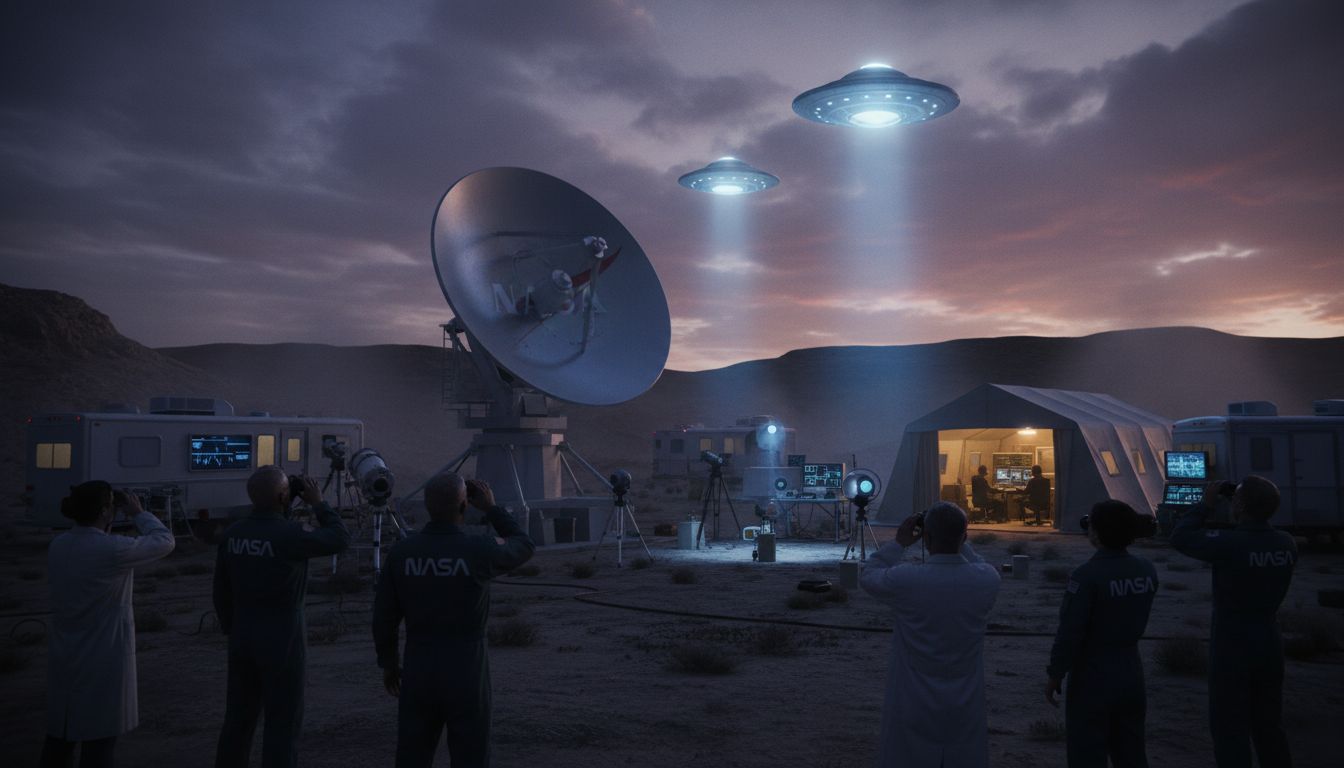
NASA announced this week the launch of a formal research program dedicated to the systematic study of unidentified aerial phenomena (UAP), commonly known as UFOs. The agency will convene a multidisciplinary team of scientists, engineers, and data analysts to gather, catalog, and evaluate observations reported by pilots, satellite operators, and other credible sources. By applying NASA’s rigorous scientific methodology, the program seeks to determine whether any of these sightings represent unknown natural phenomena, advanced technology, or potential hazards to air and space operations.
Program Objectives and Structure
The newly created UAP research office will operate under NASA’s Science Mission Directorate and report directly to the agency’s chief scientist. Its primary goals are to:
- Collect high‑quality, verifiable data from both civilian and military channels.
- Analyze the data using established astrophysical, atmospheric, and engineering models.
- Develop standardized reporting protocols that can be adopted by other government agencies and the broader scientific community.
NASA Administrator Bill Nelson emphasized that “the pursuit of knowledge is at the heart of our mission, and that includes understanding any anomalous observations that could impact flight safety or scientific discovery.” The program will also coordinate with the Department of Defense’s Unidentified Aerial Phenomena Task Force to avoid duplication of effort while maintaining independence in analysis.
Scientific Approach
Unlike earlier ad‑hoc investigations, NASA’s effort will employ peer‑reviewed methods and open‑source data wherever possible. Researchers will leverage satellite imaging, radar records, and optical sensor data, cross‑referencing them with atmospheric models to rule out conventional explanations such as meteors, drones, or weather balloons. Dr. Francesco S. R., a senior astrophysicist on the team, explained that “by applying statistical rigor and transparent criteria, we can differentiate between genuine anomalies and artifacts of instrumentation.” The agency also plans to publish its findings in scientific journals, ensuring that conclusions are subject to community scrutiny.
Context and Historical Background
The renewed focus on UAPs follows a series of high‑profile disclosures over the past few years, including the Pentagon’s 2020 release of three de‑classified videos and the 2021 Office of the Director of National Intelligence report that identified 144 sightings since 2004, many of which remained unexplained. While previous investigations were primarily security‑oriented, NASA’s mandate expands the inquiry to include potential scientific value. This shift reflects growing public interest and the recognition that unexplained aerial events could have implications for air‑traffic safety, space situational awareness, and even fundamental physics.
Expected Outcomes and Next Steps
The program is slated to produce an initial interim report within the next 12 months, outlining the state of existing data, gaps in current knowledge, and recommendations for future research. In the longer term, NASA hopes to establish a permanent UAP data repository that can be accessed by researchers worldwide. By fostering collaboration across agencies and the scientific community, the agency aims to either demystify the phenomena or, if warranted, identify genuine unknowns that merit further investigation. As NASA’s chief scientist Sirika K. noted, “Whether the answer lies in atmospheric physics, emerging technology, or something entirely new, the only way forward is systematic, evidence‑based inquiry.”


