Overview
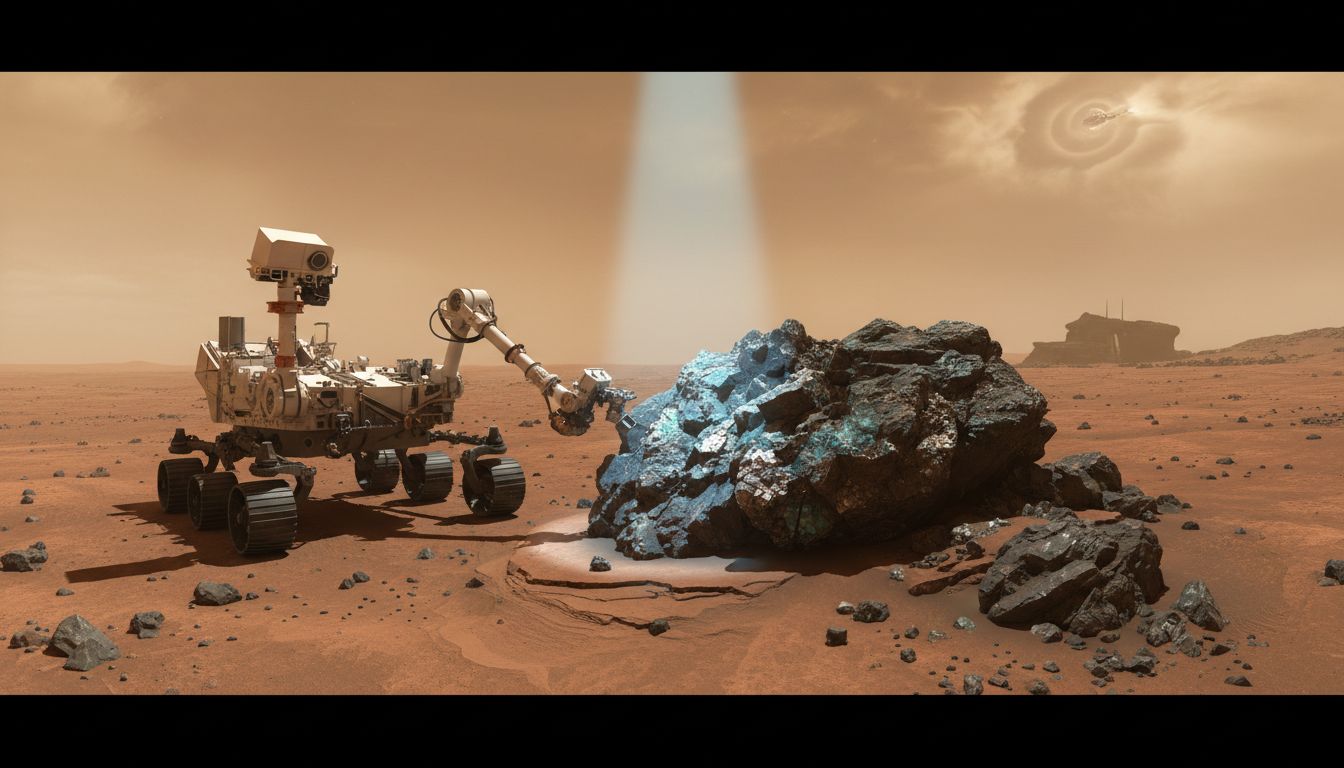
NASA’s Perseverance rover, operating in Jezero Crater since February 2021, has reported a potential biosignature in a rock formation nicknamed “Cheyava Falls.” The finding, announced on 30 March 2026, adds to a growing list of intriguing chemical clues that suggest Mars once hosted wet, potentially habitable environments. While the detection is scientifically provocative, researchers stress that the evidence remains tentative and requires extensive follow‑up before any claim of ancient life can be made.
The rock “Cheyava Falls”
The target rock sits on the foothills of an ancient valley that once channeled water into the basin of Jezero Crater—a site chosen for its river‑delta deposits and sedimentary layers that on Earth often preserve fossils. Perseverance’s suite of instruments, including the Scanning Habitable Environments with Raman & Luminescence for Organics and Chemicals (SHERLOC) and the Planetary Instrument for X‑ray Lithochemistry (PIXL), scanned the rock’s surface and identified a pattern of colored specks that warranted closer examination. The rover then drilled a small core for in‑situ analysis, revealing an unexpected mineral assemblage.
Mineral evidence: vivianite and greigite
Laboratory data from the rover indicated the presence of vivianite (Fe₃(PO₄)₂·8H₂O) and greigite (Fe₃S₄) within the same sample. On Earth, vivianite commonly precipitates in wet, organic‑rich sediments such as peat bogs, where microbial decay releases phosphate and iron. Greigite, a magnetic iron‑sulfur mineral, is often produced by sulfate‑reducing bacteria in low‑oxygen, sulfur‑laden waters. The co‑occurrence of these two minerals in a single Martian rock is unusual and has prompted speculation that a microbial ecosystem may once have influenced the local chemistry.
Scientific caution and alternative explanations
Lead investigators are careful to label the discovery a “potential biosignature” rather than proof of life. Both vivianite and greigite can form through abiotic pathways—for example, via hydrothermal alteration or redox reactions driven by volcanic gases. “Based on what we see so far, we don’t see another explanation,” said a NASA spokesperson, “but further analysis is essential.” The statement reflects the community’s high evidentiary bar; any claim of extraterrestrial biology must survive rigorous testing against non‑biological scenarios, as emphasized in prior Mars studies of organic molecules and seasonal methane spikes.
Next steps and broader context
The Perseverance team plans to return the core to Earth aboard a future sample‑return mission slated for the late 2020s, where high‑resolution electron microscopy and isotopic measurements can probe the mineralogy at the nanometer scale. Complementary observations from orbiters, such as the Mars Reconnaissance Orbiter’s CRISM instrument, will map the spatial distribution of vivianite‑ and greigite‑bearing rocks across the crater. If terrestrial‑like isotopic fractionation or micro‑textural features indicative of biology are confirmed, the find could represent the most compelling evidence yet of a past Martian biosphere. Until then, the scientific community remains cautiously optimistic, viewing “Cheyava Falls” as a promising lead that underscores Mars’ complex geochemical history and the need for continued exploration.


