Overview
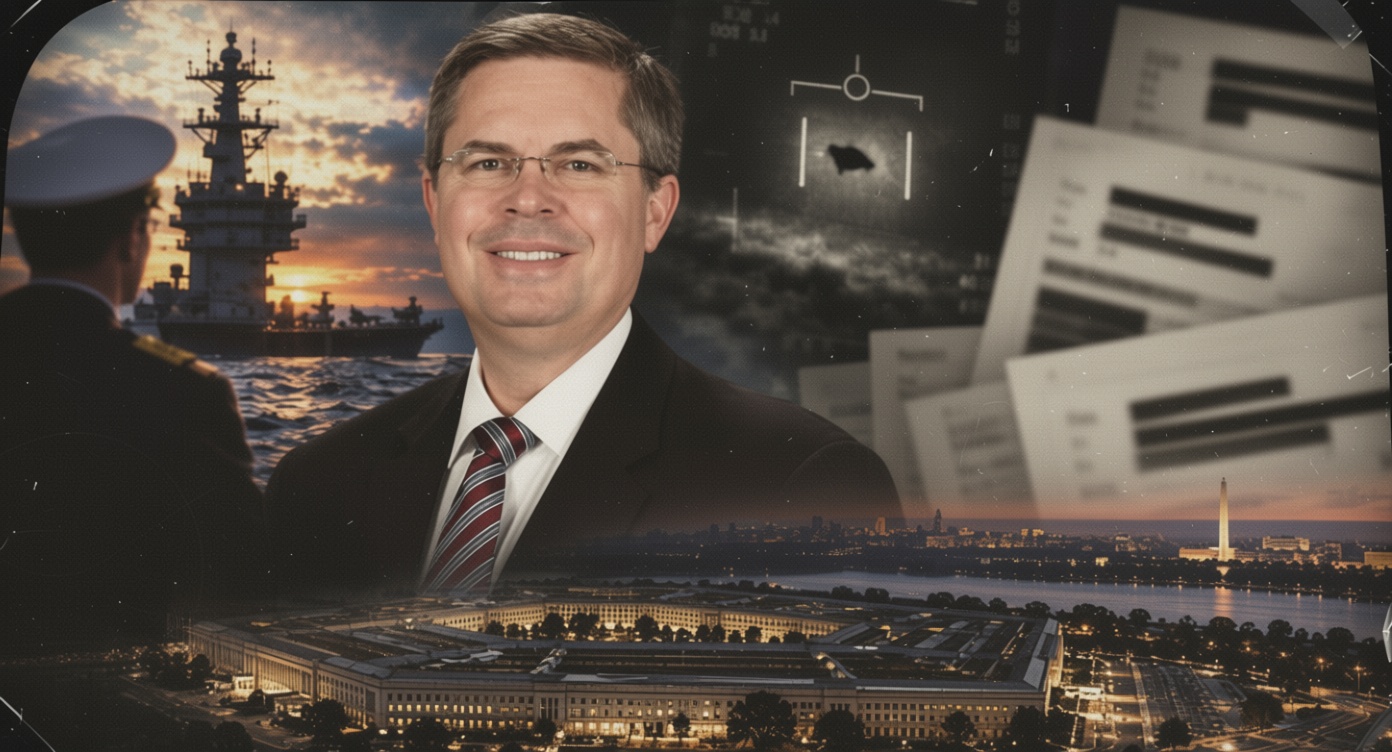
The Department of the Navy has released more than 1,300 pages of emails and related records involving former Deputy Director of Naval Intelligence Scott W. Bray, providing a substantial new look at internal government communications during a formative period in the Pentagon’s response to unidentified aerial phenomena (UAP). The records were obtained by The Black Vault through a Freedom of Information Act (FOIA) request filed on May 24, 2022—more than four years before the Navy issued its response on Sept. 23, 2026.
According to the Navy’s response, its search identified 1,321 pages of responsive records. Of those, 1,019 pages were released with redactions, while 302 pages were withheld in full under applicable FOIA exemptions. The material concerns emails sent to, received by, copied to or blind-copied to Bray that included terms such as “Unidentified Aerial Phenomena,” “UAP,” “UAPTF,” “UFO,” “AATIP” and “AAWSAP.”
Bray’s Role in the UAP Effort
Bray held senior positions within Naval Intelligence during much of the period covered by the documents, serving as Deputy Director of Naval Intelligence and Director of the Naval Intelligence Activity. Those roles placed him at the center of communications involving the Navy, the Defense Department and the broader Intelligence Community as officials addressed UAP reporting, congressional interest and the development of the Navy-led Unidentified Aerial Phenomena Task Force.
One email in the release describes the chain of responsibility directly, stating that John “Jay” Stratton “leads the UAP Task Force effort for Navy… working directly for Scott Bray, our Deputy Director of Naval Intelligence.” Stratton was a prominent figure in the department’s early UAP initiative, which later became a focus of congressional oversight and public debate.
Bray subsequently became one of the government’s most visible officials on the subject. On May 17, 2022, he appeared alongside then-Under Secretary of Defense for Intelligence and Security Ronald Moultrie at a House Intelligence subcommittee hearing devoted to UAP. That public session was followed by a classified briefing, making the newly released correspondence particularly relevant to understanding the administrative and policy context surrounding his testimony.
Records Show Broad Interagency Communications
The email collection includes exchanges involving Stratton, Defense Intelligence official Neill Tipton, senior Navy officers, admirals, Pentagon public-affairs personnel and other Defense and Intelligence Community officials. The breadth of the correspondence suggests that UAP-related matters were being handled across multiple offices rather than by a single isolated program.
In one March 2020 exchange, Tipton—then identified in his signature block as Director of Defense Intelligence, Collection and Special Programs in the Office of the Under Secretary of Defense for Intelligence and Security—told Bray he had a document “relevant to our discussion the other day” that he preferred to deliver in hard copy. Other records concern preparations for a planned Senate Select Committee on Intelligence briefing involving Bray, Stratton, Tipton and Rear Adm. Kelly Aeschbach.
The release also includes discussions about proposed public language concerning the UAP effort and whether that wording should be reviewed by Bray before being forwarded. Additional correspondence involves Vice Adm. Matthew Kohler, Rear Adm. Charles Brown and Rear Adm. Paula Dunn.
What Remains Unknown
Although the release offers a wider documentary record of the Navy’s UAP activities, more than 300 pages remain entirely unavailable, and the released pages contain redactions under multiple FOIA exemptions. The Navy’s response, as described in the source material, does not provide further public insight into the withheld records or explain in detail which specific information they contain.
The documents therefore add context to the government’s evolving UAP program without resolving broader questions about the underlying incidents or the information retained by defense and intelligence agencies. Their significance lies primarily in showing how officials coordinated briefings, public messaging and internal discussions during a pivotal phase of the Pentagon’s modern UAP effort.