Overview
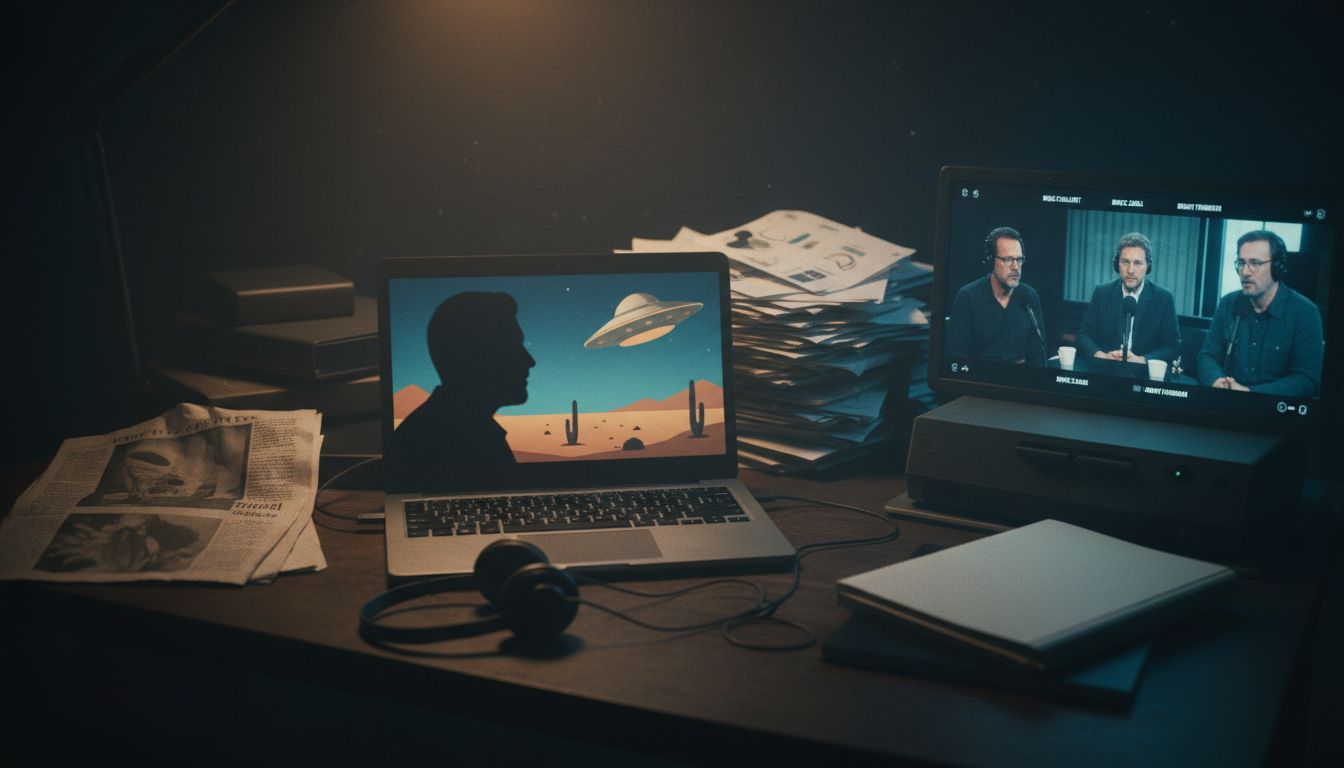
The American fascination with unidentified aerial phenomena (UAP) stretches back to the post‑World War II era, yet recent reporting has tangled fact with fiction in ways that undermine public trust. A recent Associated Press story—cited by ABC News—attempted to summarize a century of sightings, government projects, and pop‑culture moments, but its muddled chronology and reliance on sensational anecdotes prompted a sharper critique. Analysts now argue that the narrative is being reshaped by a mix of podcasts, interviews, and nostalgic claims, each blurring the line between documented investigation and entertainment. The core issue is not the existence of strange lights, but the competing stories that claim to explain them—and the growing suspicion that “someone is lying” about what they really represent.
Historical Context
The modern UFO saga began on June 24, 1947, when private pilot Kenneth Arnold reported nine objects near Mount Rainier, sparking the first nationwide wave of sightings. Within weeks, the infamous Roswell incident unfolded as a ranch foreman discovered debris that the military initially described as “flying disc” material before retracting to a weather‑balloon explanation. The U.S. Air Force responded with Project Sign, later renamed Project Blue Book in 1953, which catalogued more than 12,600 reports through 1969. Parallel cultural milestones—such as the 1966 release of The Flying Saucer spy film, the 1966 Star Trek debut, and later Spielberg classics like Close Encounters (1977) and E.T. (1982)—fed a feedback loop where media amplified public curiosity, and public sightings fed media storylines. This intertwined history sets the stage for today’s contentious discourse.
Recent Media Coverage
Three contemporary pieces have drawn particular scrutiny. Pavel Ibarra’s podcast dissected the 2023 Bob Lazar documentary, emphasizing Lazar’s unverified claims of reverse‑engineered alien tech while noting the film’s reliance on dramatized reenactments. Ross Coulthart’s interview with UFO investigators Bryce Zabel and Brent Friedman presented speculative theories about “government‑sanctioned secrecy” without offering verifiable documentation. Finally, John Herrington’s 1981 claim—re‑examined in a recent memoir—asserts that he witnessed a “metallic craft” while serving in the Air Force, a story that has never been corroborated by official records. Each of these works blends anecdote with conjecture, creating a media environment where the boundary between investigative journalism and mythmaking becomes indistinct.
Government Investigations and Data Gaps
In contrast, official efforts have taken a more measured approach. The Pentagon’s UAP Task Force, established in 2020, released declassified videos—nicknamed “Gimbal,” “GoFast,” and “FLIR”—that depict anomalous aerial objects, but subsequent reports concluded that the 144 cases reviewed showed no evidence of extraterrestrial origin. Congressional hearings in May 2024, the first in half a century, underscored the need for improved data collection and analytic standards rather than sensational conclusions. While the Air Force formally terminated Project Blue Book in 1969, the recent U.S. government report highlighted persistent gaps in sensor coverage and inter‑agency communication, urging a systematic, science‑based response.
Analysis & Conclusions
The juxtaposition of rigorous government documentation with a torrent of speculative media content fuels a perception that key information is being concealed. Critics point to the repeated pattern: a sighting is reported, a dramatized retelling follows, and official agencies issue cautious, often non‑committal statements. This cycle, they argue, creates fertile ground for the claim that “someone is lying.” Yet the evidence, as presented by the Pentagon and congressional committees, suggests no deliberate deception, only a complex mix of genuine unknowns, methodological shortcomings, and a cultural appetite for mystery. As journalists, the responsibility is to separate verified data—such as the declassified Navy clips and the documented history of Project Blue Book—from unsubstantiated narratives that thrive on intrigue. Only by maintaining that distinction can the public engage with the UFO phenomenon without succumbing to unfounded conspiracy.


