Overview
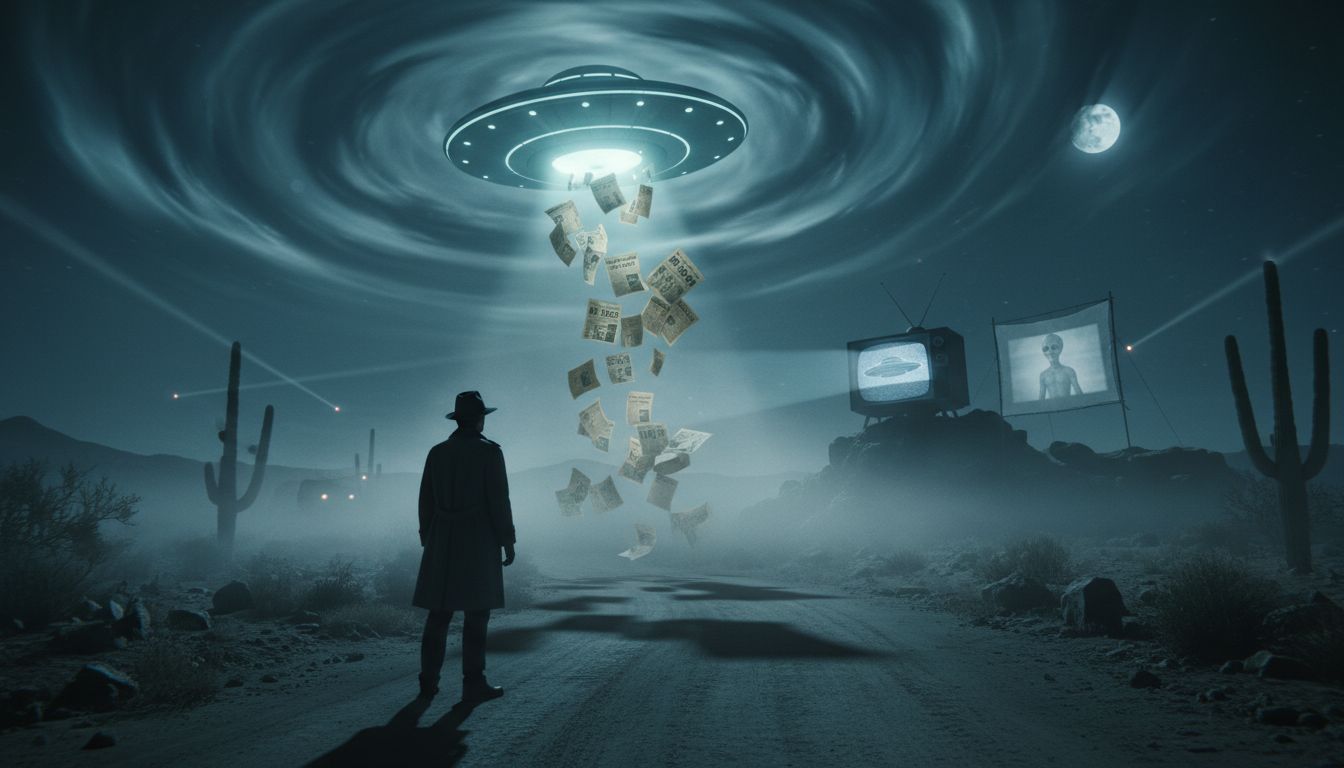
For almost a hundred years, unidentified aerial phenomena—commonly called UFOs or UAPs—have occupied a unique place in American consciousness. From the first post‑World War II sightings that prompted official inquiries, through the boom of science‑fiction cinema in the 1950s and 60s, to the recent release of Pentagon‑commissioned reports, the saga reflects a continual interplay between government scrutiny, media sensationalism, and popular imagination. The new AP analysis underscores how each era reshaped public expectations, turning what began as a national security concern into a cultural mythos that still fuels debate today.
Early Government Inquiries
The modern UFO era is widely traced to the 1947 “Roswell incident,” when a crashed object near Roswell, New Mexico, sparked speculation about extraterrestrial technology. Within weeks, the U.S. Army Air Forces launched Project Sign, the first formal study of unidentified sightings. Although Sign concluded that some reports could not be readily explained, it was quickly superseded by Project Grudge, which dismissed most cases as misidentifications. The most extensive effort, Project Blue Book (1952‑1969), logged 12,618 sightings, attributing 701 to “unidentified” and ultimately concluding that none posed a national security threat. Former Air Force officer and Blue Book analyst Dr. Edward R. Stanton told AP, “We were dealing with a phenomenon that demanded rigorous data, yet the public narrative often outpaced the facts.”
Media and Pop‑Culture Mythmaking
Parallel to official investigations, the 1950s and 60s saw a surge in UFO‑themed movies, radio dramas, and comic books. Films such as The Day the Sky Exploded (1958) and later Close Encounters of the Third Kind (1977) transformed the alien encounter into a mainstream entertainment trope. Television series like The X‑Files (1993‑2002) blended investigative drama with speculative science, cementing the image of the lone whistleblower confronting a shadowy agency. Cultural historian Dr. Maya López noted, “The media didn’t just report sightings; it created a narrative framework that allowed ordinary Americans to imagine themselves as part of a larger, mysterious story.”
Modern Investigations and Declassification
The turn of the millennium revived official interest, spurred by credible reports from military pilots and radar operators. In 2007, the Advanced Aerospace Threat Identification Program (AATIP) was quietly funded, and its existence was disclosed in 2017, igniting renewed public scrutiny. The Pentagon’s 2021 UAP Task Force released a preliminary report acknowledging 144 incidents, 143 of which remained unexplained. In a recent congressional hearing, former Defense Department official Sean M. Coulson testified, “We have no definitive explanation, and that uncertainty is itself a security concern.” The 2023 establishment of the All‑Domain Anomaly Resolution Office (AARO) signals an institutional shift toward systematic data collection and inter‑agency analysis.
Looking Ahead
As the United States prepares to release additional classified footage and analysis, the conversation is moving beyond speculation toward policy and scientific inquiry. Legislators have introduced bills mandating annual public briefings on UAP findings, while academic institutions are forming dedicated research centers. Yet the legacy of a century‑long fascination endures: each new disclosure rekindles the cultural motifs forged in the Cold War era, and the line between fact and fiction remains porous. As AP’s coverage concludes, “America’s UFO saga is as much about our yearning to understand the unknown as it is about the skies above us,” a reminder that the story is still being written.


