Overview
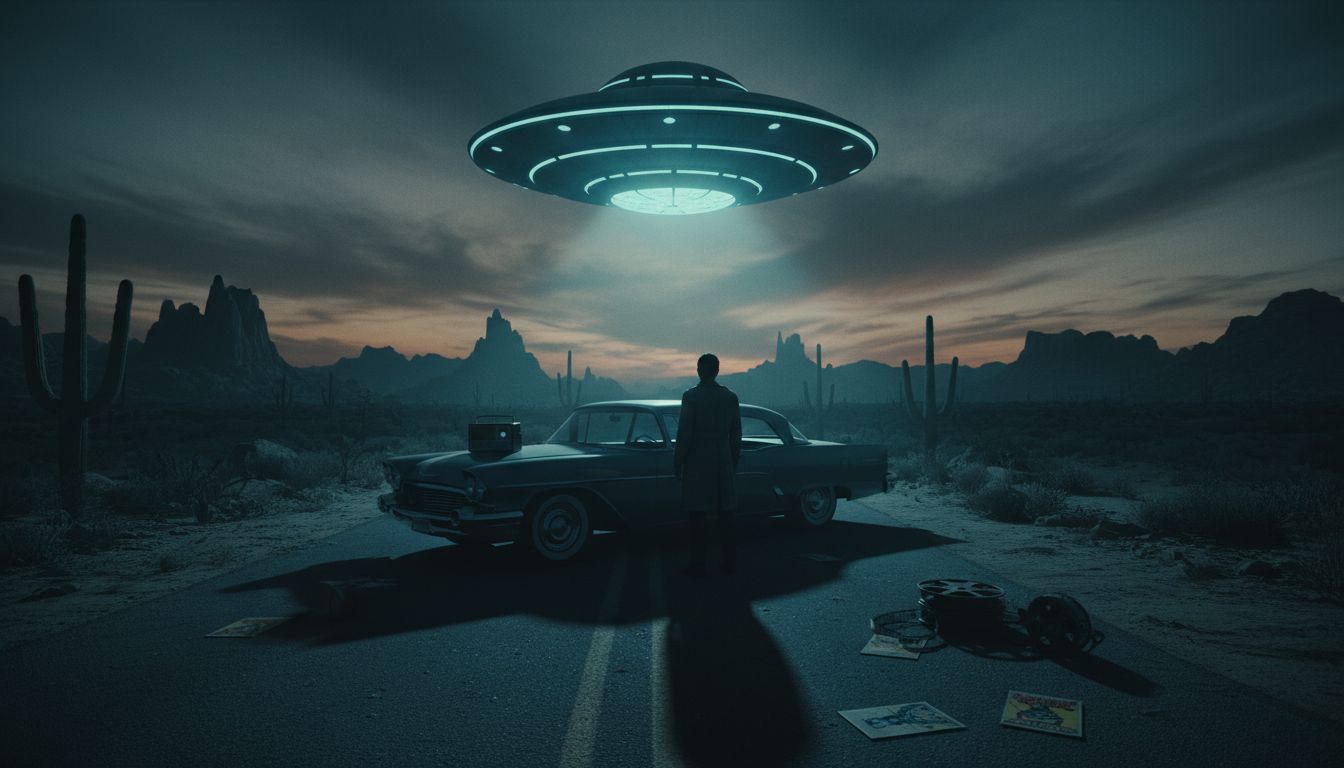
For a century, the United States has oscillated between curiosity, caution, and controversy over unidentified aerial phenomena (UAP). From the first widely reported sighting by private pilot Kenneth A. Arnold in 1947 to the Pentagon’s recent declassification of hundreds of DOD files, the saga intertwines documented investigations, government policy, and a parallel surge of extraterrestrial storytelling in film and television. The latest batch of documents, released on May 5, 2026, adds new data points to a historical record that already includes Project Sign, Project Blue Book, and the infamous Roswell incident, while also reflecting how cultural narratives have shaped public perception of the unknown.
Early Government Action
The post‑World War II era prompted the U.S. Air Force to launch Project Sign in 1948, the first formal attempt to assess UFO reports. Renamed Project Blue Book in 1953, the program catalogued more than 12,600 sightings through 1969, concluding that most could be explained by conventional aircraft, weather balloons, or misidentifications—yet a small “unidentified” fraction persisted. The 1947 Roswell debris episode, initially described as a “flying disc” before being rebranded a weather balloon, cemented a legacy of official reversals that would fuel skepticism and intrigue alike. In 1955, the construction of the secretive Area 51 facility added another layer of mystery, prompting later speculation that the site housed recovered extraterrestrial technology.
Pop Culture Takes Flight
While the military grappled with data, Hollywood turned the phenomenon into profit. The 1950 spy‑thriller “The Flying Saucer” marked the first major cinematic treatment, quickly followed by a wave of 1950s B‑movies that framed saucers as either hostile invaders or benign visitors. Television series such as “The X‑Files” (1993‑2002) and more recent streaming hits like “Project Blue Book” (2019‑2020) borrowed directly from declassified reports, blurring the line between documented inquiry and speculative fiction. Cultural scholars note that these narratives amplified public demand for transparency, pressuring policymakers to address the “UAP” label rather than the sensational “UFO” moniker.
Modern Transparency and Policy
The Pentagon’s establishment of the UAP Task Force in 2020, and its successor the All‑Domain Anomaly Resolution Office (AARO), signaled a shift from secrecy to limited openness. A 2023 congressional report acknowledged 144 incidents that could not be readily explained, prompting calls for a standardized reporting system across military branches. The May 2026 release of DOD files—over 400 previously classified images, radar logs, and pilot testimonies—provided fresh material for both analysts and the public. As Corey Williams of the Associated Press observes, “The new documents do not prove alien visitation, but they do underscore gaps in our sensor coverage and the need for rigorous scientific scrutiny.” The data have reignited debate in congressional hearings about funding for advanced detection technologies and inter‑agency coordination.
Looking Ahead
As the United States marks a hundred years of UFO fascination, the interplay between real‑world investigations and fictional portrayals appears set to continue. Researchers at the University of Colorado’s UAP Research Center plan to publish a peer‑reviewed analysis of the 2026 DOD releases later this year, aiming to separate statistical anomalies from mythic embellishment. Meanwhile, streaming platforms have announced several upcoming series that will dramatize the early Cold‑War investigations, suggesting that the cultural appetite for the unknown remains robust. Whether future disclosures will resolve lingering questions or simply add new chapters to an enduring saga, the American public’s “wondering” shows no sign of waning.