Overview
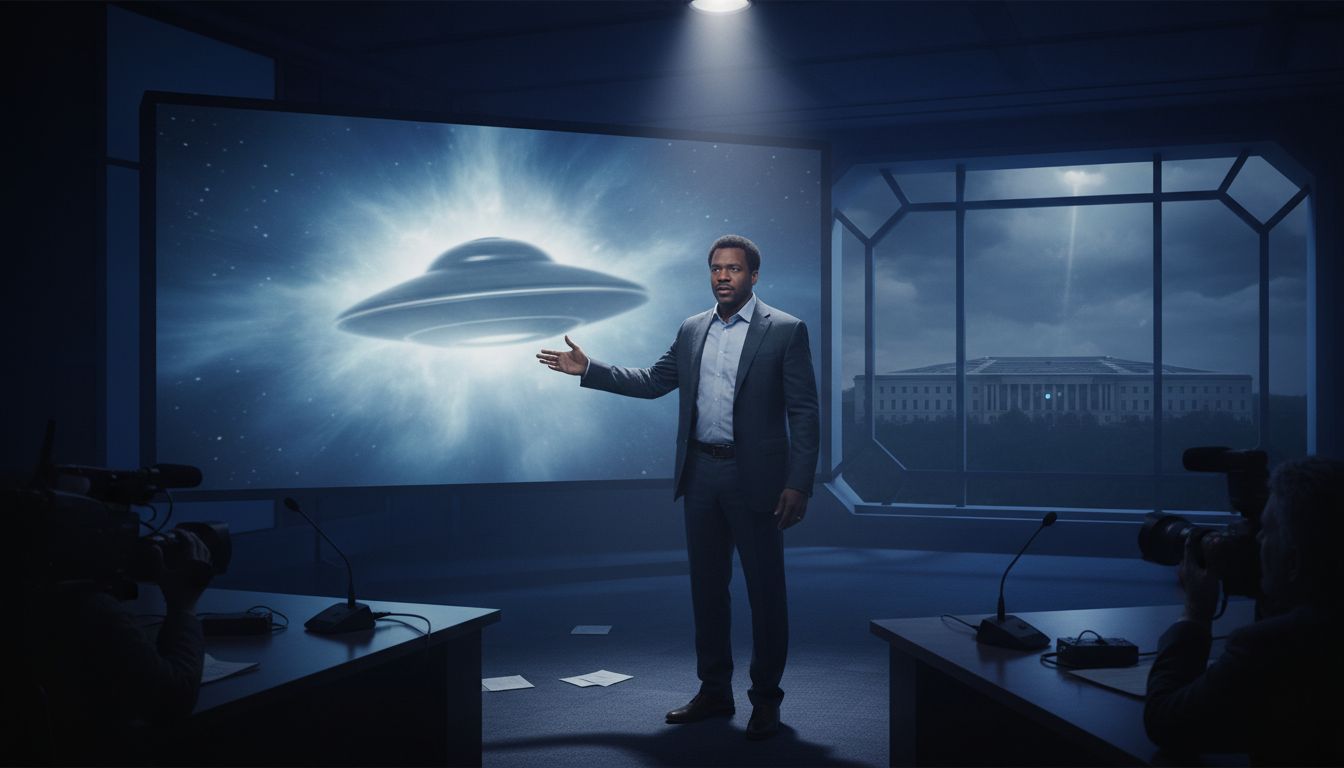
Astrophysicist and public science communicator Neil deGrasse Tyson called on the U.S. government to publicly disclose any verified evidence of extraterrestrial life during a recent interview that followed the latest set of Unidentified Aerial Phenomena (UAP) disclosures. Tyson, speaking to The Wrap on May 20, 2026, argued that the Pentagon’s recent reports and congressional hearings have created a “window of opportunity” for full transparency, and that popular culture has already prepared the public for the possibility of contact.
Tyson’s Call for Transparency
Tyson said, “The Pentagon’s reports make it clear that we have credible data on UAPs, and the public deserves to see what we have. It’s time to bring out the alien if there is one.” He added that the entertainment industry has “primed us” through decades of sci‑fi storytelling, suggesting that the shock of an official revelation would be mitigated by familiar narratives. Tyson emphasized that scientific rigor, not speculation, should guide any disclosure: “If there is evidence, let it be examined openly by the scientific community, not hidden behind classified briefings.”
Recent UAP Disclosures
The demand comes after a series of government actions that have elevated the UAP issue from fringe speculation to a matter of national security. In late 2023, the Office of the Director of National Intelligence released an unclassified assessment acknowledging that many UAP incidents remain unexplained. A 2024 congressional hearing featured testimony from senior Department of Defense officials, who confirmed ongoing investigations into anomalous aerial observations. Most recently, a supplemental Pentagon report issued in March 2026 detailed 38 new sightings recorded by Navy pilots, noting “unusual flight characteristics” that could not be readily explained by known technology.
These developments have spurred renewed calls from lawmakers for a comprehensive public briefing. Representative Mike Turner (D‑CA) introduced a resolution in April 2026 urging the intelligence community to declassify all non‑sensitive data on UAPs within 90 days. Tyson’s remarks echo this bipartisan push for openness, while also stressing the need for scientific validation.
The Role of Hollywood
Tyson’s reference to Hollywood reflects a broader cultural context in which media has shaped public expectations about extraterrestrials. Blockbuster franchises such as Independence Day (1996), Arrival (2016), and the recent streaming series The Phenomena (2025) have normalized the idea of contact and government secrecy. “We have been watching aliens on screen for decades,” Tyson noted, “so the idea of an official announcement is less terrifying than it might have been in the 1950s.”
Industry analysts, however, caution against conflating entertainment with empirical evidence. Dr. Lena Morris, a media studies professor at NYU, explained that “while pop culture can lower psychological barriers, it also creates a mythologized view of alien life that may distort public understanding of the scientific process.”
Reactions and Implications
The astrophysics community has responded with a mixture of curiosity and caution. The American Astronomical Society issued a statement supporting “transparent, peer‑reviewed analysis of any credible data” while warning that premature conclusions could undermine public trust in science. Meanwhile, former Pentagon UAP program director Luis Garcia reiterated that “any release of classified material must balance national security with the public’s right to know.”
If the government were to disclose definitive evidence of extraterrestrial technology, the ramifications would extend beyond scientific inquiry to policy, defense, and international relations. Experts suggest that a coordinated approach involving NASA, the National Academy of Sciences, and international bodies such as the United Nations Office for Outer Space Affairs would be essential to manage the fallout.
Looking Ahead
Tyson’s appeal underscores a growing consensus that the era of secrecy surrounding UAPs is ending. As congressional oversight intensifies and scientific institutions prepare for potential data analysis, the next few months could determine whether the public will indeed “see the alien” or continue to grapple with unanswered questions. For now, the conversation remains anchored in a call for evidence‑based transparency, a principle that Tyson, as a scientist and communicator, insists is the only path forward.


