Overview
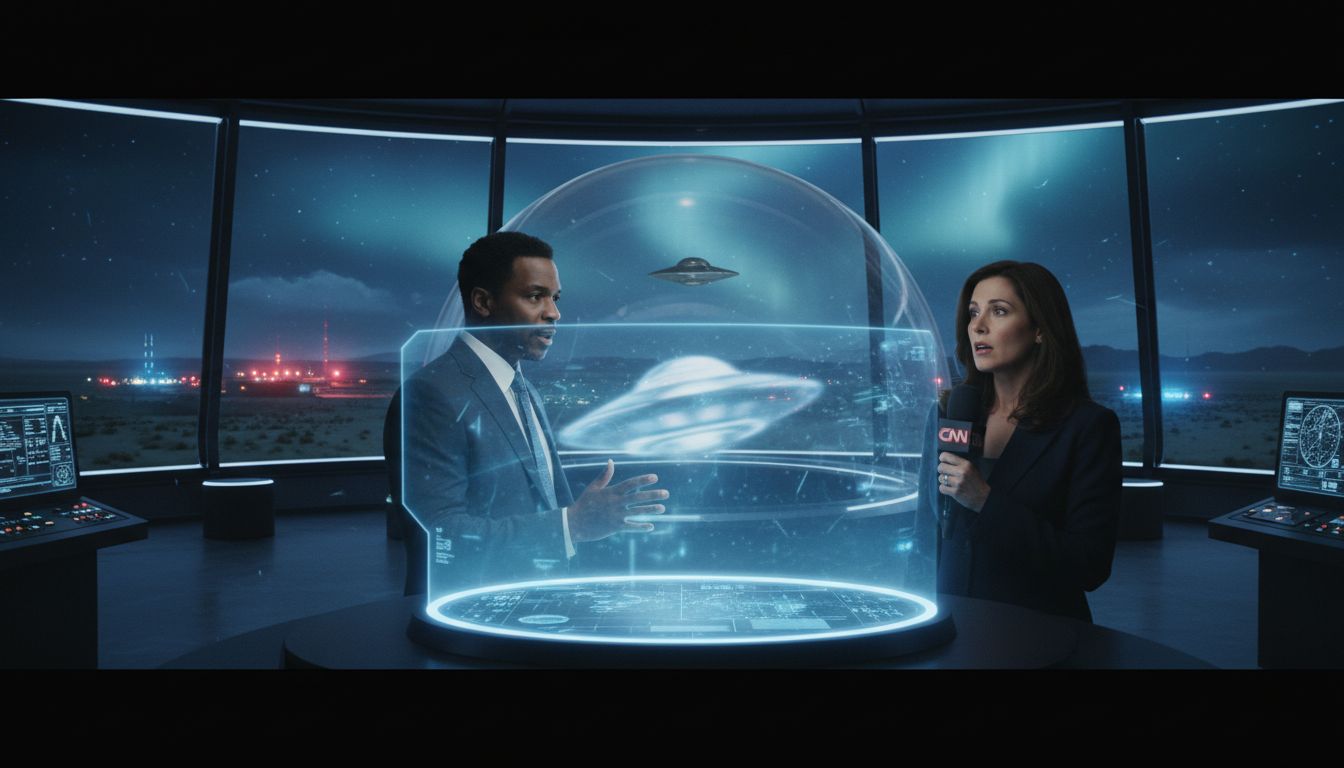
In a candid interview with CNN’s Dana Bash on May 17, 2026, astrophysicist Neil deGrasse Tyson responded to the Pentagon’s recent release of classified UFO files with a wry suggestion: “Let’s just bring out the alien and get it over with.” The comment, made as the scientist promoted his forthcoming book Take Me To Your Leader, captured the growing public fascination with unidentified aerial phenomena (UAP) while underscoring a scientific call for transparency and rigor. Tyson’s remarks, though light‑hearted, reflect a broader dialogue about how governments and the scientific community should handle evidence that may challenge conventional understandings of the sky.
Pentagon UFO Files
The Department of Defense’s Office of the Director of National Intelligence (ODNI) disclosed over 400 de‑classified UAP reports earlier this year, spanning incidents from the 1950s to 2023. The documents include radar data, pilot testimonies, and video recordings captured by advanced sensor platforms. While the majority of cases remain inconclusive, a subset—approximately 15 percent—were deemed “unexplained” after exhaustive analysis, prompting calls for an independent scientific review. The release marks the most extensive public accounting of UAP encounters to date and has spurred congressional hearings, renewed funding for the All‑Domain Anomaly Resolution Office (AARO), and heightened media scrutiny.
Tyson’s Take
Tyson framed the Pentagon disclosures as a catalyst for a more open, data‑driven conversation about possible extraterrestrial contact. “We have a responsibility to the public to examine these sightings with the same rigor we apply to any astronomical phenomenon,” he told Bash. He added, “If an alien were sitting in a lab right now, I’d rather we meet it on the table than speculate in the dark.” The scientist’s forthcoming book, Take Me To Your Leader, aims to explore humanity’s place in the cosmos, the cultural impact of potential contact, and the scientific methods needed to evaluate extraordinary claims. Tyson emphasized that curiosity should be paired with critical inquiry, warning against both blind awe and dismissive skepticism.
Public Reaction and Expert Views
The Pentagon’s files have reignited a cultural moment that blends pop‑culture intrigue with legitimate scientific curiosity. Polls released by CNN in early May show that 68 % of Americans believe the government should disclose all information on UAPs, while 22 % remain unconvinced of any extraterrestrial origin. Astronomers and physicists, including members of the American Astronomical Society, have urged the establishment of a peer‑reviewed framework to assess the data, citing past missteps where anecdotal reports outpaced rigorous analysis. At the same time, UFO advocacy groups argue that bureaucratic red tape continues to obscure potentially groundbreaking evidence, a tension that Tyson acknowledges but hopes to temper with “transparent, methodical study.”
Looking Ahead
As the U.S. government pledges to expand its UAP reporting mechanisms, Tyson’s upcoming publication is poised to enter the conversation at a pivotal moment. Take Me To Your Leader promises to blend scientific insight with philosophical reflection, asking what meaning—if any—alien contact would hold for humanity’s self‑understanding. While the “bring out the alien” quip may have sparked headlines, Tyson’s deeper message is clear: the pursuit of truth about unidentified phenomena must be guided by evidence, openness, and humility. Whether the next decade yields definitive proof of extraterrestrial life or merely refines our knowledge of atmospheric and technological anomalies, the dialogue sparked by the Pentagon’s files—and amplified by voices like Tyson’s—marks a significant step toward a more informed public discourse.


