Overview
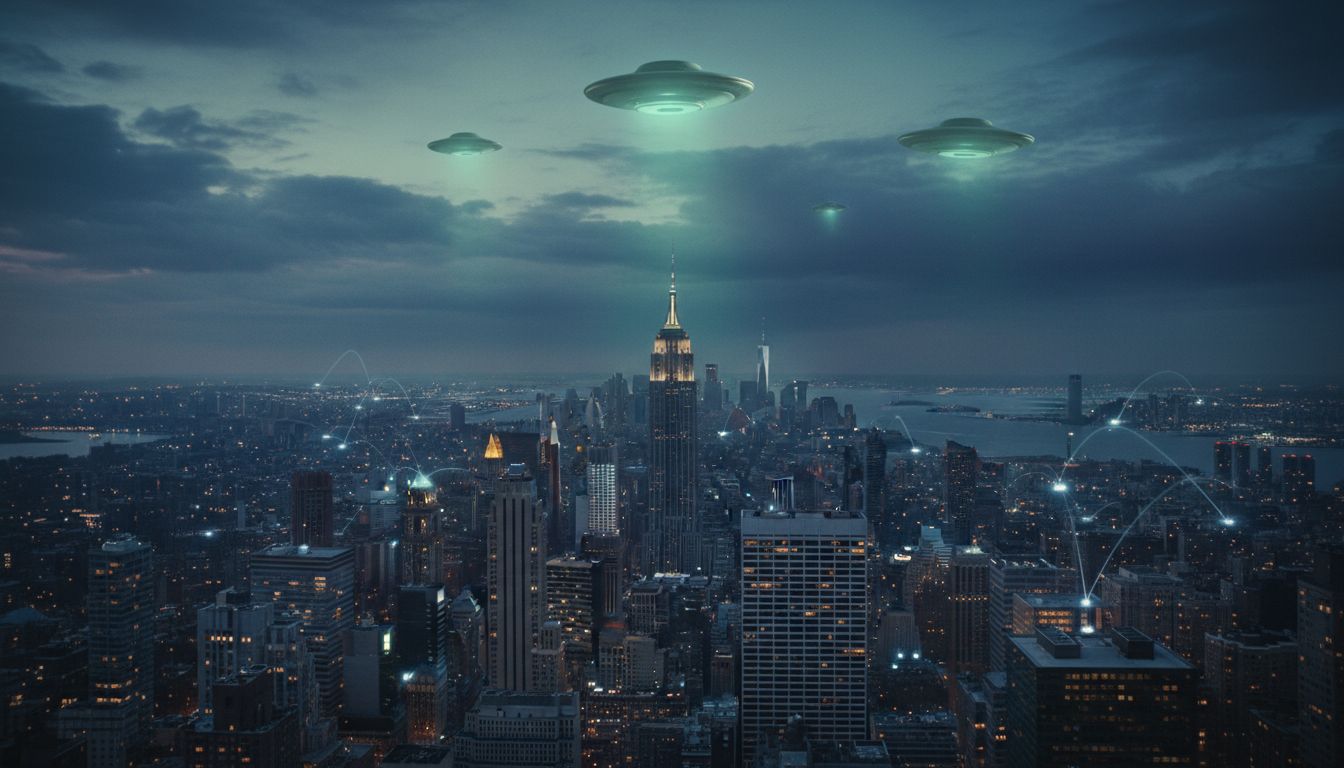
A new statistical review of civilian UFO/UAP (Unidentified Aerial Phenomena) reports places New York State at the top of the United States for sighting concentration. The analysis, compiled by the research team at CNY News, examined over 12,000 reports submitted to the National UFO Reporting Center, the Mutual UFO Network, and state‑run incident logs between 2015 and 2024. While the raw number of sightings in New York is comparable to that of California and Texas, the per‑capita density—roughly 1.8 reports per 1,000 residents—outstrips every other state. Researchers attribute the spike to the region’s dense population, extensive sky‑watching communities, and a well‑organized reporting infrastructure.
Key Findings
The data set shows three distinct patterns. First, urban corridors such as the New York City metro area and the Buffalo‑Rochester corridor account for 62 % of all state reports, reflecting higher observer numbers rather than necessarily higher anomalous activity. Second, a secondary peak emerges in the Adirondack and Finger Lakes regions, where sightings often involve bright, slow‑moving lights at altitudes reported between 3,000 and 12,000 feet. Finally, the temporal distribution reveals a modest increase of 12 % year‑over‑year since 2020, with a noticeable surge in the summer months—particularly July and August—coinciding with traditional “UFO season” trends observed nationwide.
Context and Expert Insight
Dr. Elena Ramirez, a senior researcher in atmospheric physics at SUNY Albany, cautions against drawing immediate causal conclusions. “Higher reporting rates in New York are largely a function of population density and the presence of active citizen‑science groups,” she said. “When you have more eyes on the sky and established channels for filing reports, the data naturally skews toward those areas.” Similarly, James O’Leary, director of the New York State Department of Environmental Conservation’s Air Quality Division, notes that meteorological phenomena—such as temperature inversions and noctilucent clouds—can be mistaken for UAPs, especially in regions with complex terrain.
Potential Governmental Response
The findings arrive amid renewed congressional interest in UAP transparency, following the 2023 establishment of the Office of the Director of National Intelligence’s UAP Task Force. State legislators have begun drafting a “New York UAP Transparency Act,” which would allocate $2 million over the next two fiscal years for a centralized state database, enhanced training for first responders, and partnerships with academic institutions for scientific analysis. If passed, the act could position New York as a model for coordinated civilian‑government reporting, echoing similar initiatives in Colorado and Texas.
Outlook
While the concentration of sightings does not, on its own, confirm the existence of extraterrestrial craft, the robustness of New York’s reporting network provides a valuable dataset for ongoing research. Analysts anticipate that the combination of higher‑resolution radar data, satellite imagery, and crowdsourced observations will enable more rigorous classification of future reports. As public curiosity grows, experts stress the importance of maintaining a skeptical yet open‑minded approach, ensuring that anomalous observations are examined with scientific rigor rather than sensational hype.