Overview
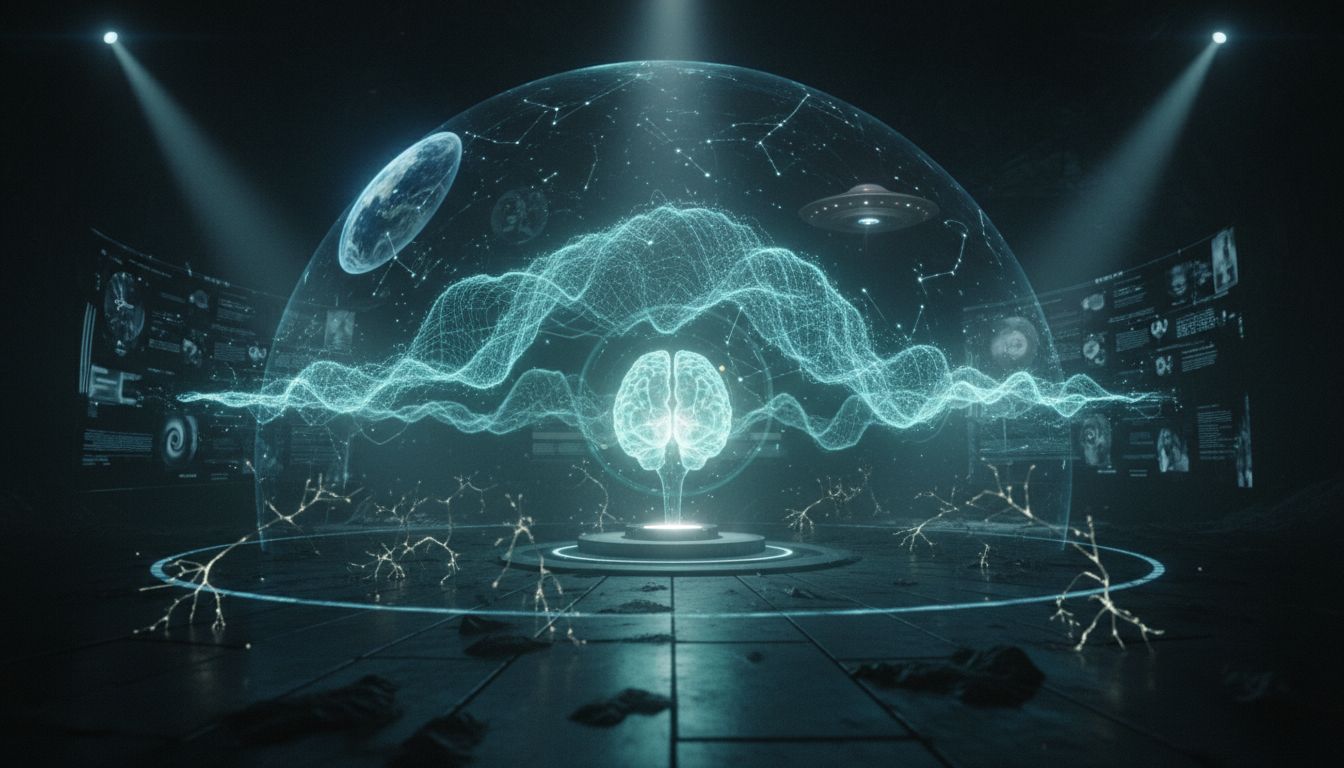
A new hypothesis published in Frontiers in Psychology challenges the long‑standing neuron‑centric view of consciousness. Robert Worden, a researcher at the Active Inference Institute, argues that subjective experience may emerge from a projective wave—a hidden, holographic‑like excitation located in the thalamus—rather than directly from patterns of neuronal firing. The proposal, dubbed the “projective wave theory of consciousness,” offers a mechanistic explanation for the “decoding problem” that has puzzled neuroscientists for decades and outlines concrete experimental tests using advanced brain imaging of comatose or anesthetized subjects.
The Wave‑Based Model
Worden’s paper contends that neural spikes encode information but lack intrinsic meaning without a decoding process, a mismatch with the immediate spatial awareness we experience. He writes, “Neuronal activity maintains the wave, but has no direct link to consciousness.” In this view, the thalamus—traditionally seen as a relay hub for sensory and motor signals—hosts a Fourier‑transform‑like wave that encodes the geometry of the external world in a holographic fashion. The wave would act as an analogue model, projecting a spatial map that the brain can “read” without the need for a separate decoding step. Neurons would thus serve as the scaffolding that sustains the wave, while the wave itself carries the phenomenological content of consciousness.
Testable Predictions
Worden emphasizes that the theory is falsifiable. He proposes high‑resolution functional MRI and magnetoencephalography (MEG) studies of patients in deep anesthesia or persistent vegetative states to look for coherent, low‑frequency oscillations localized to the thalamus that persist even when cortical activity is suppressed. If such a wave can be isolated and shown to correlate with the return of conscious awareness—e.g., during emergence from anesthesia—it would provide empirical support. Conversely, the absence of any thalamic wave independent of neuronal firing would undermine the hypothesis. The paper also suggests computational modeling to compare holographic wave dynamics with known thalamocortical circuitry.
Unrelated Discovery: Corona Discharges in Trees
In a separate line of research, botanists have finally documented a century‑old prediction that trees emit brief ultraviolet (UV) flashes during thunderstorms. Using high‑speed UV cameras, scientists observed micro‑scale corona discharges on leaf surfaces, confirming that electric fields can ionize the thin air layer around foliage. The flashes are harmless to the plant but may induce physiological stress, prompting a brief surge in protective antioxidant production. While unrelated to consciousness, the finding illustrates how advances in imaging technology can reveal hidden physical phenomena in both neural and botanical systems.
Implications and Next Steps
If the projective wave theory gains experimental traction, it could prompt a paradigm shift comparable to the move from a purely synaptic view of memory to one that includes glial and extracellular matrix contributions. It would also raise philosophical questions about the nature of subjective experience and its relationship to physical fields. Critics caution that the thalamus is already known to host a variety of oscillatory activity, and disentangling a “consciousness wave” from other rhythms will be methodologically challenging. Nevertheless, the theory’s clear predictions and reliance on existing imaging modalities make it a concrete target for forthcoming studies.
The concurrent discovery of UV corona flashes in trees underscores a broader scientific trend: high‑resolution, real‑time imaging is uncovering hidden dynamics across disciplines, from the brain’s deepest structures to the outermost layers of leaves. As researchers apply these tools, theories that once seemed speculative—like Worden’s wave‑based consciousness—may soon be tested, refined, or refuted, moving the field toward a more nuanced understanding of how the brain constructs reality.


