Overview
An interactive map reportedly catalogues 164 alleged “black-triangle” UFO sightings across the United Kingdom, drawing renewed attention to reports of unusual objects in British skies. The map was highlighted in a report published by the Mirror on October 30, 2026, which linked its release to recently released Pentagon files concerning unidentified aerial phenomena (UAP).
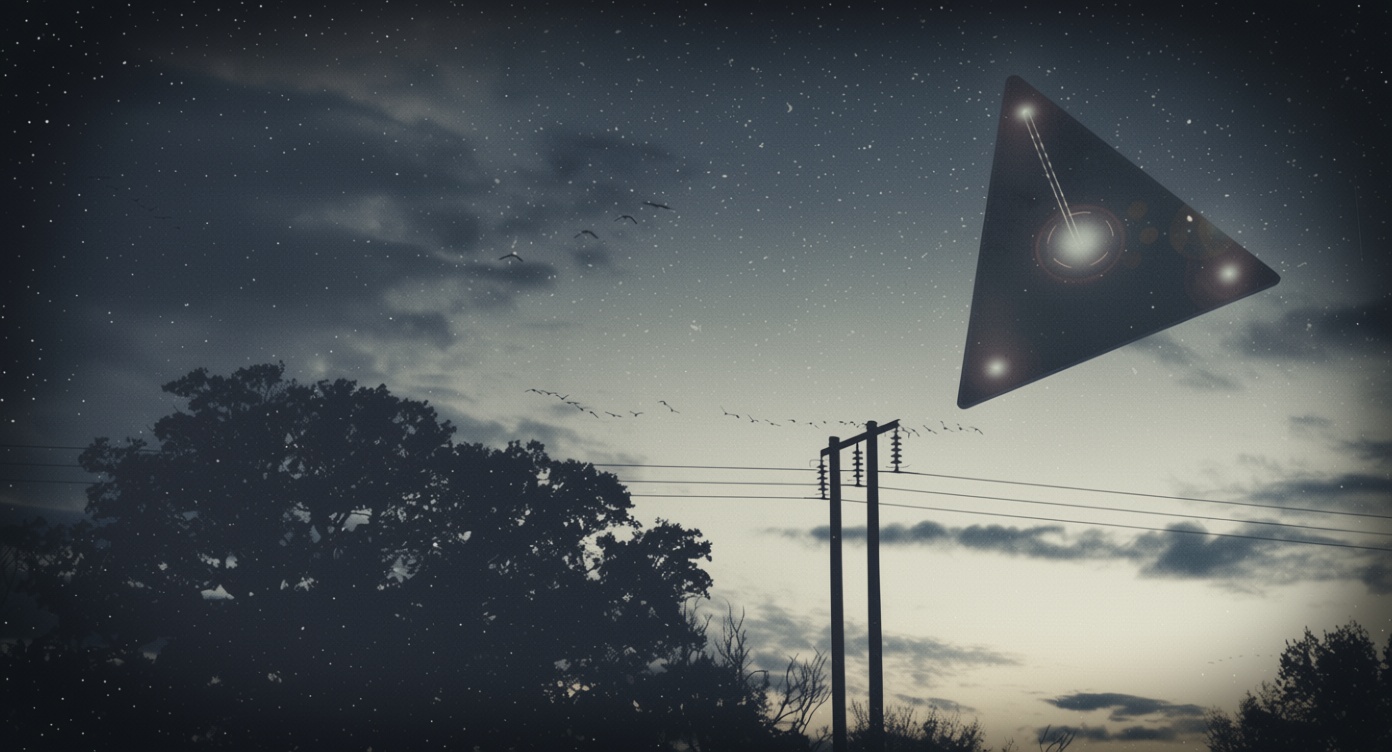
The reports remain unverified allegations. The available source material does not establish that the objects were extraterrestrial, experimental aircraft or any other specific type of craft. Instead, “black triangle” is used as a descriptive label for sightings in which witnesses say they observed a dark, triangular or wedge-shaped object.
What the Map Shows
The map’s headline figure is 164 reported sightings, apparently distributed across the UK. However, the source material available for review does not provide a full breakdown of the reports, including their dates, precise locations, witness accounts, photographs, videos or radar data. It also does not explain whether multiple reports may describe the same incident.
Those omissions are significant when assessing the strength of any apparent pattern. A concentration of reports in a particular area, for example, could reflect population density, proximity to airports or military facilities, increased public reporting, or the activities of a particular investigation group. Without information about how the entries were collected and checked, the map should be regarded as a visual catalogue of claims rather than confirmation that 164 unexplained objects were independently observed.
Link to Pentagon Material
The map’s release has been presented in connection with recently released Pentagon files, although the supplied report does not identify the specific documents or explain how they relate to the UK sightings. The Pentagon and US government have used the term UAP for observations that are not immediately identified, a designation that does not itself indicate an otherworldly origin.
Government files can include witness statements, intelligence assessments, sensor records and administrative material, but the inclusion of a report in an official archive does not necessarily mean the underlying observation has been verified. Establishing what an object was generally requires multiple forms of evidence, such as corroborating witnesses, reliable sensor data, flight records and analysis of weather and astronomical conditions.
Why Verification Matters
Black-triangle reports have circulated for decades, with witnesses variously describing objects that appeared silent, slow-moving or unusually large. Similar descriptions can potentially arise from ordinary aircraft viewed at night, drones, balloons, atmospheric effects or visual misidentification. In some cases, perspective and limited lighting can make it difficult to judge an object’s size, speed or distance.
The map may nonetheless be useful as a starting point for researchers examining how reports are distributed and how descriptions change over time. To support firmer conclusions, researchers would need access to the underlying records, a clear definition of what qualifies as a black-triangle sighting, and a method for removing duplicate or poorly documented entries.
What Is Known
At present, the central claim is limited: an interactive map is said to include 164 alleged black-triangle sightings in the UK. The available source does not independently verify the incidents, identify the map’s methodology or provide evidence connecting the reports to the Pentagon material. Until those details are published and the individual cases are examined, the map should be treated as a record of reported experiences—not proof of an unexplained aircraft or extraterrestrial activity.