Overview
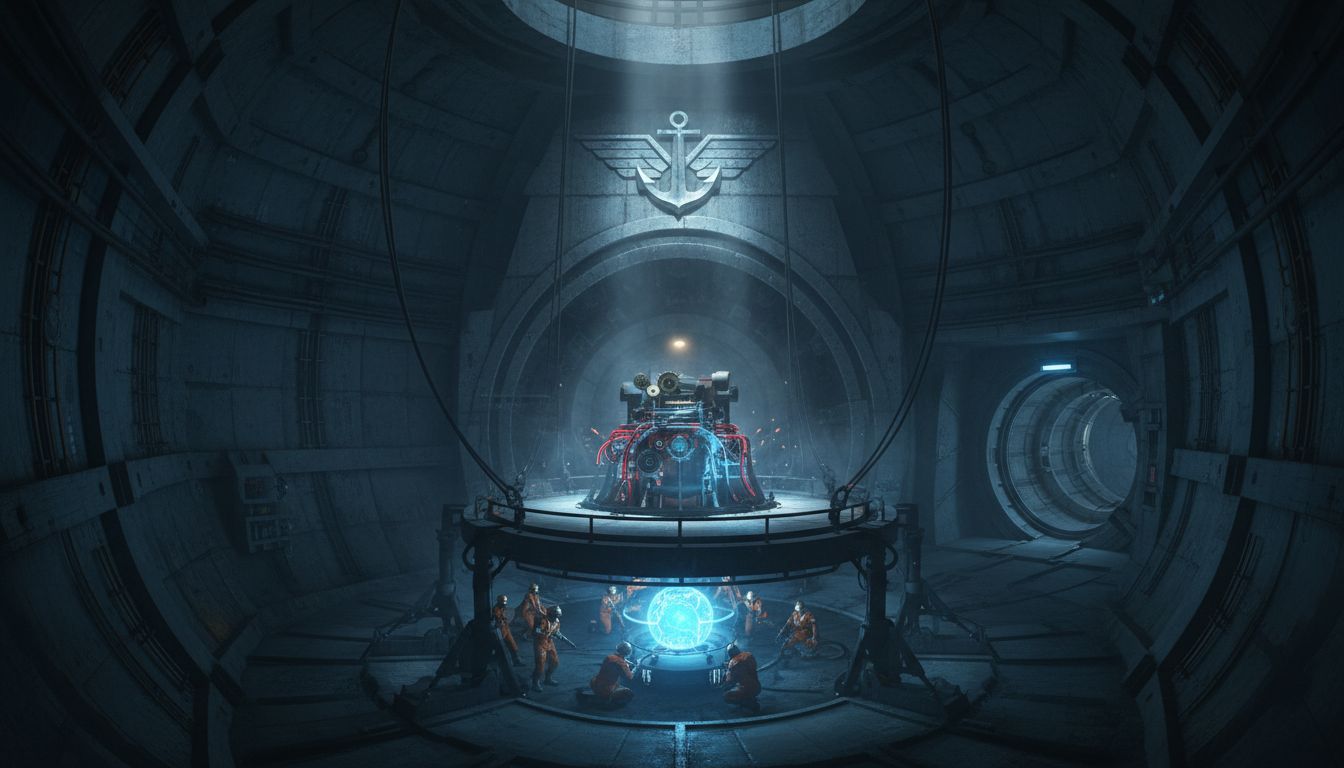
A viral social‑media claim that Earth will “lose gravity” for seven seconds on August 12, 2026 has been debunked by multiple fact‑checking organizations and NASA itself. The rumor, which circulated widely on platforms such as Instagram and TikTok in late 2025, alleged that a secret “Project Anchor” was preparing underground bunkers to protect world leaders, scientists, and a select group of citizens during a predicted gravitational anomaly. Both Snopes and Gizmodo’s investigative team found no evidence of such a project, and NASA officials confirmed that the scenario contradicts the fundamentals of physics.
Origin of the Rumor
The story first appeared in an Instagram Reel posted on December 31, 2025 by user @mr_danya_of. The video showed a silent driver with overlaid text stating:
“In November 2024, a secret NASA document titled ‘Project Anchor’ leaked online. The project’s budget is $89 billion, and its goal is to survive a 7‑second gravitational anomaly expected on August 12, 2026, at 14:33 UTC.”
The caption continued, claiming the anomaly would result from the intersection of two gravitational waves from black holes—a prediction allegedly made by NASA in 2019 with a 94.7 % probability. The post also asserted that NASA was “building underground bunkers” for a handful of “genetically diverse” individuals. Within days, the account was deleted, but screenshots and reposts had already spread across Twitter, Reddit, and Facebook, prompting panic‑filled comments about potential loss of life.
Fact‑Checking Findings
Snopes, a leading fact‑checking outlet, investigated the claim after receiving dozens of inquiries. Their report notes that no credible source—neither a NASA press release nor a peer‑reviewed scientific paper—mentions a “Project Anchor” or a scheduled gravitational event. The organization also could not locate the alleged leaked document in any public archive.
Gizmodo’s own research echoed these results. The site’s science editor, Ellyn Lapointe, traced the video’s text to a fabricated meme that cited a non‑existent NASA study from 2019. “The entire narrative is a patchwork of unrelated scientific terms stitched together to sound plausible,” Lapointe wrote. “There is no mechanism by which Earth could simply ‘lose gravity’ for a few seconds, and no agency has ever warned of such an event.”
Scientific Explanation
Gravity, as described by Einstein’s general theory of relativity, is the curvature of spacetime caused by mass. It is not a force that can be switched off, nor does it fluctuate on a planetary scale without a cataclysmic event—such as a collision with another massive body—that would leave unmistakable evidence. Gravitational waves, first directly detected by LIGO in 2015, are ripples that pass through spacetime, causing minuscule distortions measured in fractions of a proton’s diameter. Even the most powerful mergers of black holes produce effects far too weak to alter Earth’s overall gravitational field. As a NASA spokesperson clarified to Snopes:
“That’s not how gravity works. There is no scenario in which Earth’s gravity could simply disappear for a few seconds, and no credible data suggest such a phenomenon is imminent.”
NASA’s Official Response
When contacted by journalists, NASA’s public affairs office issued a brief statement reiterating the agency’s commitment to transparency and scientific accuracy. The spokesperson said:
“NASA has no project named ‘Anchor,’ no budget of $89 billion allocated for underground shelters, and no knowledge of any impending gravitational anomaly. Our focus remains on monitoring space weather, studying gravitational waves, and advancing exploration, not on preparing for fictitious catastrophes.”
The agency also directed the public to its official channels for updates on legitimate space‑related risks, such as solar storms or asteroid flybys, which are regularly assessed by the Planetary Defense Coordination Office.
Context and Takeaway
The rapid spread of the “gravity loss” meme underscores how easily scientific jargon can be weaponized to generate fear. In an era where misinformation can travel globally within minutes, reputable sources like NASA, Snopes, and established science journalists play a crucial role in debunking false narratives. While genuine space threats—like solar flares that can disrupt communications—are real and warrant preparedness, there is no evidence to support the claim that Earth will experience a temporary loss of gravity on August 12, 2026.
Readers are encouraged to verify extraordinary claims through multiple trusted outlets and to consult NASA’s official website for accurate information on ongoing research and potential hazards.


