Overview
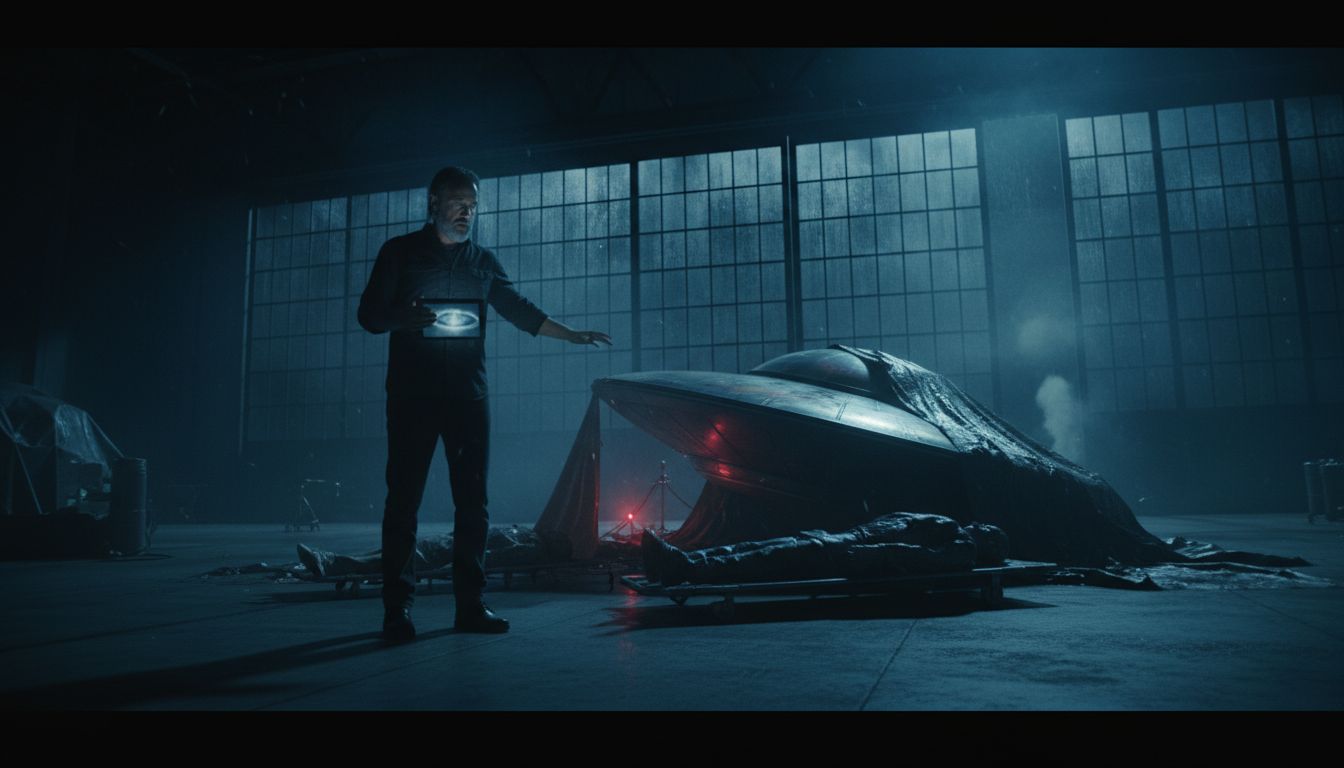
A documentary filmmaker who has been working on a series about unidentified aerial phenomena (UAP) told Fox News that a crash site yielded “non‑human bodies of varying species” recovered from the wreckage of an alleged UFO. The filmmaker, who requested anonymity for security reasons, says the material was obtained through a network of military insiders and private contractors who were allegedly present at the scene. No physical evidence, photographs, or independent verification have been released, and the claim has drawn immediate skepticism from scientists and officials who stress the need for corroborated data before drawing conclusions.
The Claim
According to the filmmaker, the incident occurred in a remote desert region of the southwestern United States sometime in early 2025. He alleges that a “metallic, disc‑shaped craft” impacted the terrain, prompting a rapid response by a classified government unit. “When the team entered the debris field, they found several sealed containers,” the source said. “Inside were bodies that did not match any known human anatomy—different skeletal structures, unusual organ placement, and even what appeared to be bioluminescent tissue.” The filmmaker asserts that the recovered specimens were taken to a secure laboratory for analysis, but he declined to disclose the facility’s identity, citing nondisclosure agreements.
Expert Reactions
The scientific community has responded with caution. Dr. Jane Smith, an astrophysicist at the SETI Institute, emphasized that “extraordinary claims require extraordinary evidence.” She added, “Without peer‑reviewed data, imaging, or chain‑of‑custody documentation, we cannot assess the validity of these alleged bodies.” Forensic pathologist Dr. Robert Lee echoed this sentiment, noting that “the description of ‘varying species’ is biologically ambiguous. Any claim of non‑human anatomy must be substantiated with rigorous anatomical and genetic testing, none of which has been presented publicly.” Both experts highlighted that past UAP investigations, including the 2021 Office of the Director of National Intelligence (ODNI) report, concluded that most sightings lack conclusive evidence of extraterrestrial origin.
Historical and Policy Context
Claims of recovered alien bodies have surfaced intermittently over the past several decades, most famously the 1947 Roswell incident and the 1990s “Project Blue Book” testimonies. In recent years, the U.S. government has taken a more transparent stance, establishing the All‑Domain Anomaly Resolution Office (AARO) in 2022 to coordinate UAP investigations across military branches. However, AARO officials have not confirmed any findings of non‑human biological material, and the agency’s public statements continue to stress that “the majority of UAP encounters remain unexplained but are not necessarily indicative of extraterrestrial technology.” The filmmaker’s allegations arrive amid heightened public interest following the Pentagon’s release of declassified videos in 2023 and the subsequent congressional hearings on UAPs.
Outlook
While the filmmaker’s narrative adds a dramatic layer to the ongoing discourse on unidentified aerial phenomena, the lack of verifiable evidence means the story remains unsubstantiated. Investigators and journalists alike are awaiting any tangible data—such as lab reports, high‑resolution imagery, or independent expert analysis—that could move the claim from speculation to credible inquiry. Until such material is made available, the incident is likely to be catalogued alongside other unverified UFO anecdotes, serving as a reminder of the importance of rigorous scientific standards in the pursuit of truth about potential non‑human encounters.


