Overview
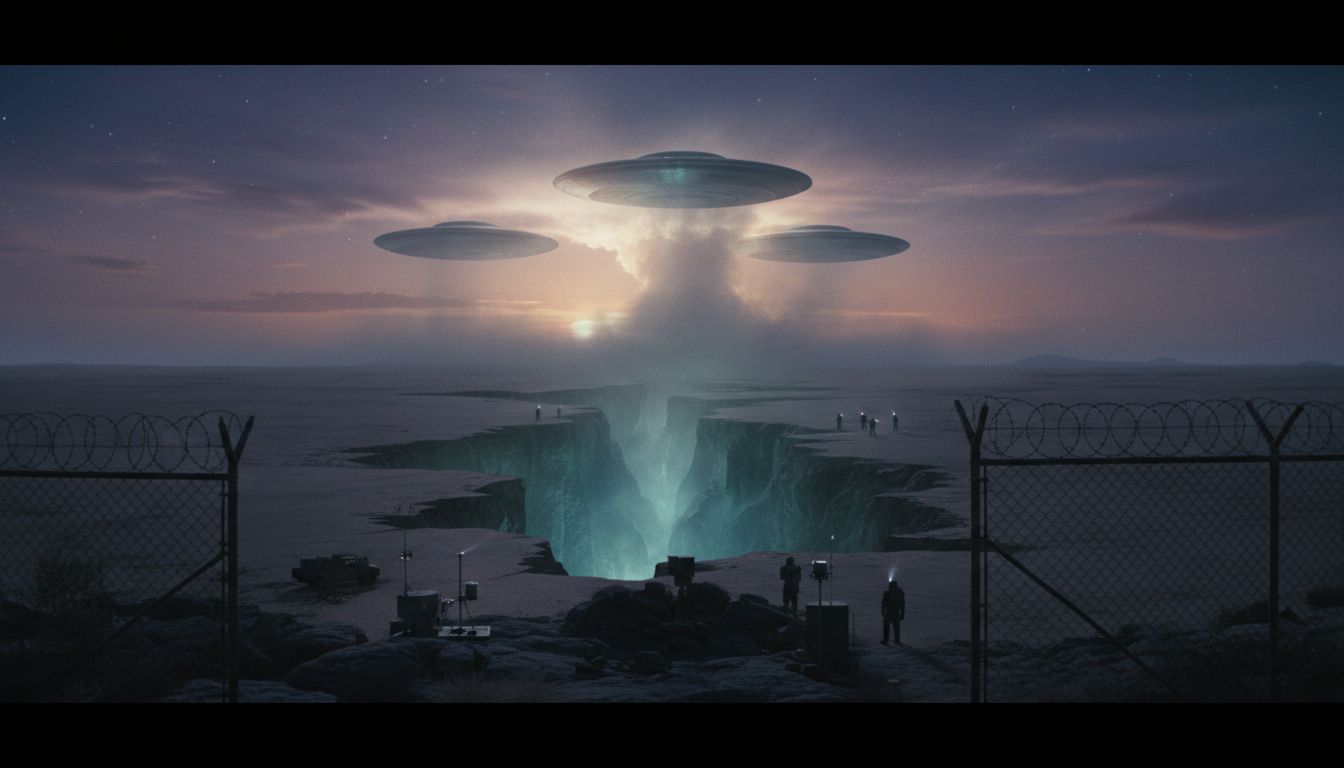
Between April 29 and April 30, a series of small‑magnitude earthquakes struck the vicinity of the Nevada test range, prompting a surge of speculation on social media. Seismologists from the United States Geological Survey (USGS) recorded at least 17 events, most clustering around a magnitude of 4.4 and originating roughly 2.5 miles (4 km) below the surface. The tremors were centered a few miles east of the highly classified Area 51 installation, a site long associated with aircraft testing rather than nuclear activities. While the timing coincided with heightened U.S.–Iran diplomatic strain, scientific analysis confirms the quakes were natural tectonic movements, not clandestine detonations or extraterrestrial phenomena.
Seismic Findings
The USGS catalogued the sequence as a typical earthquake swarm, a pattern where numerous modest quakes occur in a confined area over a short period. “The depth, waveform signatures, and lack of any accompanying surface deformation are consistent with crustal stress release along known fault lines in the Great Basin,” explained Dr. Laura Chen, a senior seismologist at the agency. The region’s geology includes the Walker Lane fault system, which regularly generates low‑to‑moderate magnitude events. No anomalous acoustic or electromagnetic signatures—often associated with underground explosions—were detected by the national monitoring network, further supporting a natural origin.
Geopolitical Backdrop
The seismic activity surfaced amid renewed U.S.–Iran tensions. President Donald Trump has been briefed on potential military options following stalled cease‑fire negotiations and a recent escalation in the Strait of Hormuz. Concurrently, the administration announced plans to increase public disclosure of unidentified aerial phenomena (UAP) reports, fueling online conjecture that the tremors might be linked to secret weapons testing or even UFO activity. Analysts caution against conflating unrelated events. “Geopolitical stress can amplify the appetite for sensational explanations, but the data on the ground remain clear,” noted Michael Alvarez, a senior fellow at the Center for Strategic and International Studies.
Public Reaction and Misinformation
Social platforms erupted with theories ranging from covert nuclear tests to missing scientists and rising meteor sightings. A widely shared post claimed that “several nuclear and space scientists have vanished” and suggested a breach of the expired New START treaty as a possible catalyst for clandestine testing. Fact‑checking organizations, however, found no evidence linking the seismic swarm to any weapons program or to the disappearance of personnel. The rapid spread of such narratives underscores the challenges faced by authorities in countering misinformation during periods of international tension.
Expert Commentary and Outlook
Military officials have refrained from commenting on the specific seismic events, emphasizing standard monitoring protocols. A Pentagon spokesperson stated, “The Department of Defense continuously monitors all activities that could impact national security, including seismic events, and we have no indication of any unauthorized testing in the area.” Meanwhile, geoscientists stress the importance of public education on natural hazards. “Understanding the normal behavior of fault systems helps the public differentiate between routine geological activity and truly anomalous events,” Dr. Chen added. As the U.S. and Iran navigate diplomatic channels, the focus is expected to remain on verified intelligence rather than speculative links to the Nevada tremors.


