
Overview
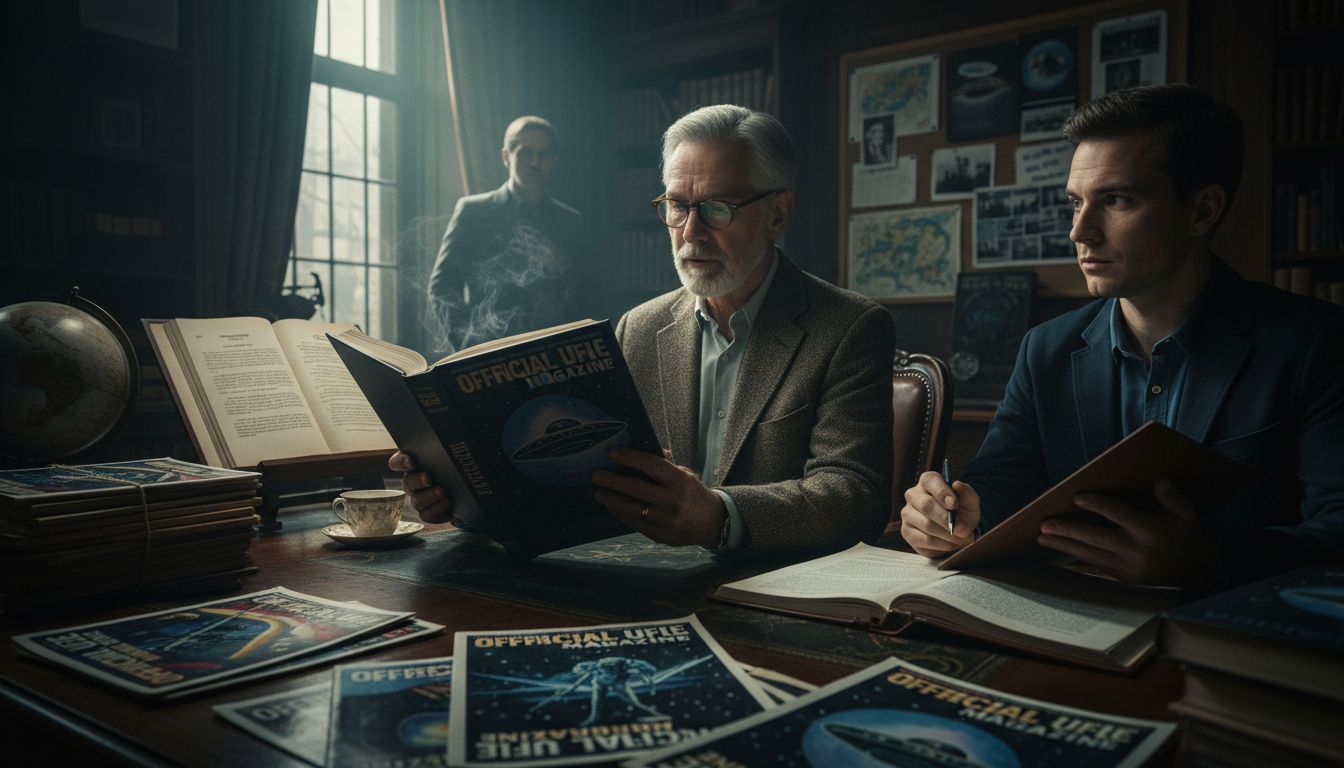
Veteran UFO researcher Kevin Randle has published a detailed review of Bernie O’Connor’s new compilation, The Official History of Official UFO Magazine. The book re‑issues the first six issues of the pioneering Official UFO magazine (1974‑1976) and adds commentary from both O’Connor and Randle, who contributes a fresh foreword. In his blog post dated 23 December 2025, Randle praises the volume’s historical value while also using the platform to revisit three of the most debated UFO incidents—Del Rio, Roswell and Socorro—arguing that the prevailing narratives often lack the rigorous scrutiny they deserve.
Historical Context
During the mid‑1970s the United States saw a brief “UFO magazine boom,” with as many as half a dozen titles publishing anywhere from six to nine issues a year. Official UFO distinguished itself by emphasizing substantive reporting over sensationalism, a stance championed by its founding editor Bernie O’Connor. Randle recalls his own entry into the field: “I wrote my first UFO‑related article while still in the Army, about physical evidence, and it paid my college tuition.” His early contributions, sometimes under the pen name James Butler Bonham, appeared alongside a mix of investigative pieces, science‑fiction columns, and period‑appropriate advertisements.
The New Compilation
O’Connor’s book collects the magazine’s inaugural six issues on high‑quality paper, preserving the original layout, color photographs, and even the quirky ads that once filled the pages. Randle notes that the volume “offers inside information and commentary that shed light on the editorial decisions of the era.” The foreword, penned by Randle, situates the magazine within the broader UFO‑research community and explains why the material remains relevant: “What was once dismissed as fringe literature now serves as a primary source for scholars tracing the evolution of UFO discourse.”
Revisiting Controversial Cases
Using the platform of his review, Randle turns a critical eye to three landmark cases.
Del Rio, Texas (1971): Randle challenges the long‑standing claim that a “triangular craft” was captured on radar, pointing out inconsistencies in the original Navy logs and suggesting that atmospheric phenomena may have been misidentified.
Roswell (1947): While acknowledging the cultural impact of the “crashed saucer” story, he stresses that contemporary documentation—including the 1994 Air Force report—still leaves the incident open to interpretation, urging researchers to separate declassified facts from later embellishments.
Socorro, New Mexico (1964): Randle critiques the reliance on a single eyewitness (pilot Al Hernandez) and the subsequent media amplification, arguing that the case lacks the corroborating physical evidence required for definitive conclusions.
Across all three, Randle calls for a more disciplined methodological approach, warning that “the allure of mystery should not override the standards of scientific inquiry.”
Implications for UFO Research
Randle’s review underscores the dual significance of O’Connor’s book: it is both a historical archive and a catalyst for renewed analytical rigor. By foregrounding the original editorial ethos of Official UFO—which prioritized factual reporting over profit‑driven sensationalism—Randle suggests that contemporary researchers can draw lessons about source credibility and bias mitigation. He concludes that “as long as we continue to re‑examine these cases with fresh data and skeptical eyes, the field can move beyond mythmaking toward genuine understanding.”
Looking Ahead
The release of The Official History of Official UFO Magazine arrives at a time of heightened public and governmental interest in unidentified aerial phenomena. Randle hopes the book will serve as a reference point for both seasoned investigators and newcomers, encouraging a culture where evidence, not anecdote, drives the conversation. As he writes in his foreword, “The past offers us a mirror; it is up to us to see clearly what it reflects.”


