Overview
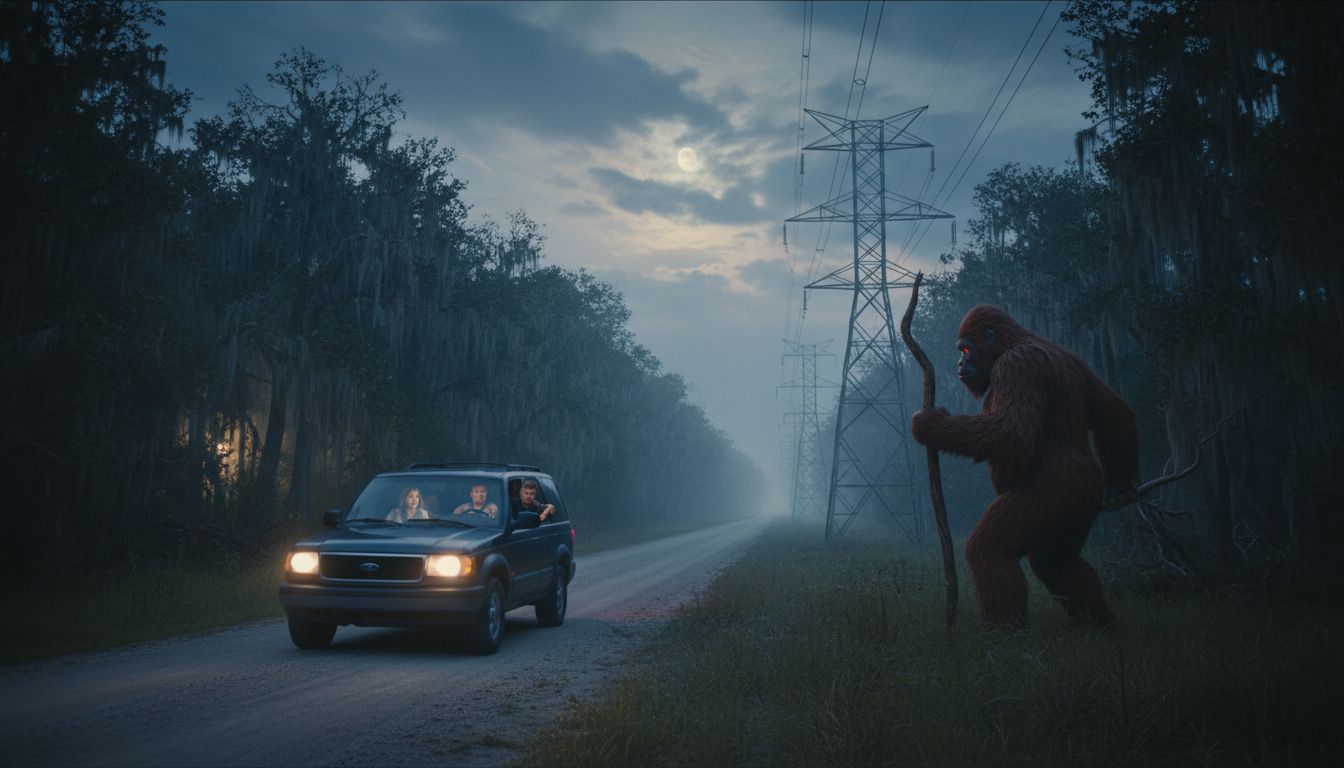
A family of three traveling through the small community of Silo, Oklahoma, reported an encounter with an unidentified, large, hairy biped while on a road trip last weekend. The sighting was relayed to Coast to Coast AM, the long‑running overnight radio program that frequently covers anomalous phenomena. According to the family’s account, the creature paused briefly on a power‑line easement before disappearing into a nearby stand of woods. While the incident occurred in Oklahoma, the narrative has been linked by commentators to the broader tradition of Bigfoot folklore that is especially prominent in neighboring Kentucky.
Incident Details
The family—identified only as the “Miller” family for privacy—was driving south on State Highway 78 when the father, Mark Miller, first noticed a movement near the edge of the easement. “It was about eight to ten feet tall, covered in dark hair, and it stood upright for a few seconds,” he told the Coast to Coast AM host. The mother, Lisa Miller, added that the creature’s posture was “human‑like but clearly not a person,” and that it seemed to be observing the vehicle before turning and vanishing into the forest. No photographs or video were captured, and the family did not report any physical evidence such as footprints or hair samples at the scene.
Regional Folklore
Bigfoot, also known as Sasquatch, has been part of Appalachian and Mid‑American folklore for decades. Kentucky, in particular, hosts several community events that celebrate the legend, including the Wild Man Triathlon in Berea and the annual Bigfoot Fest in Bowling Green, which draw enthusiasts, researchers, and tourists alike. These gatherings often feature talks by cryptozoologists, storytelling sessions, and “search parties” that venture into the state’s heavily forested regions. The Miller family’s encounter adds a contemporary anecdote to a body of reports that, while largely anecdotal, continue to fuel local interest and tourism tied to the myth.
Expert Commentary
Dr. Susan Harlow, a professor of anthropology at the University of Oklahoma who studies contemporary folklore, cautioned against jumping to conclusions. “Human perception is highly adaptable, especially in low‑light or high‑stress situations,” she explained. “People can misinterpret known wildlife—such as bears standing on hind legs—or even mannequins used in outdoor advertising as something more exotic.” Nonetheless, Dr. Harlow acknowledged that consistent eyewitness reports across a geographic region merit systematic documentation. She suggested that local wildlife officials could conduct a site survey to look for tracks, broken branches, or other signs that might corroborate or refute the family’s description.
Next Steps
Following the broadcast, the Miller family has expressed willingness to cooperate with any investigative effort. They have provided the exact GPS coordinates of the easement and have agreed to a follow‑up interview with the program’s producers. Meanwhile, the Oklahoma Department of Wildlife Conservation has noted the report in its public log but has not opened a formal investigation, citing the lack of physical evidence. As the story circulates, it is likely to draw additional attention from both amateur Bigfoot hunters and academic researchers interested in the sociocultural impact of such sightings. Whether the creature was a misidentified animal, a hoax, or an as‑yet‑unexplained phenomenon, the incident underscores the enduring allure of the Bigfoot legend in the American heartland.


