Overview
Peru’s Ministry of Culture announced on 30 April 2026 the identification of a 4,000‑year‑old architectural complex at the coastal settlement of Áspero that functioned as an astronomical observatory for the ancient Caral civilization. The structure, uncovered during a systematic survey of the valley’s pre‑ceramic sites, is the oldest known purpose‑built observatory in the Americas and adds a new dimension to our understanding of the region’s earliest urban network.
Discovery Details
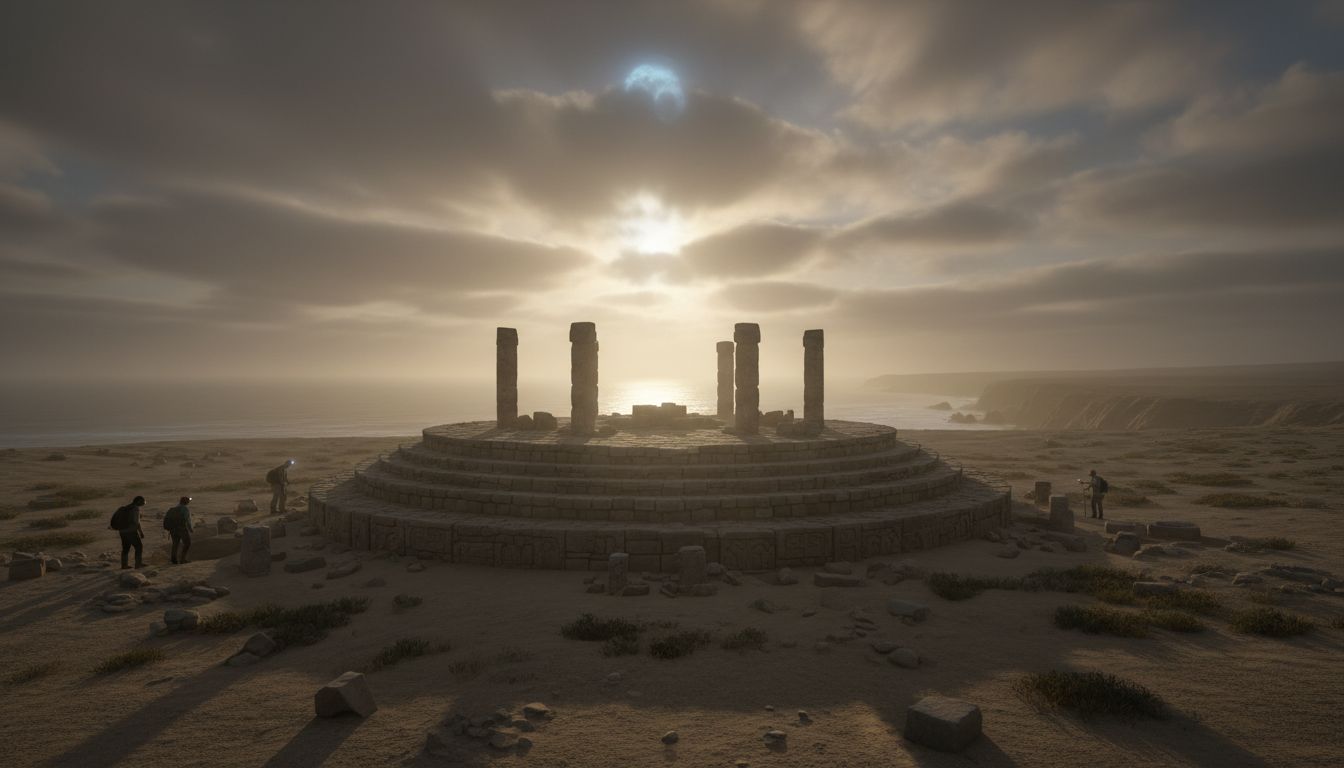
Archaeologists led by Dr. Carlos Mendoza of the National Institute of Culture used high‑resolution LiDAR scanning and ground‑penetrating radar to map a series of stone‑lined platforms oriented along the solstitial sunrise and sunset points. Excavations revealed a series of sightlines carved into limestone slabs that align with the heliacal rising of the star Sirius and the lunar standstill cycles. Radiocarbon dating of charcoal found in a sealed layer beneath the platforms places the construction of the complex between 2000 BCE and 1800 BCE, contemporaneous with the peak of Caral’s urban expansion.
The Ministry released photographs taken by the field team, showing a rectangular platform measuring roughly 25 m by 15 m, flanked by two smaller basins that likely held water for reflective observations. “The precision of the alignments indicates a sophisticated knowledge of celestial mechanics, far beyond what was previously attributed to pre‑ceramic societies in this area,” said Ministry spokesperson María Gómez in a press briefing.
Cultural and Scientific Significance
The Áspero observatory underscores the social and symbolic complexity of the Caral civilization, which is already recognized for its monumental pyramids, extensive irrigation canals, and long‑distance trade networks. By linking astronomical cycles to seasonal fishing and shellfish gathering, the structure would have provided a communal calendar essential for resource management along the Pacific coast. This integration of cosmology and economy mirrors similar practices observed at later Mesoamerican sites such as Teotihuacan and the Maya, suggesting that the roots of astronomical tradition in the New World extend much further back than previously documented.
Expert Commentary
Dr. Ana López, an independent archaeologist specializing in Andean archaeoastronomy, praised the find as “a watershed moment for pre‑ceramic research.” She noted that “the alignment with Sirius, a star that heralds the onset of the rainy season in many ancient cultures, points to a deliberate attempt to synchronize agricultural and marine activities with celestial events.” López cautioned, however, that further analysis of the surrounding settlement patterns is needed to fully understand how the observatory fit within the broader social hierarchy of Caral.
Next Steps
The Ministry plans to protect the site with a perimeter fence and initiate a long‑term conservation program that includes community outreach and digital reconstruction. A multidisciplinary team comprising archaeologists, astronomers, and engineers will conduct further surveys to determine whether additional observational structures exist along the coast. Findings from Áspero are expected to be presented at the upcoming International Conference on Pre‑Ceramic Cultures in Quito later this year, where researchers hope to refine the chronology of early astronomical practices across South America.
The discovery of the Áspero observatory not only pushes back the timeline for complex scientific activity in the Americas but also invites a re‑examination of how early societies integrated celestial knowledge into daily life, offering fresh perspectives on the ingenuity of the Caral civilization.