Overview
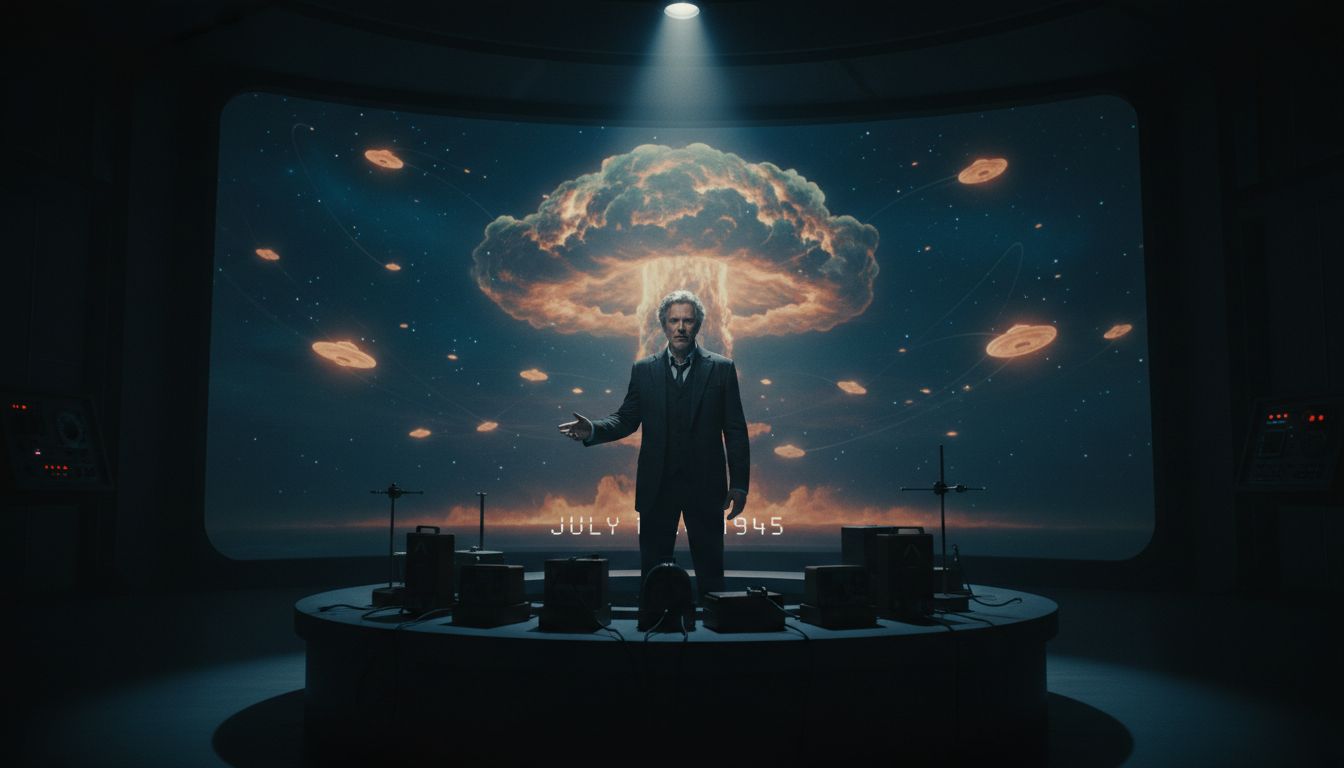
On March 1, 2026, Albuquerque Journal opinion columnist David Marks launched the first installment of a new series that examines a controversial hypothesis: unidentified aerial phenomena (UAP) may have functioned as “nuclear sentinels” monitoring America’s atomic weapons program. Titled “Nuclear sentinels: UFOs, nuclear weapons tests and the destroyer of worlds,” the piece links the debut of the atomic bomb on July 16 1945 at the Trinity test site in New Mexico to a series of alleged UAP sightings near nuclear installations over the past seven decades.
Historical Context
The Trinity test, the world’s first successful detonation of a nuclear device, marked a watershed in modern warfare. Within weeks, the United States conducted additional tests at the Nevada Test Site and later at the Pacific Proving Grounds. Since the 1950s, declassified government documents have recorded dozens of UAP observations in the vicinity of nuclear facilities, including the 1967 “Groom Lake” incident and the 1979 “Rendlesham Forest” encounter, both of which featured objects reportedly maneuvering in ways that defied conventional aircraft capabilities. The 2021 Office of the Director of National Intelligence (ODNI) report on UAPs noted a “statistically significant correlation” between sightings and nuclear sites, though it stopped short of assigning intent.
The Nuclear Sentinel Hypothesis
Marks argues that the timing of the Trinity test and the subsequent pattern of UAP reports suggest a purposeful surveillance role. He writes, “When humanity first unleashed the power to destroy entire cities, something—whether a non‑human intelligence or an unknown natural phenomenon—appeared to take notice.” The column cites testimonies from former military personnel who observed luminous objects hovering over the Los Alamos National Laboratory and the Pantex Plant during critical weapons‑handling operations. Marks also references the 2023 Pentagon release of UAP Task Force footage that shows an object maintaining a fixed position over a nuclear missile silo for several minutes, a behavior he interprets as “guard‑like.”
Reactions and Skepticism
The nuclear sentinel theory has drawn both intrigue and criticism. Dr. Laura Jensen, a physicist at the University of Colorado, cautions that “correlation does not equal causation; many of these sightings can be attributed to atmospheric optics, classified aircraft, or sensor anomalies.” Similarly, the Scientific Advisory Board of the U.S. Department of Energy has emphasized that no credible evidence currently links UAP activity to deliberate monitoring of nuclear assets. Nonetheless, a growing community of civilian UFO analysts—including veteran researcher Luis Alvarez—has begun compiling a database of sightings, arguing that the consistency of flight patterns merits further scientific inquiry.
Looking Ahead
Marks signals that this series will expand beyond the Trinity test narrative. Upcoming installments promise to explore the infamous Roswell incident, examine the controversial MJ‑12 documents, and feature commentary from UFO analyst Dr. Steven Greer and New Mexico cartoonist Miguel Romero, whose illustrations often satirize the intersection of secrecy and speculation. By weaving historical documentation with contemporary testimony, the column aims to keep the conversation about UAPs and national security in the public sphere, while urging policymakers to consider a systematic, evidence‑based approach.
The debate over whether UAPs act as “nuclear sentinels” remains unsettled. As the Albuquerque Journal series unfolds, it will likely serve as a focal point for both advocates of deeper investigation and skeptics demanding rigorous scientific standards. Whether the phenomenon is a matter of extraterrestrial intelligence, advanced human technology, or misinterpreted natural events, the discourse underscores a broader societal question: How should a nation respond when the unknown hovers over its most powerful weapons?