Overview
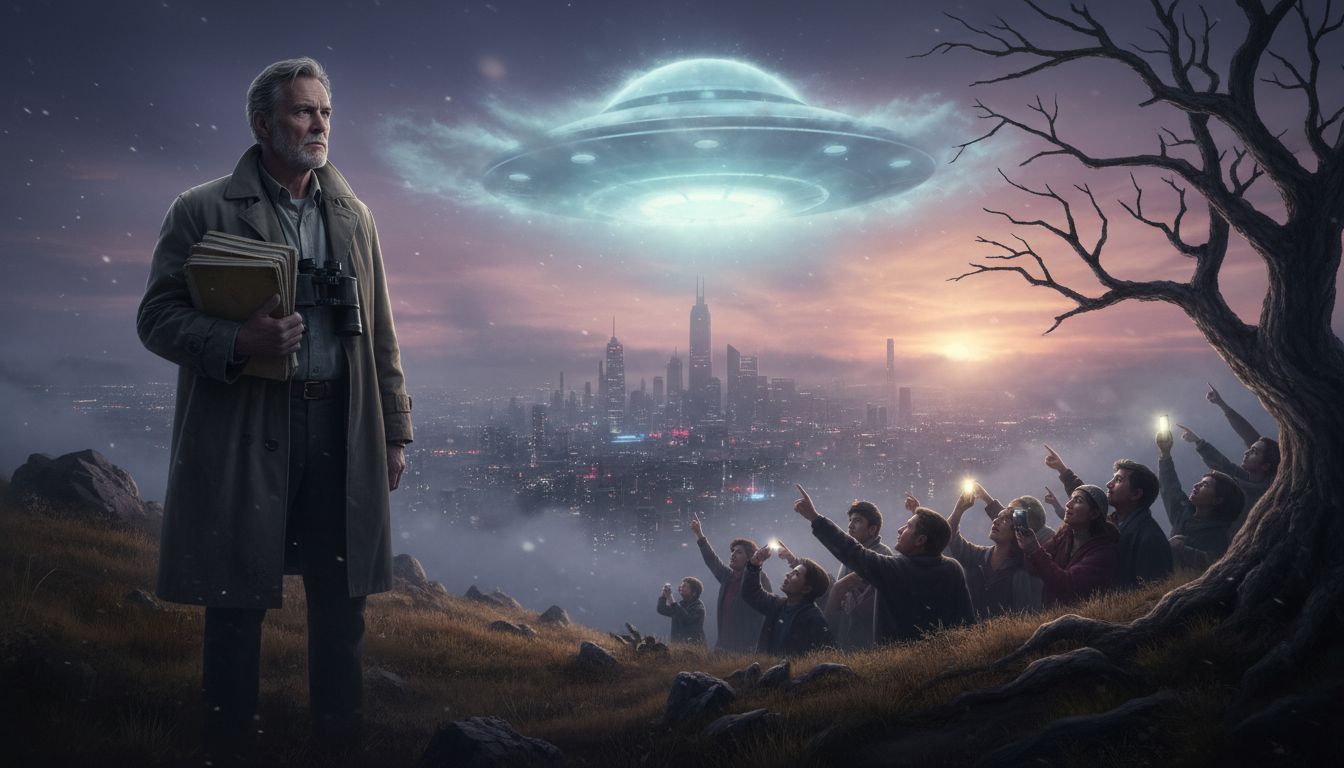
Veteran UFO reporter Tom Bowman reflects on more than three decades of covering unidentified aerial phenomena (UAP). In a recent Washington Post column, he argues that the vast majority of sightings are ultimately explained by mundane causes, even as public fascination endures. Bowman points to a growing body of government documents—released since the Pentagon’s 2017 acknowledgment of the Advanced Aerospace Threat Identification Program—that have moved the discussion from fringe speculation to a matter of national security. Yet he cautions that declassification alone does not substitute for transparent, methodical investigation of the remaining unexplained cases.
Government Action and Legislative Response
The shift from secretive programs to open congressional hearings began with the New York Times front‑page story in December 2017, which revealed the Pentagon’s hidden effort to catalog anomalous sightings near military installations. Since then, lawmakers have convened multiple hearings featuring former Navy pilots David Fravor and Ryan Graves, as well as intelligence officials Luis Elizondo and David Grusch, who alleged that the government has concealed evidence of non‑human technology. In January, Vermont legislator Troy Headrick (I) introduced a bill to create a state task force focused on “unidentified anomalous phenomena” observed around U.S. air bases, signaling that the issue is now entering state‑level policy debates.
Historical Context and the “UAP” Rebranding
For most of the 20th century, UFO reports were dismissed as fringe or pseudoscientific. The terminology shifted in 2020 when the Pentagon adopted UAP—Unidentified Aerial Phenomena—to distance the subject from popular culture and to frame it as a legitimate intelligence concern. Bowman notes that this linguistic change mirrors a broader cultural evolution: documentaries such as Dan Farah’s The Age of Disclosure (2025) have entered mainstream media, and even Secretary of State Marco Rubio has referenced the phenomenon in public remarks. Nonetheless, the core data remains unchanged; as Leslie Kean documented in her 2010 study, 90‑95 % of sightings can be traced to conventional explanations like weather balloons, commercial aircraft, astronomical objects, or atmospheric effects.
Expert Opinions and Skeptical Perspectives
Michael Shermer, publisher of Skeptic magazine and author of Truth: What It Is, How to Find It, and Why It Still Matters, emphasizes the need for rigorous standards when evaluating anomalous reports. He warns that “the allure of the unknown can easily eclipse the modest but reliable work of scientists and engineers who routinely solve these mysteries.” Similarly, Helen McCaw, a former senior analyst at the Bank of England, urged the institution’s governor to prepare for potential financial turbulence should the White House ever confirm extraterrestrial intelligence—a reminder that the implications of any definitive disclosure would ripple far beyond aerospace circles. Bowman concurs, arguing that sensational speculation should not replace systematic data collection, peer‑reviewed analysis, and open‑source sharing of sensor recordings.
Conclusion
Tom Bowman’s long‑term perspective underscores a paradox: while the proportion of unexplained sightings is shrinking, public interest is at an all‑time high. Recent declassifications have provided valuable clues, but they also expose gaps in methodology and accountability. Bowman calls on Congress, the Pentagon, and scientific agencies to fund dedicated research programs, standardize reporting protocols, and make raw data publicly available. Only through such disciplined inquiry can the few genuinely mysterious cases be separated from the sea of explainable phenomena, allowing society to assess whether the “UAP” label conceals a profound discovery—or simply reflects the enduring human penchant for wonder.