Overview
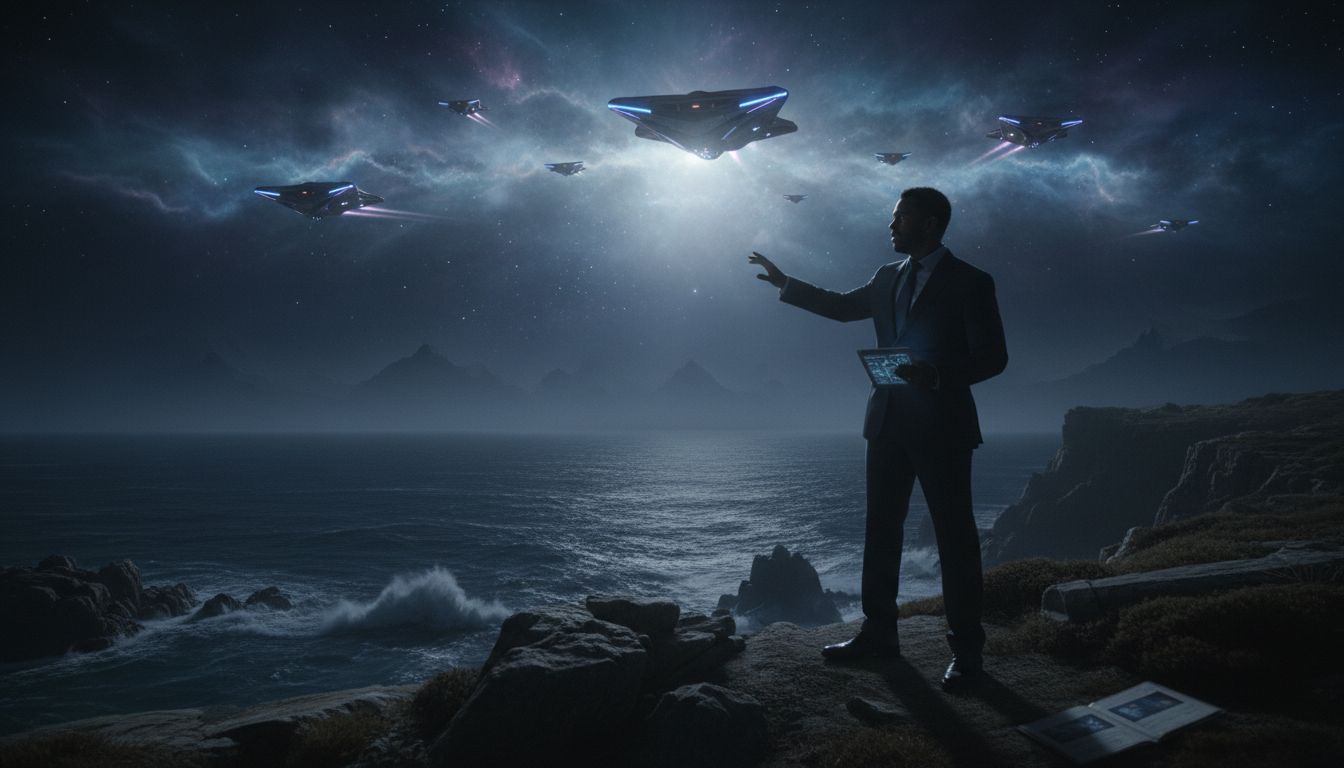
In a recent opinion column for The New York Times, astrophysicist Neil de Grasse Tyson called on the U.S. government to declassify any credible evidence of extraterrestrial life and make it publicly available. Tyson, who has long served as a public voice for science communication, argues that transparency would not only satisfy a growing public curiosity about unidentified aerial phenomena (UAP) but also advance scientific understanding across multiple disciplines. His piece joins a wave of discourse sparked by the Pentagon’s 2021 Unidentified Aerial Phenomena Task Force report and subsequent congressional hearings on the topic.
Tyson’s Core Argument
Tyson frames the request for disclosure as a matter of scientific integrity. He writes that “if the data exist, they belong to the scientific community and, ultimately, to the public.” Citing the principle that “science thrives on open data,” he contends that withholding verified observations of non‑human technology hinders the ability of researchers to test hypotheses, develop new models, and potentially unlock transformative technologies. Tyson also emphasizes that the United States, as a global leader in space exploration, has a responsibility to share knowledge that could reshape humanity’s place in the cosmos.
Scientific Implications
The astrophysicist notes that even a single confirmed observation of an extraterrestrial craft would have profound ramifications for fields ranging from astrophysics to materials science. He points to historical precedents—such as the discovery of pulsars or the detection of cosmic microwave background radiation—where unexpected data sparked entire sub‑disciplines. “A credible dataset on alien technology would force us to revisit the limits of physics as we know them,” Tyson asserts, adding that the potential for cross‑disciplinary collaboration could accelerate breakthroughs in propulsion, energy generation, and communication.
Public Interest and Policy Considerations
Tyson acknowledges the tension between national security and openness. He argues that a transparent review process, overseen by an independent scientific panel, could protect sensitive information while still allowing the broader community to evaluate the evidence. He references the 2022 congressional directive that required the Office of the Director of National Intelligence to produce an unclassified summary of UAP findings, suggesting that this step “demonstrates a willingness to balance secrecy with accountability.” Tyson also highlights the growing public demand for answers, noting recent polls that show a majority of Americans believe the government is withholding information about UFOs.
Reactions from the Community
The column has elicited a spectrum of responses. Former Pentagon UAP program director Luis Elizondo praised the call for openness but warned that “the data we have are fragmented and often inconclusive; premature release could fuel misinformation.” Meanwhile, NASA’s chief scientist Dr. Thomas Zurbuchen expressed cautious optimism, stating that “if credible evidence exists, NASA stands ready to engage in rigorous analysis under proper protocols.” Critics, including some members of the intelligence community, caution that full disclosure could reveal adversary capabilities or compromise ongoing investigations, a point Tyson addresses by proposing a tiered classification system that shields operational details while exposing scientific content.
Looking Ahead
Tyson concludes that the question is not whether the government should share extraterrestrial data, but when and how it will do so. He urges lawmakers to draft legislation that mandates a structured, scientifically driven declassification pathway, and calls on the public to maintain a “healthy skepticism paired with an open mind.” As the debate over UAPs moves from the margins to mainstream policy discussions, Tyson’s appeal underscores a broader shift: the intersection of national security, scientific curiosity, and public accountability may soon define how humanity confronts the possibility that we are not alone.


