Overview
The Washington Post’s recent opinion column argues that the wave of newly released UFO and unidentified aerial phenomena (UAP) documents is doing more than shed light on mysterious aerial sightings—it is fueling a nascent quasi‑religious movement that interprets the unknown as a spiritual revelation. While the piece reflects an editorial perspective, it highlights a growing pattern: government secrecy and delayed disclosure appear to be inadvertently providing fertile ground for a belief system that blends extraterrestrial speculation with ritualistic devotion.
Declassification of UFO Files
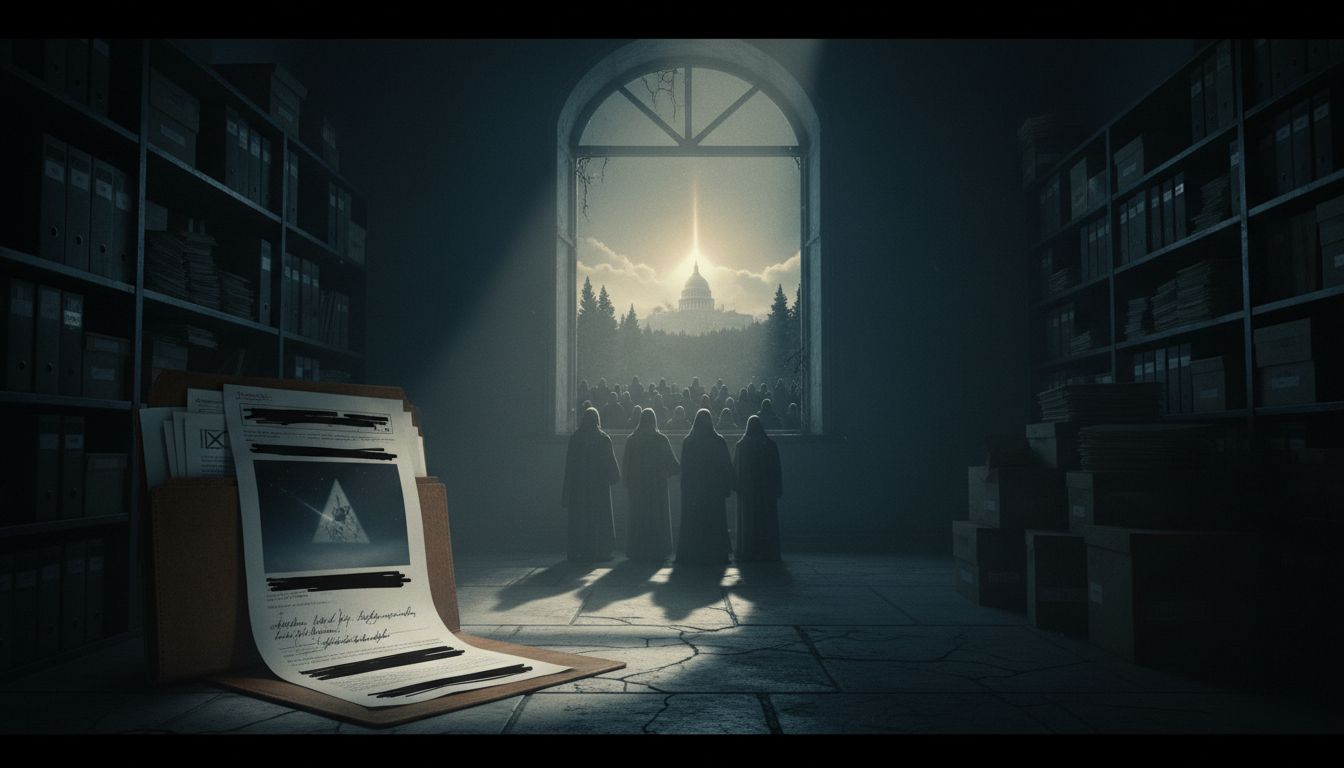
In early 2026, the Office of the Director of National Intelligence (ODNI) published a 144‑page unclassified report summarizing 130 UAP incidents investigated by the Pentagon’s All‑Domain Anomaly Resolution Office. The document confirmed that many sightings remain “unexplained” and that some objects exhibit flight characteristics beyond known technology. Concurrently, the National Archives released a trove of previously classified Navy and Air Force memos, radar logs, and pilot testimonies dating back to the 1950s. The sheer volume of material—over 2,000 pages of reports, videos, and internal correspondence—has reignited public fascination and prompted a surge of media coverage, podcasts, and online forums dissecting every frame of the released footage.
Emergence of a UFO‑Centric Belief System
The Post’s column notes that the secrecy surrounding these phenomena has unintentionally nurtured a quasi‑religious movement. Groups such as the “UFO Church of the New Dawn” and “Celestial Light Fellowship” have multiplied across the United States, holding weekly gatherings where members discuss declassified files alongside spiritual texts that frame extraterrestrials as messengers or divine beings. Scholars of new religious movements point out that the narrative of hidden knowledge—once the preserve of secret societies—now finds a modern outlet in government‑held UFO data. As one organizer told the Post, “When the government finally admits they don’t have all the answers, it feels like a cosmic invitation to seek meaning beyond our planet.”
Experts Weigh In
Religious studies professor Dr. Maya Patel of Georgetown University cautions against equating curiosity with cult‑like devotion, noting that “human beings have historically turned mystery into myth; the difference now is the presence of official documentation that lends a veneer of legitimacy.” Conversely, sociologist Dr. Luis Hernández of the University of Arizona observes that the rapid formation of UFO‑centered communities mirrors the rise of other tech‑driven belief systems, where shared online spaces create collective identities. Government officials, including a spokesperson for the Department of Defense, emphasize that the releases are intended to improve transparency, not to endorse any spiritual interpretation, and stress that the data remains “inconclusive regarding origin or intent.”
Implications for Public Trust
The opinion piece underscores a paradox: while declassification aims to rebuild confidence in institutions, it may also deepen mistrust among those who view the delayed disclosure as evidence of a broader cover‑up. Polls conducted by the Pew Research Center in March 2026 show that 42 % of Americans now believe the government is withholding critical information about extraterrestrials, up from 31 % a year earlier. This erosion of trust could have ripple effects on policy debates ranging from defense spending to scientific funding. As the conversation moves beyond aerospace analysis into the realm of belief, policymakers may need to address not only the factual gaps in the UAP record but also the sociocultural vacuum that such gaps create.
The Washington Post’s editorial stance invites readers to consider the unintended cultural consequences of secrecy. Whether the burgeoning UFO‑centric spirituality endures or fades will likely depend on future disclosures, the rigor of scientific investigation, and the ability of institutions to balance transparency with responsible communication. In the meantime, the intersection of declassified files and emerging belief systems remains a compelling case study of how modern information flows can shape—and sometimes sanctify—collective imagination.